Sonatas
Chamber works
Polnische Sackpfeiffen (Polish Bagpipes)
Johann Heinrich Schmelzer Books and Music
More on Schmelzer
Back to home page
Sonatas
Chamber works
Polnische Sackpfeiffen (Polish Bagpipes)
Johann Heinrich Schmelzer Books and Music
More on Schmelzer
Back to home page
Johann Heinrich Schmelzer was one of the most important violinists of the Baroque period, and an important influence on later German and Austrian composers for violin. He made substantial contributions to the development of violin technique and promoted the use and development of sonata and suite forms in Austria and South Germany. He attained a high reputation in a field (violin playing and violin composition) which at the time was dominated by Italians; indeed, one traveler referred to him in 1660 as “nearly the most eminent violinist in all of Europe.” Schmelzer’s Sonatae unarum fidium of 1664 was the first collection of sonatas for violin and basso continuo to be published by a German-speaking composer. It contains the brilliant virtuosity, sectional structure, and lengthy ground-bass variations typical of the mid-Baroque violin sonata. Austrian violinist and composer Heinrich Ignaz Franz Biber (1644-1704) is believed to have been one of Schmelzer’s students. He lived from 1620-1623 to 1680.—Excerpted from Wikipedia
Johann Heinrich Schmelzer Books and Music
More on Schmelzer
Back to home page
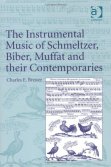
The Instrumental Music of Schmeltzer, Biber, Muffat and Their Contemporaries
Ashgate Publishing Company, 2011
Charles Brewer
$83.91 on Amazon
Before the Chinrest
Indiana University Press, 2012
Stanley Ritchie
$23.46 on Amazon
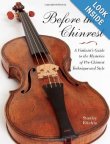
“He writes in an elegant, easy to follow style, using terms which a modern violinist can easily relate to”—Stringendo on Amazon
Selected Music
 Solo Violin Sonatas (2007)
 Violin Sonatas (1996)
 Sonatas – Balletti Francesi – Ciaconna (1993)
Lamento sopra la morte di Ferdinando III
Duodena selactarum sonatarum
Sacroprofanus Concentus
Sonatae unarum fidium seu a violino solo
Die musikalische Fechtschul
Sacred Music
Ad cocentus o mortales ad triumphos
Compieta
Currite, accurrite
Die Stärke der Liebe
Hodie lux tua, sancti fulgebit
Inquietum est cor meum
Le memorie dolorose
Missa Dei patris benedicte
Missa Jesu crusifixi
Missa Mater purissima
Missa Natalis
Missa Peregrina in honorem Sancti Rochi
Missa pro defunctis
Missa Sancti Joannis
Missa Sancti Spiritus
Missa Sancti Stanislai
Missa Tarde venientium in honorem Sancti Wenceslai
Nos autem gloriari
O Jesu summa charitas
Sileat misericordiam tuam
Terra triumphans jubila
Vesperae brivissimae de beatissimae virgine et de apostolis
150 suites, vocal works, and Christian music
Johann Heinrich Schmelzer Books and Music
More on Schmelzer
Back to home page

Sonatas
Chamber works
Polnische Sackpfeiffen (Polish Bagpipes)
Harmonia a 5
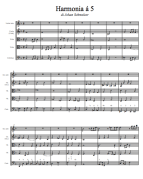
Source: IMSLP.org
Sonata III in G minor
Johann Heinrich Schmelzer was one of the most important violinists of the Baroque period, and an important influence on later German and Austrian composers for violin. He made substantial contributions to the development of violin technique and promoted the use and development of sonata and suite forms in Austria and South Germany. He attained a high reputation in a field (violin playing and violin composition) which at the time was dominated by Italians; indeed, one traveler referred to him in 1660 as “nearly the most eminent violinist in all of Europe.” Schmelzer’s Sonatae unarum fidium of 1664 was the first collection of sonatas for violin and basso continuo to be published by a German-speaking composer. It contains the brilliant virtuosity, sectional structure, and lengthy ground-bass variations typical of the mid-Baroque violin sonata. Austrian violinist and composer Heinrich Ignaz Franz Biber (1644-1704) is believed to have been one of Schmelzer’s students. He lived from 1620-1623 to 1680.—Excerpted from Wikipedia
Selected Books
The Instrumental Music of Schmeltzer, Biber, Muffat and Their Contemporaries
Ashgate Publishing Company, 2011
Charles Brewer
$83.91 on Amazon
Before the Chinrest
Indiana University Press, 2012
Stanley Ritchie
$23.46 on Amazon
“He writes in an elegant, easy to follow style, using terms which a modern violinist can easily relate to”—Stringendo on Amazon
Selected Music
Solo Violin Sonatas (2007)
Violin Sonatas (1996)
Sonatas – Balletti Francesi – Ciaconna (1993)
More Johann Heinrich Schmelzer Music
Lamento sopra la morte di Ferdinando III
Duodena selactarum sonatarum
Sacroprofanus Concentus
Sonatae unarum fidium seu a violino solo
Die musikalische Fechtschul
Sacred Music
Ad cocentus o mortales ad triumphos
Compieta
Currite, accurrite
Die Stärke der Liebe
Hodie lux tua, sancti fulgebit
Inquietum est cor meum
Le memorie dolorose
Missa Dei patris benedicte
Missa Jesu crusifixi
Missa Mater purissima
Missa Natalis
Missa Peregrina in honorem Sancti Rochi
Missa pro defunctis
Missa Sancti Joannis
Missa Sancti Spiritus
Missa Sancti Stanislai
Missa Tarde venientium in honorem Sancti Wenceslai
Nos autem gloriari
O Jesu summa charitas
Sileat misericordiam tuam
Terra triumphans jubila
Vesperae brivissimae de beatissimae virgine et de apostolis
Minuetto con Variazione
6 Sonatas for Flute and Cembalo
Sonata VI
Sonata for harpsichord in B flat major
Anna Bon was a Russian-born Italian composer and performer. Her parents were both involved in music and traveled internationally, her father a Bolognese artist, and her mother a singer. She studied music at the Ospedale della Pietà in Venice with the maestra di viola, Candida della Pièta. At the age of 16, she composed her six op. 1 flute sonatas, published in Nürnberg in 1756, which she dedicated to Friedrich. By 1756, she rejoined her parents in Bayreuth and held the new post of ‘chamber music virtuosa’ at the court. In 1762 the family moved to the Esterházy court at Eisenstadt, where she remained until at least 1765. She dedicated the published set of six harpsichord sonatas, op. 2, to Ernestina Augusta Sophia, Princess of Saxe-Weimar, and the set of six divertimenti (trio sonatas), op. 3, to Charles Theodore, Elector of Bavaria. In 1767, she lived in Hildburghausen, Thuringia, with her husband, a singer named Mongeri, although details of her story are lost to history. She was born in 1739 and died at an unknown date after 1767.—Excerpted from Wikipedia
Six Chamber Sonatas, for transverse flute, violoncello, or harpsichord, op. 1
Six Sonatas for Harpsichord, op. 2
Six Divertimenti, for two flutes and basso continuo, op. 3
Aria, “Astra coeli,” for soprano, 2 violins, viola, and basso continuo
Offertory, “Ardete amore,” for soprano, 2 altos, bass, 2 oboes, 2 horns, 2 violins, viola, and basso continuo
Motet, “Eia in preces et veloces,” for alto, 2 violins, viola, and basso continuo
Opera, now lost, composed during her stay at the court of Prince Esterhazy in Eisenstadt


 On Baroque
You must be logged in to post a comment.