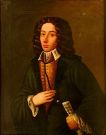
Giovanni Battista Pergolesi, 1710-1736

220px-Pergolesi

Selected Recordings

Stabat Mater in F minor

Concerto in G major

Sonata in A major

Selected Sheet Music

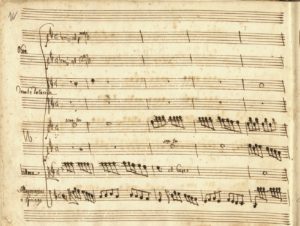
Adriano in Siria
siria

Source: IMSLP.org

Showcase Piece

La Serva Padrona

Notes and Commentary

“To Giovanni Battista Pergolesi goes the distinction and the achievement of having been the first to establish the traditions that would govern the writing of opera buffa for more than a century. Opera buffa liked to deal with everyday people in everyday settings, involved in everyday farcical episodes, in contrast to opera seria, which favored mythological subjects, characters, and exploits.”—David Ewen, The Complete Book of Classical Music

Pergolesi was an Italian composer, violinist and organist. His opera seria, Il prigionier superbo, contained the two act buffa intermezzo, La Serva Padrona (The Servant Mistress), which became a very popular work separate from the main opera. When it was performed in Paris in 1752, it prompted the so-called Querelle des Bouffons (“quarrel of the comic actors”) between supporters of serious French opera by the likes of Jean-Baptiste Lully and Jean-Philippe Rameau and supporters of new Italian comic opera. Pergolesi was held up as a model of the Italian style during this quarrel, which divided Paris’s musical community for two years.

Pergolesi also wrote sacred music, including a Mass in F and his Magnificat in C major. It is his Stabat Mater (1736), however, for female soprano, female alto, string orchestra and basso continuo, which is his best known sacred work. While classical in scope, the opening section of the setting demonstrates Pergolesi’s mastery of the Italian baroque durezze e ligature style, characterized by numerous suspensions over a faster, conjunct bassline. The work remained popular, becoming the most frequently printed work of the 18th century, and being arranged by a number of other composers, including Johann Sebastian Bach, who used it as the basis for his cantata Tilge, Höchster, meine Sünden (Root out my sins, Highest One). Pergolesi also wrote a number of secular instrumental works, including a violin sonata and a violin concerto.

He lived from January 4, 1710, to March 16, 1736, dying at age 28 from tuberculosis.—Excerpted from Wikipedia

Books and Music

Selected Books

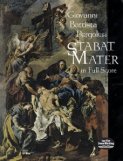
Stabat Mater in Full Score
Dover Publications, 1997
$10.67 on Amazon

pergolesi4

Selected Music

pergolesi1 Stabat Mater (1990), 1 CD

prtgolesi2 La Serva Padrona (1950), MP3

pergolesi3 L’Olimpiade (2011), 3-CD set

More Giovanni Battista Pergolesi music

Complete Works

Most well-known works:
Opera
Il prigionier superbo, including two act buffa intermezzo, La Serva Padrona, 1733
La conversione e morte di San Guglielmo, 1731
Lo frate ‘nnamorato, 1732,
L’Olimpiade, 1735
Il Flaminio, 1735
Sacred
Mass in F
Magnificat in C major.
Stabat Mater, 1736

Works in alphabetical order (not a complete list):
Adriano in Siria
Allegro in E major
Chi non ode, e chi non vede
Il Flaminio
Flute Concerto in G major
Lo frate ‘nnamorato
Harpsichord Sonata in A major
Harpsichord Sonata in D major
Livietta e Tracollo
Maestro di musica
L’Olimpiade
Orfeo
Organ Sonata in F major
Salve Regina a due in C minor
Salve Regina a due in F minor
Salve regina in C minor
Salve Regina in E minor
Salve regina in F minor
Segreto tormento
La serva padrona
Sinfonia for Cello and Continuo
Stabat mater
Tre giorni son che Nina
Verbum Christi di croce
Back to home page

Dietrich Buxtehude: Notes and Commentary

“In the writing of organ music and church cantatas, none exerted a greater influence upon Johann Sebastian Bach that Dietrich Buxtehude. Bach’s biographies ell us how, in 1703, he walked a distance of some 200 miles to Luebeck just to hear Buxtehude play the organ. So impressed was he by these performances and by the quality of Buxtehude’s compositions, that he overstayed his leave of absence.”—David Ewen, The Complete Book of Classical Music

Dieterich Buxtehude was a German-Danish organist and composer of the Baroque period. His organ works represent a central part of the standard organ repertoire and are frequently performed at recitals and in church services. He composed in a wide variety of vocal and instrumental idioms, and his style strongly influenced many composers, including Johann Sebastian Bach. Today, Buxtehude is considered one of the most important German composers of the mid-Baroque.

The bulk of Buxtehude’s oeuvre consists of vocal music, which covers a wide variety of styles, and organ works, which concentrate mostly on chorale settings and large-scale sectional forms. Chamber music constitutes a minor part of the surviving output, and the only chamber works Buxtehude published during his lifetime were fourteen chamber sonatas. Although Buxtehude himself most probably wrote in organ tablature, the majority of the copies [of his work] are in standard staff notation. He lived from c. 1637—1639 to May 9, 1707. —Excerpted from Wikipedia

“Until recently, Buxtehude was known as a forerunner of Bach. In fact, he was a major composer in his own right, who exploited recent technical developments in organ building to produce a large body of organ music that was both highly virtuosic and expressive.”—The Rough Guide to Classical Music (2001, 3rd ed.) 

Dietrich Buxtehude Books and Music
More on Buxtehude
Back to home page

Dietrich Buxtehude: Complete Works

Buxtehude wrote hundreds of pieces. A partial list os below. Access complete list.
Cantatas 

  • BuxWV 1 — Accedite gentes, accurite populi
  • BuxWV 2 — Afferte Domino gloriam honorem
  • BuxWV 3 — All solch dein Güt wir preisen
  • BuxWV 4 — Alles, was ihr tut mit Worten oder mit Werken
  • BuxWV 5 — Also hat Gott die Welt geliebet
  • BuxWV 6 — An filius non est Dei, fons gratiae salus rei
  • BuxWV 7 — Aperite mihi portas justitiae
  • BuxWV 8 — Att du, Jesu, will mig höra
  • BuxWV 9 — Bedenke, Mensch, das Ende, bedenke deinen Tod
  • BuxWV 10 — Befiehl dem Engel, daß er komm
  • BuxWV 11 — Canite Jesu nostro citharae, cymbala, organa
  • BuxWV 12 — Cantate Domino canticum novum
  • BuxWV 13 — Das neugeborne Kindelein, das herzeliebe Jesulein
  • BuxWV 14 — Dein edles Herz, der Liebe Thron
  • BuxWV 15 — Der Herr ist mit mir, darum fürchte ich mich nicht
  • BuxWV 16 — Dies ist der Tag (lost)
  • BuxWV 17 — Dixit Dominus Domino meo

Free organ works 

  • BuxWV 136 — Prelude in C major
  • BuxWV 137 — Prelude (Prelude, Fuga and Ciacona) in C major
  • BuxWV 138 — Prelude in C major
  • BuxWV 139 — Prelude in D major
  • BuxWV 140 — Prelude in D minor
  • BuxWV 141 — Prelude in E major
  • BuxWV 142 — Prelude in E minor
  • BuxWV 143 — Prelude in E minor
  • BuxWV 144 — Prelude in F major
  • BuxWV 145 — Prelude in F major
  • BuxWV 146 — Prelude in F-sharp minor
  • BuxWV 147 — Prelude in G major
  • BuxWV 148 — Prelude in G minor
  • BuxWV 149 — Prelude in G minor
  • BuxWV 150 — Prelude in G minor
  • BuxWV 151 — Prelude in A major

Chamber music 

  • Seven Sonatas, Op. 1 (c. 1694):
    • BuxWV 252 — Sonata in F major for violin, viola da gamba and basso continuo
    • BuxWV 253 — Sonata in G major for violin, viola da gamba and basso continuo
    • BuxWV 254 — Sonata in A minor for violin, viola da gamba and basso continuo
    • BuxWV 255 — Sonata in B-flat major for violin, viola da gamba and basso continuo
    • BuxWV 256 — Sonata in C major for violin, viola da gamba and basso continuo
    • BuxWV 257 — Sonata in D minor for violin, viola da gamba and basso continuo
    • BuxWV 258 — Sonata in E minor for violin, viola da gamba and basso continuo
  • Seven Sonatas, Op. 2 (1696):
    • BuxWV 259 — Sonata in B-flat major for violin, viola da gamba and basso continuo
    • BuxWV 260 — Sonata in D major for violin, viola da gamba and basso continuo
    • BuxWV 261 — Sonata in G minor for violin, viola da gamba and basso continuo
    • BuxWV 262 — Sonata in C minor for violin, viola da gamba and basso continuo
    • BuxWV 263 — Sonata in A major for violin, viola da gamba and basso continuo
    • BuxWV 264 — Sonata in E major for violin, viola da gamba and basso continuo
    • BuxWV 265 — Sonata in F major for violin, viola da gamba and basso continuo

    Access complete list.

Dietrich Buxtehude Books and Music
More on Buxtehude
Back to home page

Dietrich Buxtehude: Books and Music

Selected Books

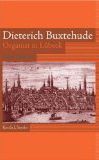
Dieterich Buxtehude: Organist in Lubeck
University of Rochester Press, 2007
Kerala J. Snyder
$64.18 on Amazon

buxtehude4

“Buxtehude’s music remains one of the great pleasures of classical music: thoughtful and rich in melody, filled to overflowing with new ideas and freshness. For several years Kerala Snyder’s book has been out of print, and unscrupulous book dealers have demanded exhorbitant prices for used copies. Now reissued it is possible to once again obtain a personal copy. Although the price is high do not let that hold you back. This is an excellent achievement, and will probably remain the only major book in English on one of the greatest German composers.”—Doug, Haydn Fan, on Amazon

Selected Music

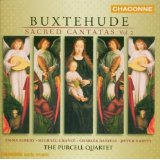
buxtehude1 Sacred Cantatas, Vol. 2 (2005), 1 CD

buxtehude2 Complete Organ Works (2007), 6-CD set

buxtehude3 7 Sonatas, Op. 1 (2005), 1 CD

More Dietrich Buxtehude music

More on Buxtehude
Back to home page

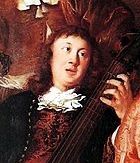
Dietrich Buxtehude, 1637-1707

Buxtehude

Selected Recordings

Sonata No. 1 in F major, Op. 1

Quemadmodum Desiderat Cervus

Alleluja

Selected Sheet Music

Canzonetta
canzonetta

Source: IMSLP.org

Showcase Piece

Ich bin eine Blume zu Saron

Notes and Commentary

“In the writing of organ music ad church cantatas, none exerted a greater influence upon Johann Sebastian Bach that Dietrich Buxtehude. Bach’s biographies ell us how, in 1703, he walked a distance of some 200 miles to Luebeck just to hear Buxtehude play the organ. So impressed was he by these performances and by the quality of Buxtehude’s compositions, that he overstayed his leave of absence.”—David Ewen, The Complete Book of Classical Music

Dieterich Buxtehude was a German-Danish organist and composer of the Baroque period. His organ works represent a central part of the standard organ repertoire and are frequently performed at recitals and in church services. He composed in a wide variety of vocal and instrumental idioms, and his style strongly influenced many composers, including Johann Sebastian Bach. Today, Buxtehude is considered one of the most important German composers of the mid-Baroque.

The bulk of Buxtehude’s oeuvre consists of vocal music, which covers a wide variety of styles, and organ works, which concentrate mostly on chorale settings and large-scale sectional forms. Chamber music constitutes a minor part of the surviving output, and the only chamber works Buxtehude published during his lifetime were fourteen chamber sonatas. Although Buxtehude himself most probably wrote in organ tablature, the majority of the copies [of his work] are in standard staff notation. He lived from c. 1637—1639 to May 9, 1707. —Excerpted from Wikipedia

“Until recently, Buxtehude was known as a forerunner of Bach. In fact, he was a major composer in his own right, who exploited recent technical developments in organ building to produce a large body of organ music that was both highly virtuosic and expressive.”—The Rough Guide to Classical Music (2001, 3rd ed.) 

Books and Music

Selected Books

Dieterich Buxtehude: Organist in Lubeck
University of Rochester Press, 2007
Kerala J. Snyder
$64.18 on Amazon

buxtehude4

“Buxtehude’s music remains one of the great pleasures of classical music: thoughtful and rich in melody, filled to overflowing with new ideas and freshness. For several years Kerala Snyder’s book has been out of print, and unscrupulous book dealers have demanded exhorbitant prices for used copies. Now reissued it is possible to once again obtain a personal copy. Although the price is high do not let that hold you back. This is an excellent achievement, and will probably remain the only major book in English on one of the greatest German composers.”—Doug, Haydn Fan, on Amazon

Selected Music

buxtehude1 Sacred Cantatas, Vol. 2 (2005), 1 CD

buxtehude2 Complete Organ Works (2007), 6-CD set

buxtehude3 7 Sonatas, Op. 1 (2005), 1 CD

More Dietrich Buxtehude music

Complete Works

Buxtehude wrote hundreds of pieces. A partial list os below. Access complete list.
Cantatas 

  • BuxWV 1 — Accedite gentes, accurite populi
  • BuxWV 2 — Afferte Domino gloriam honorem
  • BuxWV 3 — All solch dein Güt wir preisen
  • BuxWV 4 — Alles, was ihr tut mit Worten oder mit Werken
  • BuxWV 5 — Also hat Gott die Welt geliebet
  • BuxWV 6 — An filius non est Dei, fons gratiae salus rei
  • BuxWV 7 — Aperite mihi portas justitiae
  • BuxWV 8 — Att du, Jesu, will mig höra
  • BuxWV 9 — Bedenke, Mensch, das Ende, bedenke deinen Tod
  • BuxWV 10 — Befiehl dem Engel, daß er komm
  • BuxWV 11 — Canite Jesu nostro citharae, cymbala, organa
  • BuxWV 12 — Cantate Domino canticum novum
  • BuxWV 13 — Das neugeborne Kindelein, das herzeliebe Jesulein
  • BuxWV 14 — Dein edles Herz, der Liebe Thron
  • BuxWV 15 — Der Herr ist mit mir, darum fürchte ich mich nicht
  • BuxWV 16 — Dies ist der Tag (lost)
  • BuxWV 17 — Dixit Dominus Domino meo

Free organ works 

  • BuxWV 136 — Prelude in C major
  • BuxWV 137 — Prelude (Prelude, Fuga and Ciacona) in C major
  • BuxWV 138 — Prelude in C major
  • BuxWV 139 — Prelude in D major
  • BuxWV 140 — Prelude in D minor
  • BuxWV 141 — Prelude in E major
  • BuxWV 142 — Prelude in E minor
  • BuxWV 143 — Prelude in E minor
  • BuxWV 144 — Prelude in F major
  • BuxWV 145 — Prelude in F major
  • BuxWV 146 — Prelude in F-sharp minor
  • BuxWV 147 — Prelude in G major
  • BuxWV 148 — Prelude in G minor
  • BuxWV 149 — Prelude in G minor
  • BuxWV 150 — Prelude in G minor
  • BuxWV 151 — Prelude in A major

Chamber music 

  • Seven Sonatas, Op. 1 (c. 1694):
    • BuxWV 252 — Sonata in F major for violin, viola da gamba and basso continuo
    • BuxWV 253 — Sonata in G major for violin, viola da gamba and basso continuo
    • BuxWV 254 — Sonata in A minor for violin, viola da gamba and basso continuo
    • BuxWV 255 — Sonata in B-flat major for violin, viola da gamba and basso continuo
    • BuxWV 256 — Sonata in C major for violin, viola da gamba and basso continuo
    • BuxWV 257 — Sonata in D minor for violin, viola da gamba and basso continuo
    • BuxWV 258 — Sonata in E minor for violin, viola da gamba and basso continuo
  • Seven Sonatas, Op. 2 (1696):
    • BuxWV 259 — Sonata in B-flat major for violin, viola da gamba and basso continuo
    • BuxWV 260 — Sonata in D major for violin, viola da gamba and basso continuo
    • BuxWV 261 — Sonata in G minor for violin, viola da gamba and basso continuo
    • BuxWV 262 — Sonata in C minor for violin, viola da gamba and basso continuo
    • BuxWV 263 — Sonata in A major for violin, viola da gamba and basso continuo
    • BuxWV 264 — Sonata in E major for violin, viola da gamba and basso continuo
    • BuxWV 265 — Sonata in F major for violin, viola da gamba and basso continuo

    Access complete list.

    Back to home page