Jean-Féry Rebel was an innovative French Baroque composer and violinist. He was considered a child prodigy on the violin and later studied under Jean-Baptiste Lully. He was one of the first French musicians to compose sonatas in the Italian style. Many of his compositions are marked by striking originality that include complex counter-rhythms and audacious harmonies that were not fully appreciated by listeners of his time. His Les caractères de la danse combined music with dance, and presented innovative metrical inventions. The work was popular and by some accounts was performed in London in 1725 under the baton of George Frideric Handel. In honor of his teacher, Rebel composed Le tombeau de M. Lully (literally, “The Tomb of Monsieur Lully”; figuratively, “A Tribute to Lully”).
Some of his compositions are described as choreographed “symphonies.” Among his boldest original compositions is Les élémens (“The Elements”) which describes the creation of the world. He lived from April 18, 1666, to January 2, 1747.—Excerpted from Wikipedia
Book of twelve sonatas in 2 or 3 parts (composed in 1695, published in Paris in 1712)
(includes: Le tombeau de M. de Lully, en hommage à son maître)
Ulysse, tragédie lyrique (1703)
Receuils d’airs sérieux et à boire, airs for voice (1695-1708)
Caprice, ballet d’action (ballet-pantomime) (1711)
12 sonatas for violin solo mixed with récits for viol, (Paris 1713)
Les caractères de la danse, ballet (1715)
La Terpsichore, ballet (1720)
Les plaisirs champêtre, ballet (1724)
Boutade, ballet
Fantaisie, ballet (1729)
Les élémens, ballet (1737)
“Good academic study, a little too long and not enough of a bird view of the baroque musics in Europe and their interrelationship.”—Philippe Thaure on Amazon
Jean-Féry Rebel was an innovative French Baroque composer and violinist. He was considered a child prodigy on the violin and later studied under Jean-Baptiste Lully. He was one of the first French musicians to compose sonatas in the Italian style. Many of his compositions are marked by striking originality that include complex counter-rhythms and audacious harmonies that were not fully appreciated by listeners of his time. His Les caractères de la danse combined music with dance, and presented innovative metrical inventions. The work was popular and by some accounts was performed in London in 1725 under the baton of George Frideric Handel. In honor of his teacher, Rebel composed Le tombeau de M. Lully (literally, “The Tomb of Monsieur Lully”; figuratively, “A Tribute to Lully”).
Some of his compositions are described as choreographed “symphonies.” Among his boldest original compositions is Les élémens (“The Elements”) which describes the creation of the world. He lived from April 18, 1666, to January 2, 1747.—Excerpted from Wikipedia
“Good academic study, a little too long and not enough of a bird view of the baroque musics in Europe and their interrelationship.”—Philippe Thaure on Amazon
Book of twelve sonatas in 2 or 3 parts (composed in 1695, published in Paris in 1712)
(includes: Le tombeau de M. de Lully, en hommage à son maître)
Ulysse, tragédie lyrique (1703)
Receuils d’airs sérieux et à boire, airs for voice (1695-1708)
Caprice, ballet d’action (ballet-pantomime) (1711)
12 sonatas for violin solo mixed with récits for viol, (Paris 1713)
Les caractères de la danse, ballet (1715)
La Terpsichore, ballet (1720)
Les plaisirs champêtre, ballet (1724)
Boutade, ballet
Fantaisie, ballet (1729)
Les élémens, ballet (1737)
Domenico Gabrielli was an Italian Baroque composer and virtuoso cello player. He was apparently not related to the Venetian Gabrielis. Born in Bologna, he worked in the orchestra of the church of San Petronio and was also a member and for some time president (principe) of the Accademia Filarmonica of Bologna. During the 1680s he also worked as a musician at the court of Duke Francesco II d’Este of Modena. Gabrielli wrote several operas as well as instrumental and vocal church works. He is especially notable as the composer of some of the earliest attested works for solo cello (two sonatas for cello and basso continuo, a group of seven ricercari for unaccompanied cello, and a canon for two cellos). Among his contemporaries, his own virtuoso performances on this instrument earned him the nickname Mingain (or Minghino) dal viulunzeel, a dialect form meaning “Dominic of the cello.” He lived from April 15, 1651, or October 19, 1659, to July 10, 1690.—Excerpted from Wikipedia


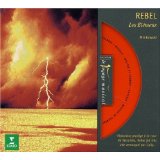
 , 1 CD
 , 1 CD
 , 1 CD

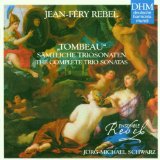
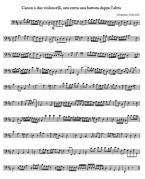



 , 1 CD
 , 1 CD
 , 1 CD
 On Baroque
You must be logged in to post a comment.