Johann Sebastian Bach: Complete Works

Bach composed hundreds of works during his lifetime, too many to list here. For a complete list of his wok, broken up by catgory, go to the J.S. Bach home page. The following information is excerpted from Wikipedia.

His work is generally broken into organ and other keyboard works, orchestral and chamber music, and vocal and choral works, which are in turn broken into his cantatas and Passions, and his major choral work, Mass in B Minor.

Among his noteworthy organ works are Toccata and Fugue in D minor and Concerto No. 1 in D Major. His well-known keyboard works are The Well-Tempered Clavier, his English and French Suites, and his Goldberg Variations.

Orchestral and chamber music
Bach wrote for single instruments, duets, and small ensembles. Many of his solo works, such as his six sonatas and partitas for violin, six cello suites, and Partita for solo flute, are widely considered among the most profound works in the repertoire. Bach composed a suite and several other works for solo lute. He wrote trio sonatas; solo sonatas (accompanied by continuo) for the flute and for the viola da gamba; and a large number of canons and ricercare, mostly with unspecified instrumentation. The most significant examples of the latter are contained in The Art of Fugue and The Musical Offering.

Bach’s best-known orchestral works are the Brandenburg Concertos, so named because he submitted them in the hope of gaining employment from Margrave Christian Ludwig of Brandenburg-Schwedt in 1721; his application was unsuccessful. These works are examples of the concerto grosso genre. Other surviving works in the concerto form include two violin concertos; a Concerto for Two Violins in D Minor, often referred to as Bach’s “double” concerto; and concertos for one to four harpsichords. It is widely accepted that many of the harpsichord concertos were not original works, but arrangements of his concertos for other instruments now lost. A number of violin, oboe and flute concertos have been reconstructed from these. In addition to concertos, Bach wrote four orchestral suites, and a series of stylised dances for orchestra, each preceded by a French overture.

Vocal and choral works
As the Thomaskantor, beginning mid of 1723, Bach performed a cantata each Sunday and feast day that corresponded to the lectionary readings of the week. Although Bach performed cantatas by other composers, he composed at least three entire annual cycles of cantatas at Leipzig, in addition to those composed at Mühlhausen and Weimar. In total he wrote more than 300 sacred cantatas, of which approximately 200 survive.

His cantatas vary greatly in form and instrumentation, including those for solo singers, single choruses, small instrumental groups, or grand orchestras. Many consist of a large opening chorus followed by one or more recitative-aria pairs for soloists (or duets) and a concluding chorale. The recitative is part of the corresponding Bible reading for the week and the aria is a contemporary reflection on it. The melody of the concluding chorale often appears as a cantus firmus in the opening movement. Among his best known cantatas are:

  • Christ lag in Todes Banden
  • Ich hatte viel Bekümmernis
  • Ein feste Burg ist unser Gott
  • Gottes Zeit ist die allerbeste Zeit
  • Wachet auf, ruft uns die Stimme
  • Herz und Mund und Tat und Leben

In addition, Bach wrote a number of secular cantatas, usually for civic events such as council inaugurations. These include wedding cantatas, the Wedding Quodlibet, the Peasant Cantata and the Coffee Cantata.

Passions
Bach’s large choral-orchestral works include the grand scale St Matthew Passion and St John Passion, both written for Good Friday vespers services at the Thomaskirche and the Nikolaikirche in alternate years, and the Christmas Oratorio (a set of six cantatas for use in the Liturgical season of Christmas). The two versions of the Magnificat (one in E-flat major, with four interpolated Christmas-related movements, and the later and better-known version in D major), the Easter Oratorio, and the Ascension Oratorio are smaller and simpler than the Passions and the Christmas Oratorio.

Mass in B minor
Bach assembled his other large work, the Mass in B minor, near the end of his life, mostly from pieces composed earlier (such as the cantatas Gloria in excelsis Deo, and Weinen, Klagen, Sorgen, Zagen). The mass was never performed in full during Bach’s lifetime. All of these movements, unlike the six motets (Singet dem Herrn ein neues LiedDer Geist hilft unsrer Schwachheit aufJesu, meine FreudeFürchte dich nichtKomm, Jesu, komm!; and Lobet den Herrn alle Heiden), have substantial solo parts as well as choruses.

Johann Sebastian Bach Books and Music
More on Bach
Back to home page

Johann Sebastian Bach: Notes and Commentary

“Practically all of those who were his superiors at the St. Thomas Church in Leipzig, and most of those who attended the services there regularly, had little idea that their cantor, Johann Sebastian Bach, was one of music’s elect.”—David Ewen, The Complete Book of Classical Music

“A titan on Western Art.”—Phil Goulding, Classical Music

Johann Sebastian Bach was a German composer, organist, harpsichordist, violist, and violinist of the Baroque period. He enriched many established German styles through his skill in counterpoint, harmonic and motivic organisation, and the adaptation of rhythms, forms, and textures from abroad, particularly from Italy and France. Bach’s compositions include the Brandenburg Concertos, the Mass in B minor, the The Well-Tempered Clavier, his cantatas, chorales, partitas, Passions, and organ works. His music is revered for its intellectual depth, technical command, and artistic beauty.

Bach was born in Eisenach, Saxe-Eisenach, into a very musical family; his father, Johann Ambrosius Bach was the director of the town musicians, and all of his uncles were professional musicians. His father taught him to play violin and harpsichord, and his brother, Johann Christoph Bach, taught him the clavichord and exposed him to much contemporary music. Bach also went to St Michael’s School in Lüneburg because of his singing skills. After graduating, he held several musical posts across Germany: he served as Kapellmeister (director of music) to Leopold, Prince of Anhalt-Köthen, Cantor of Thomasschule in Leipzig, and Royal Court Composer to August III.

Bach’s abilities as an organist were highly respected throughout Europe during his lifetime, although he was not widely recognised as a great composer until a revival of interest and performances of his music in the first half of the 19th century. He is now generally regarded as one of the main composers of the Baroque period, and as one of the greatest composers of all time. He lived from (31 March 31, 1685, to July 28, 1750.—Excerpted from Wikipedia

Was Bach’s son J.C. Bach sometimes referred to as “The English Bach?” That’s open to debate.

Johann Sebastian Bach Books and Music
More on Bach
Back to home page

Johann Sebastian Bach: Books and Music

Selected Books
Johann Sebastian Bach: The Learned Musician
W.W. Norton & Co., 2001
Christoph Wolff
$16.63 on Amazon

wolff

“A magisterial biographical portrait . . . necessarily learned, but also user-friendly, helpful and entertainingly informative.”—Chicago Tribune

The New Bach Reader
W.W. Norton & Co., 1999
Christoph Wolff, Arthur Mendel, and Hans David (eds.)
$18.45 on Amazon

Mendel

“This book is essential for anyone wanting to understand the life and work of J. S. Bach. It provides wonderful insights about the man through his own documents and writings by those who knew and worked with him. He comes across as an amazingly hard working genius with a quick temper and absolute focus.”—Craig Matteson on Amazon

The Cello Suites
Grove Press, 2011
Eric Siblin
$12.87 on Amazon

Siblin

“I fell in love with this book both for the caliber of the writing and the subject matter. Because Siblin doesn’t stick rigidly to discussing Bach and the cello suites themselves, he doesn’t get bogged down in the kind of musicological detail that would lose him part of his audience. What appealed to me most is that it’s the kind of book that at its heart addresses the enduring impact of great art.”—S. McGee on Amazon

Selected Music

brandenburg 6 Brandenburg Concertos / 4 Orchestral Suites (1989), 3-CD set

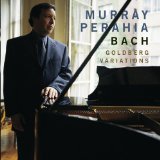
goldberg Goldberg Variations (2000), 1 CD

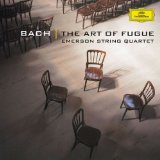
fugue The Art of Fugue (2003), 1 CD

More Johann Sebastian Bach music
More on Bach
Back to home page

Jean-Philipe Rameau: Notes and Commentary

“With Jean-Philipe Rameau, the golden age of French classical opera is at hand. Lully was the founder of the French opera, and in essence Rameau’s operas were an extension of Lully, and not a departure. This fact makes all the more ridiculous the bitter war raged against Rameau by the Lully faction, which came to regard Rameau as an arch enemy, the negation of what Lully stood for and accomplished.”—David Ewen, The Complete Book of Classical Music

“Top early French harpsichord genius, theorist, and opera specialist”—Phil GouldingClassical Music

Jean-Philippe Rameau  was one of the most important French composers and music theorists of the Baroque era. He replaced Jean-Baptiste Lully as the dominant composer of French opera and is also considered the leading French composer for the harpsichord of his time, alongside François Couperin.

Little is known about Rameau’s early years, and it was not until the 1720s that he won fame as a major theorist of music with his Treatise on Harmony (1722). He was almost 50 before he embarked on the operatic career on which his reputation chiefly rests. His debut, Hippolyte Et Aricie (1733), caused a great stir and was fiercely attacked for its revolutionary use of harmony by the supporters of Lully’s style of music.
Nevertheless, Rameau’s pre-eminence in the field of French opera was soon acknowledged, and he was later attacked as an “establishment” composer by those who favoured Italian opera during the controversy known as the Querelle des Bouffons in the 1750s. Rameau’s music had gone out of fashion by the end of the 18th century, and it was not until the 20th that serious efforts were made to revive it. Today, he enjoys renewed appreciation with performances and recordings of his music ever more frequent. He lived from September 25, 1683, to September 12, 1764.—Excerpted from Wikipedia 

Jean-Philipe Rameau: Complete Works

The following list is excerpted from Wikipedia.
RCT numbering refers to Rameau Catalogue Thématique established by Sylvie Bouissou and Denis Herlin.

Instrumental works

  • Pièces de clavecin. Trois livres. “Pieces for harpsichord”, 3 books, published 1706, 1724, 1726/27(?). 

    • RCT 1 – Premier livre de Clavecin (1706)
    • RCT 2 – Pièces de clavecin (1724) – Suite in E minor
    • RCT 3 – Pièces de clavecin (1724) – Suite in D major
    • RCT 4 – Pièces de clavecin (1724) – Menuet in C major
    • RCT 5 – Nouvelles suites de pièces de clavecin (1726/27) – Suite in A minor
    • RCT 6 – Nouvelles suites de pièces de clavecin (1726/27) – Suite in G minor
  • Pieces de Clavecin en Concerts Five albums of character pieces for harpsichord, violin and viol. (1741)
    • RCT 7 – Concert I in C minor
    • RCT 8 – Concert II in G major
    • RCT 9 – Concert III in A major
    • RCT 10 – Concert IV in B flat major
    • RCT 11 – Concert V in D minor
  • RCT 12 – La Dauphine for harpsichord. (1747)
  • RCT 12bis – Les petits marteaux for harpsichord.
  • Several orchestral dance suites extracted from his operas.

Motets

  • RCT 13 – Deus noster refugium (c.1713–1715)
  • RCT 14 – In convertendo (probably before 1720)
  • RCT 15 – Quam dilecta (c. 1713–1715)
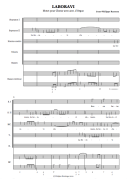
  • RCT 16 – Laboravi (published in the Traité de l’harmonie, 1722)

Canons

  • RCT 17 – Ah! loin de rire, pleurons (soprano, alto, tenor, bass) (pub. 1722)
  • RCT 18 – Avec du vin, endormons-nous (2 sopranos, Tenor) (1719)
  • RCT 18bis – L’épouse entre deux draps (3 sopranos) (formerly attributed to François Couperin)
  • RCT 18ter – Je suis un fou Madame (3 voix égales) (1720)
  • RCT 19 – Mes chers amis, quittez vos rouges bords (3 sopranos, 3 basses) (pub. 1780)
  • RCT 20 – Réveillez-vous, dormeur sans fin (5 voix égales) (pub. 1722)
  • RCT 20bis – Si tu ne prends garde à toi (2 sopranos, bass) (1720)

Songs

  • RCT 21.1 – L’amante préoccupée or A l’objet que j’adore (soprano, continuo) (1763)
  • RCT 21.2 – Lucas, pour se gausser de nous (soprano, bass, continuo) (pub. 1707)
  • RCT 21.3 – Non, non, le dieu qui sait aimer (soprano, continuo) (1763)
  • RCT 21.4 – Un Bourbon ouvre sa carrière or Un héros ouvre sa carrière (alto, continuo) (1751, air belonging to Acante et Céphise but censored before its first performance and never reintroduced in the work).

Cantatas

  • RCT 23 – Aquilon et Orithie (between 1715 and 1720)
  • RCT 28 – Thétis (same period)
  • RCT 26 – L’impatience (same period)
  • RCT 22 – Les amants trahis (around 1720)
  • RCT 27 – Orphée (same period)
  • RCT 24 – Le berger fidèle (1728)
  • RCT 25 – Cantate pour le jour de la Saint Louis (1740)

Operas and stage works

Main article: List of operas by Rameau

Tragédies en musique

  • RCT 43 – Hippolyte et Aricie (1733; revised 1742)
  • RCT 32 – Castor et Pollux (1737; revised 1754)
  • RCT 35 – Dardanus (1739; revised 1744 and 1760)
  • RCT 62 – Zoroastre (1749; revised 1756, with new music for Acts II, III & V)
  • RCT 31 – Les Boréades or Abaris (unperformed; in rehearsal 1763)

Opéra-ballets

  • RCT 44 – Les Indes galantes (1735; revised 1736)
  • RCT 41 – Les fêtes d’Hébé or les Talens Lyriques (1739)
  • RCT 39 – Les fêtes de Polymnie (1745)
  • RCT 59 – Le temple de la gloire (1745; revised 1746)
  • RCT 38 – Les fêtes de l’Hymen et de l’Amour or Les Dieux d’Egypte (1747)
  • RCT 58 – Les surprises de l’Amour (1748; revised 1757)

Pastorales héroïques

  • RCT 60 – Zaïs (1748)
  • RCT 49 – Naïs (1749)
  • RCT 29 – Acante et Céphise or La sympathie (1751)
  • RCT 34 – Daphnis et Eglé (1753)

Comédies lyriques

  • RCT 53 – Platée or Junon jalouse (1745)
  • RCT 51 – Les Paladins or Le Vénitien (1760)

Comédie-ballet

  • RCT 54 – La princesse de Navarre (1744)

Actes de ballet

  • RCT 33 – Les courses de Tempé (1734)
  • RCT 40 – Les fêtes de Ramire (1745)
  • RCT 52 – Pigmalion (1748)
  • RCT 42 – La guirlande or Les fleurs enchantées (1751)
  • RCT 57 – Les sibarites or Sibaris (1753)
  • RCT 48 – La naissance d’Osiris or La Fête Pamilie (1754)
  • RCT 30 – Anacréon (1754)
  • RCT 58 – Anacréon (completely different work from the above, 1757, 3rd Entrée of Les surprises de l’Amour)
  • RCT 61 – Zéphire (date unknown)
  • RCT 50 – Nélée et Myrthis (date unknown)
  • RCT 45 – Io (unfinished, date unknown)

Lost works

Main article: Lost operas by Jean-Philippe Rameau
  • RCT 56 – Samson (tragédie en musique) (partially performed in 1734)
  • RCT 46 – Linus (tragédie en musique) (1752, score stolen after a rehearsal)
  • RCT 47 – Lysis et Délie (pastorale) (scheduled on November 6, 1753)

Incidental music for opéras comiques
Music mostly lost.

  • RCT 36 – L’endriague (in 3 acts, 1723)
  • RCT 37 – L’enrôlement d’Arlequin (in 1 act, 1726)
  • RCT 55 – La robe de dissension or Le faux prodige (in 2 acts, 1726)
  • RCT 55bis – La rose or Les jardins de l’Hymen (in a prologue and 1 act, 1744)

Jean-Philipe Rameau Books and Music
More on Rameau
Back to home page