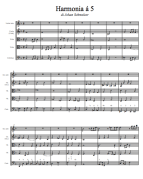
Johann Schmelzer: the Most Underrated Baroque Composer?

Heinrich Ignaz Franz Biber is widely considered one of the most important composers for the violin in the Baroque era, with his innovations in tuning and fingering. It’s hard not to listen to his work without appreciating his virtuosity. But his Austrian contemporary, SchmelzerJohann Heinrich Schmelzer, with whom some scholars think Biber studied, certainly gives him a run for the money. And yet Schmelzer is hardly known even among Baroque music aficianados. It’s a mystery as mysterious as, well, Biber’s “Mystery Sonata.”
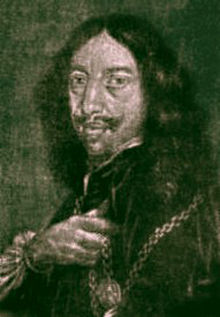
Before Biber came to prominence, Schmelzer helped establish the violin sonata outside of Italy. Arguably his most important work is the “Sonatae unarum fidium” of 1664. It was the first collection of sonatas for violin and basso continuo published outside of Italy and showcases some of Schmelzer’s finest work. The English violinist John Holloway has a lively and fresh take on the collection in a 2000 recording. The CD also contains an almost jazzy version of “Chiacona in A” by Antonio Bertali.

Holloway

Some random impressions of Schmelzer’s music pulled from Amazon: 

“Some of the most lyrical and beautiful writing that I have come across.  You can hear through Schmelzer’s music the basis on which much of Biber is founded.”—Anonymous

“Most melodious violin sonatas I have ever heard.”—Y. Dai “abubblingegg”

“Beautiful, lyrical, haunting,”—Karen G.

violin-1664

“Schmelzer is revealed as a major composer, his violin sonatas exquisite gems.”—Victor Rodriguez Viera

“Intricate, somewhat experimental, and highly emotive expression.”—Alan Lekan

“Great virtuosity, with hauntingly sweet, slow passages.”—Anonymous

“Picks up where Biber left off, giving the sonata a fun and exhilerating Turkish concept.”—dolcissima2780

“Pulls you into the smooth waves of an ocean. . . . Exciting, fresh, poised.”—Dirkk

Some suggested listening:

“Sonata Quarta in D Major from Sonatae Unarum Fidium”

“Sonata III in G minor”

“Polish Bagpipes”

“Sonata IV a sei”
Back to Point Against Point
Back to home page

Camilla de Rossi: Selected Recordings

Il Figliuol Prodigo

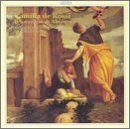
Il Sacrifizio di Abramo 6/6

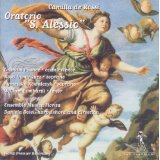
Oratorio S. Alessio

Camilla de Rossi Books and Music
More on de Rossi
Back to home page

Camilla de Rossi: Notes and Commentary

Camilla de Rossi was an Italian composer of Roman citizenship. She composed four oratorios for solo voices and orchestra, all of which were commissioned by Emperor Joseph I of Austria and were performed in the Imperial Chapel in Vienna. Rossi’s surviving works demonstrate a knowledge of stringed instruments and, as Barbara Garvey Jackson describes, “a keen interest in tone color.” Her oratorios are for solo voices; none of her works use choruses. She calls for various instruments (chalumeaux, archlute, trumpets, oboe) with string orchestra (including continuo). Her oratorio, Il Sacrifizio di Abramo, suggests a knowledge of instruments, strings in particular. But the piece also calls for two chalumeaux, an instrument first heard in Vienna in 1707, one year before her oratorio was performed for the first time in 1708. Her cantata Frá Dori e Fileno is for strings and two soloists.—Excerpted from Wikipedia

Camilla de Rossi Books and Music
More on de Rossi
Back to home page

Camilla de Rossi: Books and Music

Selected Books

Companion to Baroque Music
Oxford Univ. Press, 1998
Julie Anne Sadie (ed.)
$56.42 on Amazon

Rossi4

“A volume that genuinely deserves the epithet ‘indispensable.'”—

Selected Music

Rossi1 Oratorio “S. Alessio” (2002), 1 CD

Rossi2 Il Sacrifizio di Abramo (2000), 1 CD

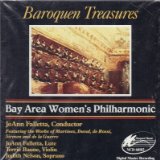
Rossi3 Baroquen Treasures (1990), 1 CD

More Camilla de Rossi Music

More on de Rossi
Back to home page

Camilla de Rossi: c. 1670-c. 1710

Rossi

Not a biographical image

Selected Recordings

Il Figliuol Prodigo

Il Sacrifizio di Abramo 6/6

Oratorio S. Alessio

Selected Sheet Music

Il Sacrifizio di Abramo
Rossi-music
Source: SheetMusicPlus (for purchase)

Showcase Piece

Il sacrifizio di Abramo

Notes and Commentary

Camilla de Rossi was an Italian composer of Roman citizenship. She composed four oratorios for solo voices and orchestra, all of which were commissioned by Emperor Joseph I of Austria and were performed in the Imperial Chapel in Vienna. Rossi’s surviving works demonstrate a knowledge of stringed instruments and, as Barbara Garvey Jackson describes, “a keen interest in tone color.” Her oratorios are for solo voices; none of her works use choruses. She calls for various instruments (chalumeaux, archlute, trumpets, oboe) with string orchestra (including continuo). Her oratorio, Il Sacrifizio di Abramo, suggests a knowledge of instruments, strings in particular. But the piece also calls for two chalumeaux, an instrument first heard in Vienna in 1707, one year before her oratorio was performed for the first time in 1708. Her cantata Frá Dori e Fileno is for strings and two soloists.—Excerpted from Wikipedia

Books and Music

Selected Books

Companion to Baroque Music
Oxford Univ. Press, 1998
Julie Anne Sadie (ed.)
$56.42 on Amazon

Rossi4

“A volume that genuinely deserves the epithet ‘indispensable.'”—

Selected Music

Rossi1 Oratorio “S. Alessio” (2002), 1 CD

Rossi2 Il Sacrifizio di Abramo (2000), 1 CD

Rossi3 Baroquen Treasures (1990), 1 CD

More Camilla de Rossi Music

Complete Works

Il sacrifizio di Abramo
Sant’Alessio
Il figliuol prodigo
Frà Dori, e Fileno
Oratorios, for solo vv, orch
Santa Beatrice d’Este

Other women Baroque composers

Back to home page