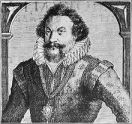
Marc-Antoine Charpentier, 1643-1704

MA_Charpentier_I

Selected Recordings</h3?

Sonate à huit

Messe de Minuit pour Nöel

Orphée descendant aux enfers

Selected Sheet Music

Actéon

Acteon

Source: IMSLP.org

Showcase Piece

Sans frayeur dans ce bois

Notes and Commentary

“Neglected for centuries, Marc-Antoine Charpentier has emerged as one of the greatest French composers of sacred music in the 17th century, arguably superior to his more successful contemporary, Jean-Baptiste Lully. His music shows more diversity than Lully’s ranging—often within the same work—from the stately to the intimate. The key to this achievement was his adoption of a style based on the new Italian concerto, which employed dramatically telling contrasts between different groupings of voices throughout a work. Moreover, Charpentier softened the predominantky formal and grandiose style of French music, intoducing a more Italianate sensuousness and a greater sensitivity to word-setting.”—The Rough Guide to Classical Music (2001, 3rd ed.)

Charpentier was exceptionally prolific and versatile, producing compositions of the highest quality in several genres. His mastery in writing sacred vocal music, above all, was recognized and hailed by his contemporaries. His compositions include oratorios, masses, operas, and numerous smaller pieces that are difficult to categorize. Many of his smaller works for one or two voices and instruments resemble the Italian cantata of the time, and share most features except for the name: Charpentier calls them air sérieux or air à boire if they are in French, but cantata if they are in Italian.

In addition to his compositions, Charpentier was a music theorist who wrote several treatises on composition, including one called Règles de Composition par Monsieur Charpentier and Augmentations tirées de l’original de Mr le duc de Chartres. He lived from 1643 to February 24, 1704.—Excerpted from Wikipedia

Books and Music

Selected Books

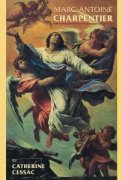
Marc-Antoine Charpentier
Amadeus Press, 2003
Catherine Cessac
$30.55 on Amazon

Cessac

“A wonderful text. It gives a sense of the man, from the very limited sources available. It gives a careful discussion of most of his compositions, by genre. It is beautifully and poignantly written. A Charpentier devotee since 1973, I have read and reread many parts of the book since it was published in 1995. It is a must for Charpentier admirers as well as those interested in French baroque musique more broadly.”—Trond Petersen

New Perspectives on Marc-Antoine Charpentier
Ashgate, 2010
Shirley Thompson
$128.20 on Amazon

Thompson

Selected Music

Orphee La Descente d’Orphee aux Enfers (2005), 1 CD

Grace Grace Et Grandeurs De La Vierge (1999), 1 CD

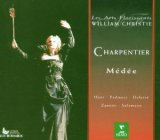
Medee Médée (1995) 3-CD box set

More Marc-Antoine Charpentier music

Complete Works

Actéon
Antiennes O de l’Avent
Ave Regina

Beatus vir

Circé
Conceptio tuo Dei genitrix virgo
Concert pour 4 parties de violes
Cur mundus militat

David et Jonathas
Dialogus inter Magdalenam et Jesum
Domine salvum fac regem
Domine salvum
Domine salvum
Domine salvum

Egredimini filiæ Sion
Élévation au St Sacrement
Euge serve bone
Exaudiat
Extremum Dei judicium

Filius prodigus

3 Hymnes à saint Nicaise

In honorem Sancti Xaverij canticum
In nativitatem Domini canticum

Laetatus sum
Lauda Jerusalem
Lauda Sion

Magnificat
Le malade imaginaire
Médée
Méditations pour le Carême
Messe à 8 voix et 8 violons et flûtes
Messe à quatre choeurs
Messe de minuit pour noël
Miserere

Nisi Dominus
Noël pour les instruments
Noël sur les instruments

O amor, o bonitas
O coelestis Jerusalem
O filii
O Salutaris
O vos amici mei
Offerte
Ouverture et intermèdes

Panis angelicus voce sola
Peccavi Domine
Peccavi Domine, peccavi multum
Les plaisirs de Versailles
Pour Saint Augustin mourant
Pour Ste. Anne

Sur la naissance de notre Seigneur Jésus Christ
Symphonies pour un reposoir

Te Deum
Tristis est anima mea

Veni creator Spiritus
Victimae paschali laudes

Source: IMSLP.org

Back to home page

The World’s Most Baroque Rock Band

It’s always interesting to see how musical genres cross paths. I like the way Albinoni’s Adagio in G was interpreted for electric guitar in Oliver Stone’s movie on The Doors, for example. Of course, these days, cross-genre interpretations often go the other way, putting a Baroque or other classical music spin on rock music, like the way the Gregorian Chant people do with Metallica’s “Unforgiven.”

Kings

One rock band that gets the Baroque treatment a lot is Rush, which was just inducted into the Rock and Roll Hall of Fame. Most people probably know the band from its radio hits like “Tom Sawyer” and “The Spirit of Radio,” but the group’s songwriting is even more interesting than those songs suggest. Indeed, for its first 10 years, many of its pieces were these long conceptual compositions that spun out moralistic, fable-like story lines.

In any case, academics and critics have tended to put a Baroque label on the band’s music, not because it sounds Baroque but because its “artifactual” as opposed to natural. That is to say, while a lot of rock is considered cool because it has a naturalness or spontaneity to it, Rush’s music is considered square or nerdy because there’s little that’s natural about it. Rather, it’s highly composed, like an artifact, and takes a lot of practice to play, and there’s very little room for improvising.

Rush: YYZ

Rush: Red Barchetta

To be sure, the band’s cool factor has increased quite a bit in recent years. For much of its 40-year history, it was considered a cult band for nerds, not worthy of serious treatment by mainstream rock critics, but in the last 10 years or so, with all those nerds now grown up and heading up tech companies, producing TV shows, and making laws (Rand Paul of Kentucky and John Kasich of Ohio are two examples),the band has become cool even as its three members have become senior citizens. (They’re all about 60 now.)

baroque

What’s interesting from a Baroque music standpoint is that no fewer than half a dozen tribute albums of Rush’s music have been released in the Baroque style. To be perfectly honest with you, the tributes are a mixed bag. Part of the problem is that several of them are arranged and produced by the same person, so there’s a bland uniformity to them. But the bigger issue is that some of the pieces just aren’t arranged that well and the production quality could be better. (The two recordings above are pretty good.)

The one album that is arranged in an interesting way and has high production values is a tribute album by the Royal Philharmonic Orchestra in London, but that album puts a classical, even romantic, spin on the music, not a Baroque spin.

Having said all this, it’s still enjoyable to listen to these many Baroque versions of Rush, and it serves as a reminder that music transcends time periods and we’re better off if we separate music from labels that try to freeze music in time. Yes, Baroque music is “ancient” music, but each generation discovers the music anew and, to these new ears, it’s as fresh, dynamic, and important as it was when it was first written. For all their faults, these Baroque-styled Rush tributes at least have the virtue of showing that old and new music is interchangeable. To the extent they help us to stop talking about music in time periods, they’ve done something important.—Nabob, On Baroque

exit-stage-right-2002 2002

baroque-tribute-2004 2004

string-quartet-tribute-2005 2005

piano-tribute-to-ush-2006 2006

through-the-prism-2007 2007

royal 2012

Back to Point Against Point
Back to home page


Samuel Scheidt: Notes and Commentary

Samuel Scheidt was a German composer, organist, and teacher of the early Baroque era. He studied with Jan Sweelinck, the distinguished Dutch composer, whose work had a clear influence on Scheidt’s style. Scheidt was the first internationally significant German composer for the organ, and represents the flowering of the new north German style, which occurred largely as a result of the Protestant Reformation. In south Germany and some other countries of Europe, the spiritual and artistic influence of Rome remained strong, so most music continued to be derivative of Italian models. Cut off from Rome, musicians in the newly Protestant areas readily developed styles that were much different from those of their neighbors.

Scheidt’s music is in two principal categories: instrumental music, including a large amount of keyboard music, mostly for organ; and sacred vocal music, some of which is a cappella and some of which uses a basso continuo or other instrumental accompaniment. In his numerous chorale preludes, Scheidt often used a “patterned variation” technique, in which each phrase of the chorale uses a different rhythmic motive, and each variation is more elaborate than the previous one, until the climax of the composition is reached. In addition to his chorale preludes, he wrote numerous fugues, suites of dances (which were often in a cyclic form, sharing a common ground bass) and fantasias. He lived from November 1587 to March 24, 1654.—Excerpted from Wikipedia

Samuel Scheidt Books and Music
More on Scheidt
Back to home page

Samuel Scheidt: Complete Works

Cantilena anglica de Fortuna
Canzon ‘Bergamasca’
Canzon ‘Cornetto’
Canzon super ‘O Nachbar Roland’
Canzon super Cantionem Belgicam
Canzon super Cantionem Gallicam
Canzon super Intradam Aethiopicam

Deutsches Magnificat

Galliard Battaglia
Gelobet seist Du, Jesus Christ

In dulci jubilo

Komm, heiliger Geist, Herre Gott

Nun komm, der Heiden Heiland

Resonet in Laudibus

Wohlan, so kommet her, ihr Frommen

Samuel Scheidt Books and Music
More on Scheidt
Back to home page

Samuel Scheidt: Books and Music

Selected Books

The Registration of Baroque Organ Music
Indiana Univ. Press, 1999
Barbara Owen
$23.40 on Amazon

Scheidt4

“In this book, Barbara Owen has created a rich resource of historical information coupled with strategies for interpreting that information on today’s instruments.”—Journal of the American Musical Instrument Society

Selected Music

Scheidt-1 Great Sacred Concertos (2007), 1 CD

Scheidt2 Concertuum Sacorum (2007), 2-CD set

Scheidt3 Tabulatura Nova I (2003), 2-CD set

More Samuel Scheidt music

More on Scheidt
Back to home page

Samuel Scheidt, 1587-1654

Scheidt

Selected Recordings

Wie schön leuchtet der Morgenstern

O Nachbar Roland

Warum betrübst du dich, mein Herz

Selected Sheet Music

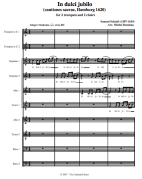
In dulci jubilo

Jubilo

Source: IMSLP.org

Showcase Piece

Ach, du feiner reiter

Notes and Commentary

Samuel Scheidt was a German composer, organist, and teacher of the early Baroque era. He studied with Jan Sweelinck, the distinguished Dutch composer, whose work had a clear influence on Scheidt’s style. Scheidt was the first internationally significant German composer for the organ, and represents the flowering of the new north German style, which occurred largely as a result of the Protestant Reformation. In south Germany and some other countries of Europe, the spiritual and artistic influence of Rome remained strong, so most music continued to be derivative of Italian models. Cut off from Rome, musicians in the newly Protestant areas readily developed styles that were much different from those of their neighbors.

Scheidt’s music is in two principal categories: instrumental music, including a large amount of keyboard music, mostly for organ; and sacred vocal music, some of which is a cappella and some of which uses a basso continuo or other instrumental accompaniment. In his numerous chorale preludes, Scheidt often used a “patterned variation” technique, in which each phrase of the chorale uses a different rhythmic motive, and each variation is more elaborate than the previous one, until the climax of the composition is reached. In addition to his chorale preludes, he wrote numerous fugues, suites of dances (which were often in a cyclic form, sharing a common ground bass) and fantasias. He lived from November 1587 to March 24, 1654.—Excerpted from Wikipedia

Books and Music

Selected Books

The Registration of Baroque Organ Music
Indiana Univ. Press, 1999
Barbara Owen
$23.40 on Amazon

Scheidt4

“In this book, Barbara Owen has created a rich resource of historical information coupled with strategies for interpreting that information on today’s instruments.”—Journal of the American Musical Instrument Society

Selected Music

Scheidt-1 Great Sacred Concertos (2007), 1 CD

Scheidt2 Concertuum Sacorum (2007), 2-CD set

Scheidt3 Tabulatura Nova I (2003), 2-CD set

More Samuel Scheidt music

Complete Works

Cantilena anglica de Fortuna
Canzon ‘Bergamasca’
Canzon ‘Cornetto’
Canzon super ‘O Nachbar Roland’
Canzon super Cantionem Belgicam
Canzon super Cantionem Gallicam
Canzon super Intradam Aethiopicam

Deutsches Magnificat

Galliard Battaglia
Gelobet seist Du, Jesus Christ

In dulci jubilo

Komm, heiliger Geist, Herre Gott

Nun komm, der Heiden Heiland

Resonet in Laudibus

Wohlan, so kommet her, ihr Frommen

Back to home page