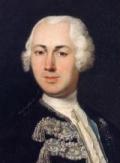
Johann Joachim Quantz, 1697-1773

Quantz

Selected Recordings

Con Spirito

Vivace

Larghetto

Selected Sheet Music

Allegro in D major
Quantz2

Source: IMSLP.org

Showcase Piece

Concerto in G major

Notes and Commentary

Johann Joachim Quantz was a German flutist, flute maker, and composer. He began his musical studies as a child with his uncle’s son-in-law, later going to Dresden and Vienna. He studied composition and pored over scores of the masters to adopt their style. During his tenure in Dresden, he abandoned the violin and the oboe for the flute and studied with Pierre Gabriel Buffardin. It was during this time as musician to Frederick Augustus II of Poland that he began to perform more on the instrument.

He gradually became known as the finest flautist in Europe, and toured France and England. He became a flute teacher, flute maker, and composer to Frederick II of Prussia (Frederick the Great) in 1740. He was an innovator in flute design, adding keys to the instrument to help with intonation. He often criticized Vivaldi for being too wild when he played.

Although Quantz wrote many pieces of music, mainly for the flute (including around 300 flute concertos and more than 200 sonatas), he is best known today as the author of Versuch einer Anweisung die Flöte traversiere zu spielen (1752) (“On Playing the Flute”), a treatise on traverso flute playing. It is a valuable source of reference regarding performance practice and flute technique in the 18th century. He lived from January 30, 1697, to July 12, 1773.—Excerpted from Wikipedia

Books and Music

Selected Books

On Playing the Flute
Northeastern (2nd. ed.), 2001
Edward Reilly, trans.
$31.50 on Amazon

Quantz-flute

“Articulation, aesthetics, phrasing, ornamentation, character, tempo, practicing, accompaniment, style, notation, how to give a concert, how to breathe when you’re nervous, how to play in an orchestra, … it’s all here. This book from 1752 covers the art of being a musician, not just a flute player.”—Bradley Lehman on Amazon

Selected Music
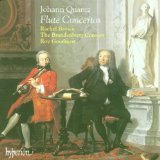
Quantz4 Flute Concertos (1997), 1 CD

Quantz5 Flute Sonatas (1997), 1 CD

Quantz6 King’s Flute Master (2012), 1 CD

More Johann Joachim Quantz music

Complete Works

Quant’s compositions number in the many hundreds. Access the complete list.

Selected flute sonatas
QV 1: 8 – Flute Sonata No. 312 in C major
QV 1: 9 – Flute Sonata No. 95 in C major
QV 1: 10 – Flute Sonata No. 332 in C major
QV 1: 11 – Flute Sonata No. 319 in C major
QV 1: 12 – Flute Sonata No. 268 in C major
QV 1: 13 – Flute Sonata No. 298 in C major
QV 1: 14 – Flute Sonata No. 305 in C minor
Selected trio sonatas
QV 2: 1 – Sonata for flute, violin (flute) & continuo Op. 3 No. 3 in C major
QV 2: 2 – Sonata for flute, recorder & continuo in C major
QV 2: 3 – Sonata for 2 flutes & continuo in C minor
QV 2: 4 – Sonata for flute, viola d’amore & continuo in C minor
QV 2: 5 – Sonata for flute, oboe & continuo in C minor
QV 2: 6 – Sonata for 2 flutes & continuo Op. 3 No. 2 in D major
QV 2: 7 – Sonata for 2 flutes & continuo in D major
QV 2: 8 – Sonata for 2 flutes & continuo in D major
QV 2: 9 – Sonata for flute, violin & continuo in D major
QV 2:10 – Sonata for flute, violin & continuo Op. 3 No. 6 in D major
Flute concertos
QV 4:1 – Concerto No. 14 for flute in D major
QV 4:2 – Concerto No. 25 for flute in E flat major
QV 4:3 – Concerto No. 13 for flute in E minor
QV 4:4 – Concerto No. 11 for flute in G major
QV 4:5 – Concerto No. 69 for flute in G major
QV 4:6 – Concerto No. 12 for flute in A major
QV 4:7 – Concerto No. 102 for flute in B minor
Other orchestral works
QV 6:1 – Concerto No. 60 for 2 flutes in D major
QV 6:2 – Concerto for flute & violin in D major
QV 6:3 – Concerto No. 59 for flute, oboe and violin in E minor
QV 6:4 – Pastorale in G major
QV 6:5 – Concerto No. 89 for 2 flutes in G major
Arias and songs
QV 7: 1 – Aria for soprano: Sembra che il ruscelletto in D major
QV 7: 2 – Aria for soprano: Padre perdona in E flat major
QV 7: 3 – Lied: Die Wahl einer Geliebten in C major
QV 7: 4 – Lied: Die geliebte Verzweiflung in E flat major
QV 7: 5 – Lied: Die Vergötterung in G major
QV 7: 6 – Lied: An eine kleine Schöne in G major
QV 7: 7 – Lied: Das Pantheon in B flat major
Access complete list.

Back to home page

Other European Baroque Composers

Jan Pieterszoon Sweelinck, 1562-1621

Jan_Pieterszoon_Sweelinck
Selected Recordings
Selected Sheet Music
Showcase Piece
Notes and Commentary
Books and Music
Complete Works

Leonora Duarte, 1610-1678

Jan Dismas Zelenka, 1679-1745

zelenka1
Selected Recordings
Selected Sheet Music
Showcase Piece
Notes and Commentary
Books and Music
Complete Works

Carlos Seixas, 1704-1742

Seixas1
Selected Recordings
Selected Sheet Music
Showcase Piece
Notes and Commentary
Books and Music
Complete Works

* * *

English Baroque Composers
French Baroque Composers
German Baroque Composers
Italian Baroque Composers
Back to home page

Jan Dismas Zelenka: Notes and Commentary

Jan Dismas Zelenka, also known as Johann Dismas Zelenka, was the most important Czech Baroque composer. His music is admired for its harmonic invention and counterpoint.

Zelenka’s pieces are characterized by very daring compositional structure, with a highly spirited harmonic invention and perfection of the art of counterpoint. His works are often virtuosic and difficult to perform, but always fresh and surprising, with sudden turns of harmony. His writing for bass instruments in particular is far more demanding than that of other composers of his era.—Excerpted from Wikipedia

Jan Dismas Zelenka Books and Music
More on Zelenka
Back to home page

Jan Dismas Zelenka: Complete Works

Sacred music
The most appreciated of Zelenka’s sacred works are probably his masses, above all his Missa Purificationis (this is the last mass to include brass instruments) and his final five pieces, ZWV 17–21, called “High Mass” compositions, written from 1736 until 1741, considered as Zelenka’s compositional peak. The last three were also called “Missae ultimae” (Last Masses). The following list contains only the most important sacred works, that have been sufficiently explored to date.

Masses and requiems

  • Missa Sancti Spiritus
  • Missa Sancti Josephi
  • Missa Purificationis Beatae Virginis Mariae
  • Missa Sanctissimae Trinitatis
  • Missa Votiva
  • Missa Dei Patris
  • Missa Dei Filii
  • Missa Omnium Sanctorum
  • Requiem in C Minor
  • Requiem in D Minor

Oratoria

  • Il Serpente di Bronzo
  • Gesù al Calvario
  • I penitenti al sepolchro del Redentore

Litanies

  • Litaniae de Venerabili Sacramento
  • Litaniae Lauretanae
  • Litaniae Lauretanae “Consolatrix afflictorum”
  • Litaniae Lauretanae “Salus infirmorum”
  • Litaniae Omnium Sanctorum
  • Litaniae Xaverianae

Psalms and hymn settings

  • Dixit Dominus
  • Confitebor tibi Domine
  • In exitu Israel
  • Lauda Jerusalem
  • Laudate pueri
  • Ave maris stella in D Minor
  • Chvalte Boha silného
  • Ave Regina coelorum
  • Regina coeli
  • Salve Regina

Other liturgical and spiritual works

  • Te Deum in D Major (2 settings)
  • Magnificat in C Major and D Major
  • Miserere in D Minor and C minor
  • Lamentationes Ieremiae Prophetae
  • XXVII Responsoria pro hebdomada

Secular works
Zelenka composed only a few extensive vocal-instrumental pieces on secular themes, but one of them – Sub olea pacis et palma virtutisMelodrama de St. Wenceslao (1723) – not only represents one of the high points in baroque music, but transcends it, as with many others of Zelenka’s works. It is a monumental opus with aspects of melodrama, oratory and contemporary opera, composed for the coronation of Charles VI by the Czech king and celebrating the memory of the greatest Czech saint and patron of Bohemia, prince St. Wenceslaus (Václav), one of the founders of the Czech state.

Vocal-instrumental works

  • Sub olea pacis et palma virtutis (conspicua orbi regia Bohemiae Corona – Melodrama de Sancto Wenceslao)
  • Il Diamante

Instrumental works

  • Trio or Quartet Sonatas Nos. 1–6
  • Capriccios Nos. 1–5
  • Concerto à 8 Concertanti
  • Hipocondrie à 7 Concertanti
  • Overture à 7 Concertanti
  • Simphonie à 8 Concertanti—Excerpted from Wikipedia

Jan Dismas Zelenka Books and Music
More on Zelenka
Back to home page

Jan Dismas Zelenka: Books and Music

Selected Books

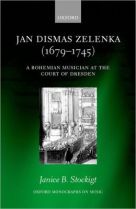
Jan Dismas Zelenka: A Bohemian Musician at the Court of Dresden
Oxford Univ. Press, 2001
Janice B. Stockigt
$166.70 on Amazon

zelenka6

“Stockigt’s lively discussion of Zelenka’s music is illuminating and wide-ranging. Her judgement is fair, her conclusions well-balanced and supported by generous musical illustration.”—BBC Music Magazine on Amazon

Selected Music

zelenka3 Trio Sonatas (1999), 2-CD set

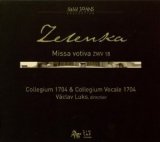
zelenka4 Missa Votiva Zwv.18 (2008), 1 CD

zelenka5 Orchestral Works (2003), 5-CD set

More Jan Dismas Zelenka music

More on Zelenka
Back to home page

Jan Dismas Zelenka, 1679-1745

zelenka1

Selected Recordings

Symphonia in A minor

Capriccio II

Il Diamante

Selected Sheet Music

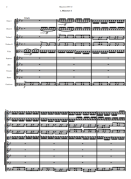
Miserere
zelenka2

Source: IMSLP.org

Showcase Piece

Miserere I

Notes and Commentary

Jan Dismas Zelenka, also known as Johann Dismas Zelenka, was the most important Czech Baroque composer. His music is admired for its harmonic invention and counterpoint.

Zelenka’s pieces are characterized by very daring compositional structure, with a highly spirited harmonic invention and perfection of the art of counterpoint. His works are often virtuosic and difficult to perform, but always fresh and surprising, with sudden turns of harmony. His writing for bass instruments in particular is far more demanding than that of other composers of his era.—Excerpted from Wikipedia

Books and Music

Selected Books

Jan Dismas Zelenka: A Bohemian Musician at the Court of Dresden
Oxford Univ. Press, 2001
Janice B. Stockigt
$166.70 on Amazon

zelenka6

“Stockigt’s lively discussion of Zelenka’s music is illuminating and wide-ranging. Her judgement is fair, her conclusions well-balanced and supported by generous musical illustration.”—BBC Music Magazine on Amazon

Selected Music

zelenka3 Trio Sonatas (1999), 2-CD set

zelenka4 Missa Votiva Zwv.18 (2008), 1 CD

zelenka5 Orchestral Works (2003), 5-CD set

More Jan Dismas Zelenka music

Complete Works

Sacred music
The most appreciated of Zelenka’s sacred works are probably his masses, above all his Missa Purificationis (this is the last mass to include brass instruments) and his final five pieces, ZWV 17–21, called “High Mass” compositions, written from 1736 until 1741, considered as Zelenka’s compositional peak. The last three were also called “Missae ultimae” (Last Masses). The following list contains only the most important sacred works, that have been sufficiently explored to date.

Masses and requiems

  • Missa Sancti Spiritus
  • Missa Sancti Josephi
  • Missa Purificationis Beatae Virginis Mariae
  • Missa Sanctissimae Trinitatis
  • Missa Votiva
  • Missa Dei Patris
  • Missa Dei Filii
  • Missa Omnium Sanctorum
  • Requiem in C Minor
  • Requiem in D Minor

Oratoria

  • Il Serpente di Bronzo
  • Gesù al Calvario
  • I penitenti al sepolchro del Redentore

Litanies

  • Litaniae de Venerabili Sacramento
  • Litaniae Lauretanae
  • Litaniae Lauretanae “Consolatrix afflictorum”
  • Litaniae Lauretanae “Salus infirmorum”
  • Litaniae Omnium Sanctorum
  • Litaniae Xaverianae

Psalms and hymn settings

  • Dixit Dominus
  • Confitebor tibi Domine
  • In exitu Israel
  • Lauda Jerusalem
  • Laudate pueri
  • Ave maris stella in D Minor
  • Chvalte Boha silného
  • Ave Regina coelorum
  • Regina coeli
  • Salve Regina

Other liturgical and spiritual works

  • Te Deum in D Major (2 settings)
  • Magnificat in C Major and D Major
  • Miserere in D Minor and C minor
  • Lamentationes Ieremiae Prophetae
  • XXVII Responsoria pro hebdomada

Secular works
Zelenka composed only a few extensive vocal-instrumental pieces on secular themes, but one of them – Sub olea pacis et palma virtutisMelodrama de St. Wenceslao (1723) – not only represents one of the high points in baroque music, but transcends it, as with many others of Zelenka’s works. It is a monumental opus with aspects of melodrama, oratory and contemporary opera, composed for the coronation of Charles VI by the Czech king and celebrating the memory of the greatest Czech saint and patron of Bohemia, prince St. Wenceslaus (Václav), one of the founders of the Czech state.

Vocal-instrumental works

  • Sub olea pacis et palma virtutis (conspicua orbi regia Bohemiae Corona – Melodrama de Sancto Wenceslao)
  • Il Diamante

Instrumental works

  • Trio or Quartet Sonatas Nos. 1–6
  • Capriccios Nos. 1–5
  • Concerto à 8 Concertanti
  • Hipocondrie à 7 Concertanti
  • Overture à 7 Concertanti
  • Simphonie à 8 Concertanti—Excerpted from Wikipedia

Back to home page

Baldassare Galuppi: Notes and Commentary

Baldassare Galuppi was an Italian composer who achieved international success, spending periods of his career in London, Saint Petersburg, and his home, Venice. In his early career he made a modest success in opera seria, but from the 1740s, together with the playwright and librettist Carlo Goldoni, he became famous throughout Europe for his comic operas in the new dramma giocoso style. To the succeeding generation of composers he was known as “the father of comic opera.” Some of his mature opere serie were also widely popular.

Throughout his career Galuppi held official positions with charitable and religious institutions in Venice, the most prestigious of which was head of music at the Doge’s chapel, St Mark’s Basilica. In these various capacities he composed a large amount of religious music. He was also highly regarded as a virtuoso performer on and composer for keyboard instruments.

After Galuppi’s death his music was largely forgotten, but his name was brought back to public notice by the English poet Robert Browning’s 1855 poem “A Toccata of Galuppi’s,” but this did not restore the composer’s work to the general repertoire. Some of Galuppi’s pieces were occasionally performed in the 200 years after his death, but it was not until the last years of the 20th century that his works were extensively revived in live performance and on record. He lived from October 18, 1706, to January 3, 1785.—Excerpted from Wikipedia

Baldassare Galuppi Books and Music
More on Galuppi
Back to home page