Cello Sonata in A minor, Op.19
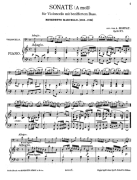
Source: IMSLP.org
Benedetto Marcello books and music
More on Marcello
Back to home page
Cello Sonata in A minor, Op.19
Source: IMSLP.org
Benedetto Marcello books and music
More on Marcello
Back to home page
Le quattro stagioni, Sinfonia for strings
Benedetto Marcello books and music
More on Marcello
Back to home page
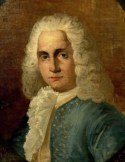
Benedetto Giacomo Marcello was an Italian composer, writer, advocate, magistrate, and teacher. Born in Venice, he was a member of a noble family and his compositions are frequently referred to as Patrizio Veneto. He was a younger contemporary of Antonio Vivaldi in Venice, and his instrumental music exhibits a Vivaldian flavor.
Benedetto Marcello composed church music, oratorios, hundreds of solo cantatas, duets, sonatas, concertos, and sinfonias. He was a younger contemporary of Antonio Vivaldi in Venice, and his instrumental music has a Vivaldian flavor. His music is “characterized by imagination and a fine technique and includes both counterpoint and progressive, galant features” (Grove, 1994).
He enjoyed some fame during his life and to a great extent he’s remembered today for his Estro poetico-armonico (Venice, 1724–1727), a musical setting for voices, figured bass (a continuo notation), and occasional solo instruments, of the first fifty Psalms, as paraphrased in Italian by his friend G. Giustiniani. They were much admired by Charles Avison, who with John Garth brought out an edition with English words (London, 1757). Although Marcello wrote an opera called La Fede riconosciuta and produced it in Vicenza in 1702, he had little sympathy with this form of composition.
With the poet Antonio Conti he wrote a series of experimental long cantatas: a duet, Il Timoteo, then five monologues, Cantone, Lucrezia, Andromaca, Arianna abandonnata, and finally Cassandra.
Marcello vented his opinions on the state of musical drama at the time in the satirical pamphlet Il teatro alla moda, published anonymously in Venice in 1720. This little work, which was frequently reprinted, is amusing and a valuable contribution to the history of opera. He lived from July 31 or August 1, 1686, to July 24, 1739.—Excerpted from Wikipedia
Benedetto Marcello books and music
More on Marcello
Back to home page
Benedetto Marcello books and music
More on Marcello
Back to home page
Selected Books
Il Teatro Alla Moda (Italian Edition)
Amazon Digital Services, 2012
Benedetto Marcello
$0.99 on Kindle
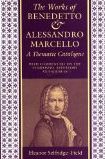
The Works of Benedetto and Alessandro Marcello
Oxford University Press, 1990
Eleanor Selfridge-Field
$195 on Amazon

Selected Music
 Requiem in the Venetian Manner (1999)
 12 Concerti Grossi, Op. 1 (2000)
 Sonatas Op. 2 (2006)
Sonata in E minor for Violoncello & Continuo
Concerto Grosso No.1
Concerto Grosso No.2
Cello Sonata in A minor, Op.19
Source: IMSLP.org
Le quattro stagioni, Sinfonia for strings
Benedetto Giacomo Marcello was an Italian composer, writer, advocate, magistrate, and teacher. Born in Venice, he was a member of a noble family and his compositions are frequently referred to as Patrizio Veneto. He was a younger contemporary of Antonio Vivaldi in Venice, and his instrumental music exhibits a Vivaldian flavor.
Benedetto Marcello composed church music, oratorios, hundreds of solo cantatas, duets, sonatas, concertos, and sinfonias. He was a younger contemporary of Antonio Vivaldi in Venice, and his instrumental music has a Vivaldian flavor. His music is “characterized by imagination and a fine technique and includes both counterpoint and progressive, galant features” (Grove, 1994).
He enjoyed some fame during his life and to a great extent he’s remembered today for his Estro poetico-armonico (Venice, 1724–1727), a musical setting for voices, figured bass (a continuo notation), and occasional solo instruments, of the first fifty Psalms, as paraphrased in Italian by his friend G. Giustiniani. They were much admired by Charles Avison, who with John Garth brought out an edition with English words (London, 1757). Although Marcello wrote an opera called La Fede riconosciuta and produced it in Vicenza in 1702, he had little sympathy with this form of composition.
With the poet Antonio Conti he wrote a series of experimental long cantatas: a duet, Il Timoteo, then five monologues, Cantone, Lucrezia, Andromaca, Arianna abandonnata, and finally Cassandra.
Marcello vented his opinions on the state of musical drama at the time in the satirical pamphlet Il teatro alla moda, published anonymously in Venice in 1720. This little work, which was frequently reprinted, is amusing and a valuable contribution to the history of opera. He lived from July 31 or August 1, 1686, to July 24, 1739.—Excerpted from Wikipedia
Selected Books
Il Teatro Alla Moda (Italian Edition)
Amazon Digital Services, 2012
Benedetto Marcello
$0.99 on Kindle

The Works of Benedetto and Alessandro Marcello
Oxford University Press, 1990
Eleanor Selfridge-Field
$195 on Amazon
Selected Music
 Requiem in the Venetian Manner (1999)
 12 Concerti Grossi, Op. 1 (2000)
Sonatas Op. 2 (2006)
Concerto for 2 corni da caccia
Quadro in D minor for Oboe, Violin, Bassoon
Quartett in B-dur
Johann Friedrich Fasch Books and Music
More on Fasch
Back to home page
Sonata in D
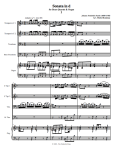
Source: IMSLP.org
Johann Friedrich Fasch Books and Music
More on Fasch
Back to home page
Suite pour orchestre en sol majeur
Johann Friedrich Fasch Books and Music
More on Fasch
Back to home page
Johann Friedrich Fasch was a German violinist and composer. His works include cantatas, concertos, symphonies, and chamber music. None of his pieces were printed in his lifetime, and a large number of his vocal works, including four operas, have been lost. However, he was held in high regard by his contemporaries (Johann Sebastian Bach made manuscript copies of a number of his pieces), and he is today considered an important link between the Baroque and Classical periods.
Fasch died in Zerbst at the age of 70. He was the father of Carl Friedrich Christian Fasch, also a musician of note. The city of Zerbst/Anhalt has been hosting International Festivals since 1983, biennially since 1993. The Twelfth International Fasch Festival took place in Zerbst in April 2013 and the included the unveiling of a memorial to him. He lived from April 15, 1688, to December 5, 1758).
Johann Friedrich Fasch Books and Music
More on Fasch
Back to home page


 On Baroque
You must be logged in to post a comment.