Antonio Bertali was born in Verona and received early music education there from Stefano Bernardi. Probably from 1624, he was employed as court musician in Vienna by Emperor Ferdinand II. In 1649, he succeeded Giovanni Valentini as court Kapellmeister.
Bertali’s compositions are in the manner of other northern Italian composers of the time and include operas, oratorios, a large number of liturgical works, and chamber music. Particularly his operas are notable for establishing the tradition of Italian opera seria in Vienna.
Approximately half of his output is now lost. The most important source for his work is the Viennese Distinta Specificatione catalogue, which lists several composers of the Habsburg court and provides titles and scoring for more than 2,000 compositions. The “Chiacona” or “Chiaccona” is perhaps his best known work. He lived from March 1605 to April 1669.—Excerpted from Wikipedia
Valoroso
Sonata à 6
Leopoldus I (1640-1705) “Accompagnamento di viole del Antonio Bertali”
Sonata à 2
Sonata à 3
Sonata à 5
Sonata IV à 3
Anonyme (ms Kremsier): Sonatina à Viola de Gamba: I. Prelude
Anonyme (ms Kremsier): Sonatina à Viola de Gamba: II. Allemande-Variatio
Anonyme (ms Kremsier): Sonatina à Viola de Gamba: III. Courente-Variatio
Anonyme (ms Kremsier): Sonatina à Viola de Gamba: IV. Sarabande-Variatio 1 ma & 2 da
Anonyme (ms Kremsier): Sonatina à Viola de Gamba: V. Gigue 1 mo & 2 da
Sonata à 3
Sonata à 6 – “Tausend Gulden”
Chiacona
Prothimia Suavissima Parte
Sonata 1 à 3
Sonata 2 à 4
Sonata 3 à 3
Sonata 4 à 3
Sonata 5 à 3
Sonata 6 à 3
Sonata 7 à 3
Sonata 8 à 3
Sonata 9 à 3
Sonata 10 à 3
Sonata 11 à 3
Sonata 12 à 4
Locatelli was born in Bergamo, Italy. A child prodigy on the violin, he was sent to study in Rome under the direction of Arcangelo Corelli. Little is known of his subsequent activities except that he settled in Amsterdam in 1729, where he died on 30 March 1764. His works are mainly for the violin, an instrument on which he was a virtuoso. His most significant publication is L’arte del violino, opus 3. Printed in Amsterdam in 1733, this was one of the most influential musical publications of the early eighteenth century. It is a collection of twelve concertos for solo violin, strings and basso continuo, with a ‘capriccio’ for unaccompanied violin inserted into the first and last movements of each concerto as a sort of cadenza. Locatelli also wrote violin sonatas, a cello sonata, trio sonatas, concerti grossi and a set of flute sonatas (his opus 2). His early works show the influence of Arcangelo Corelli, while later pieces are closer to Antonio Vivaldi in style. He lived from September 3, 1665, to March 30, 1764.—Excerpted from Wikipedia
“Given the availability of numerous sophisticated surveys on Baroque music history, this reviewer was astonished that this tome exceeded expectations regarding scope and focus. In an effort to offer a discussion that goes beyond the standard canon of thought, Buelow explores the works of Iberian, Eastern European, Latin American, and indeed even Caribbean composers. The book is replete with extensive score excerpts and analysis, and the chapters are subdivided into sections treating genre, composer, and technical development—an arrangement that makes this sizeable volume painless to navigate.”—CHOICE
Locatelli was born in Bergamo, Italy. A child prodigy on the violin, he was sent to study in Rome under the direction of Arcangelo Corelli. Little is known of his subsequent activities except that he settled in Amsterdam in 1729, where he died on 30 March 1764. His works are mainly for the violin, an instrument on which he was a virtuoso. His most significant publication is L’arte del violino, opus 3. Printed in Amsterdam in 1733, this was one of the most influential musical publications of the early eighteenth century. It is a collection of twelve concertos for solo violin, strings and basso continuo, with a ‘capriccio’ for unaccompanied violin inserted into the first and last movements of each concerto as a sort of cadenza. Locatelli also wrote violin sonatas, a cello sonata, trio sonatas, concerti grossi and a set of flute sonatas (his opus 2). His early works show the influence of Arcangelo Corelli, while later pieces are closer to Antonio Vivaldi in style. He lived from September 3, 1665, to March 30, 1764.—Excerpted from Wikipedia
“Given the availability of numerous sophisticated surveys on Baroque music history, this reviewer was astonished that this tome exceeded expectations regarding scope and focus. In an effort to offer a discussion that goes beyond the standard canon of thought, Buelow explores the works of Iberian, Eastern European, Latin American, and indeed even Caribbean composers. The book is replete with extensive score excerpts and analysis, and the chapters are subdivided into sections treating genre, composer, and technical development—an arrangement that makes this sizeable volume painless to navigate.”—CHOICE

 Valoroso (2004)
 Prothimia Suavissima Parte (2009)
 Son Festive (1998)





 , 1 CD
 , 2-CD set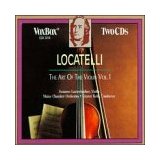
 , 2-CD set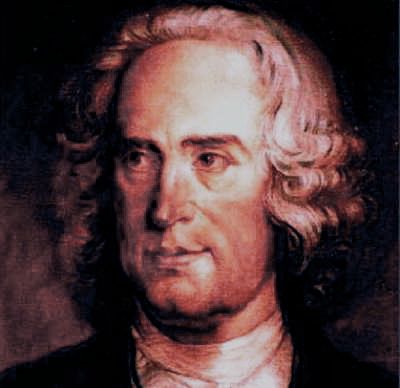
 On Baroque
You must be logged in to post a comment.