10 Sonate a 3, with Basso Continuo, op. 1 (1686).
12 Concerto da camera, for 2 violins and basso continuo, op. 2 (1686).
12 Sinfonie, for 2–4 instruments, op. 3 (1687).
12 Concertino per camera for Violin and Cello, op. 4 (1688).
12 Sinfonie a 3 e concerti a 4, op. 5 (1692).
12 Concerti musicali a quattro, op. 6 (1698).
12 Concerti grossi con una pastorale per il Santissimo Natale, op. 8 (1709).
More than 30 concertos for 1 to 4 trumpets, including a Sinfonia à 4, composed after 1702 (Tarr 1974) and unpublished during his lifetime, which is a concerto for four trumpets, with an orchestra requiring a minimum of four oboes, two bassoons, trombone, timpani, four violins, two violas, four cellos, two double basses, and continuo.—Excerpted from Wikipedia
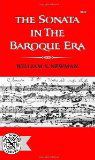
“Newman takes us through the whole range of composers working in the kinds of compositions called sonatas from the mid-sixteenth century to our own day and it is a list that includes names long forgotten to the world of living music. It is not that it isn’t worth delving into some of these composers, but the hard part is knowing which ones are worthwhile. History has shut the book on most of them for good reason, but there may have been mistakes and something delicious is waiting on the shelf to be discovered. So, look through this book has you wish. I use it more as a reference book than something to read front to back.”—Craig Matteson on Amazon
Giuseppe Torelli’s 12 concerti of opus 8 “constitute one of the great achievements of the Baroque period. The principal traits that mark the mature concerto are here displayed: the fast-slow-fast sequence of movements, the ritornello form, and the virtuoso flights of the soloists.”—Claude Palisca, Baroque Music
Giuseppe Torelli was an Italian violist, violinist, teacher, and composer. He’s most remembered for his contributions to the development of the instrumental concerto, especially concerti grossi and the solo concerto, for strings and continuo, as well as being a prolific Baroque composer for trumpets. He was born in Verona. He studied composition with Giacomo Antonio Perti, and in 1684, at the age of 26, he became a member of the Accademia Filarmonica as suonatore di violino. By 1698 he was maestro di concerto at the court of Georg Friedrich II. He returned to Bologna sometime before February 1701, when he is listed as a violinist in the newly re-formed cappella musicale at San Petronio, directed by his former composition teacher Perti. He died in Bologna in 1709, where his manuscripts are conserved in the San Petronio archives. Giuseppe’s brother, Felice Torelli, was a Bolognese painter of modest reputation, who went on to be a founding member of the Accademia Clementina. The most notable amongst Giuseppe’s many pupils was Francesco Manfredini. He lived from April 22, 1658, to February 8, 1709.—Excerpted from Wikipedia
“Newman takes us through the whole range of composers working in the kinds of compositions called sonatas from the mid-sixteenth century to our own day and it is a list that includes names long forgotten to the world of living music. It is not that it isn’t worth delving into some of these composers, but the hard part is knowing which ones are worthwhile. History has shut the book on most of them for good reason, but there may have been mistakes and something delicious is waiting on the shelf to be discovered. So, look through this book has you wish. I use it more as a reference book than something to read front to back.”—Craig Matteson on Amazon
10 Sonate a 3, with Basso Continuo, op. 1 (1686).
12 Concerto da camera, for 2 violins and basso continuo, op. 2 (1686).
12 Sinfonie, for 2–4 instruments, op. 3 (1687).
12 Concertino per camera for Violin and Cello, op. 4 (1688).
12 Sinfonie a 3 e concerti a 4, op. 5 (1692).
12 Concerti musicali a quattro, op. 6 (1698).
12 Concerti grossi con una pastorale per il Santissimo Natale, op. 8 (1709).
More than 30 concertos for 1 to 4 trumpets, including a Sinfonia à 4, composed after 1702 (Tarr 1974) and unpublished during his lifetime, which is a concerto for four trumpets, with an orchestra requiring a minimum of four oboes, two bassoons, trombone, timpani, four violins, two violas, four cellos, two double basses, and continuo.—Excerpted from Wikipedia
“Francesco Geminiani took the torch of instrumental music from the hands of Corelli and kept the fires burning. He wrote concerti grossi and sonatas in which the structure, as previously used by Corelli, were enlarged and made more flexible; where the thematic material is more greatly varied; and where the orchestral colorations are enriched.”—David Ewen, The Complete Book of Classical Music
Francesco Saverio Geminiani was an Italian violinist, composer, music theorist, and student of Arcangelo Corelli. His most well-known compositions are three sets of concerti grossi: his Opus 2 (1732), Opus 3 (1733), and Opus 7 (1746). There are 42 concerti in all. His concerti introduce the viola as a member of the concertino group of soloists, making them essentially concerti for string quartet.
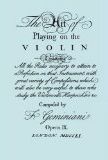
Geminiani’s significance today is largely due to his 1751 treatise Art of Playing on the Violin, published in London, which is the best known summation of the 18th century Italian method of violin playing and is an invaluable source for the study of late Baroque performance practice. The book is in the form of 24 exercises accompanied by a relatively short but extremely informative section of text, giving detailed instructions on articulation, trills, and other ornaments, shifting between positions, and other aspects of left- and right-hand violin technique. The instructions in this treatise are famously opposed to those expressed by Leopold Mozart in his Treatise on the Fundamental Principles of Violin Playing (1756) on several issues, including on bow hold, use of vibrato, and the so-called “rule of the down-bow,” which states that the first beat of every bar must be played with a down-stroke.
His Guida harmonica (c. 1752, with an addendum in 1756) is one of the most unusual harmony treatises of the late Baroque, serving as a sort of encyclopedia of basso continuo patterns and realizations. There are 2,236 patterns in all, and at the end of each pattern is a page number reference for a potential next pattern; thus a student composer studying the book would have an idea of all the subsequent possibilities available after any given short bass line.
Geminiani also published a number of solos for the violin, three sets of violin concerti, twelve violin trios, The Art of Accompaniment on the Harpsichord, Organ, etc. (1754), Lessons for the Harpsichord, Art of Playing the Guitar (1760) and some other works. He lived from December 5, 1687, to September 17, 1762.—Excerpted from Wikipedia
6 Cello Sonatas, Op.5
Concerti Grossi after Corelli’s Violin Sonatas, Op.5
6 Concertos, Op.2
6 Concertos, Op.3
6 Concertos, Op.7
4 Duos
Flute Sonata in E minor
3 Flute Sonatas
Violin Solo in B-flat major
Violin Sonata in C minor
12 Violin Sonatas, Op.1
12 Violin Sonatas, Op.4
“Facsimile of the 1751 edition. Containing all the rules necessary to attain to a perfection on that instrument, with great variety of compositions which will also be very useful to those who study the violoncello, Harpsichord etc. Contains 24 examples and 12 compositions.”
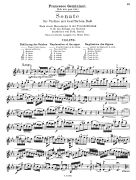
Sonata III for Violoncello and Basso Continuo in C Major
Notes and Commentary
“Francesco Geminiani took the torch of instrumental music from the hands of Corelli and kept the fires burning. He wrote concerti grossi and sonatas in which the structure, as previously used by Corelli, were enlarged and made more flexible; where the thematic material is more greatly varied; and where the orchestral colorations are enriched.”—David Ewen, The Complete Book of Classical Music
Francesco Saverio Geminiani was an Italian violinist, composer, music theorist, and student of Arcangelo Corelli. His most well-known compositions are three sets of concerti grossi: his Opus 2 (1732), Opus 3 (1733), and Opus 7 (1746). There are 42 concerti in all. His concerti introduce the viola as a member of the concertino group of soloists, making them essentially concerti for string quartet.
Geminiani’s significance today is largely due to his 1751 treatise Art of Playing on the Violin, published in London, which is the best known summation of the 18th century Italian method of violin playing and is an invaluable source for the study of late Baroque performance practice. The book is in the form of 24 exercises accompanied by a relatively short but extremely informative section of text, giving detailed instructions on articulation, trills, and other ornaments, shifting between positions, and other aspects of left- and right-hand violin technique. The instructions in this treatise are famously opposed to those expressed by Leopold Mozart in his Treatise on the Fundamental Principles of Violin Playing (1756) on several issues, including on bow hold, use of vibrato, and the so-called “rule of the down-bow,” which states that the first beat of every bar must be played with a down-stroke.
His Guida harmonica (c. 1752, with an addendum in 1756) is one of the most unusual harmony treatises of the late Baroque, serving as a sort of encyclopedia of basso continuo patterns and realizations. There are 2,236 patterns in all, and at the end of each pattern is a page number reference for a potential next pattern; thus a student composer studying the book would have an idea of all the subsequent possibilities available after any given short bass line.
Geminiani also published a number of solos for the violin, three sets of violin concerti, twelve violin trios, The Art of Accompaniment on the Harpsichord, Organ, etc. (1754), Lessons for the Harpsichord, Art of Playing the Guitar (1760) and some other works. He lived from December 5, 1687, to September 17, 1762.—Excerpted from Wikipedia
“Facsimile of the 1751 edition. Containing all the rules necessary to attain to a perfection on that instrument, with great variety of compositions which will also be very useful to those who study the violoncello, Harpsichord etc. Contains 24 examples and 12 compositions.”
6 Cello Sonatas, Op.5
Concerti Grossi after Corelli’s Violin Sonatas, Op.5
6 Concertos, Op.2
6 Concertos, Op.3
6 Concertos, Op.7
4 Duos
Flute Sonata in E minor
3 Flute Sonatas
Violin Solo in B-flat major
Violin Sonata in C minor
12 Violin Sonatas, Op.1
12 Violin Sonatas, Op.4



 , 1 CD
 , 1 CD
 , 1 CD





 , 2-CD set
 , 2-CD set
 , 1 CD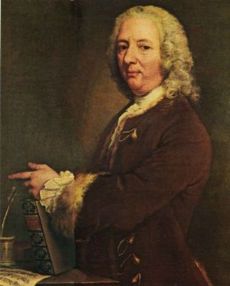


 On Baroque
You must be logged in to post a comment.