Baroque Instruments

A quick tutorial on the difference between Baroque and other classical string instruments by cellist Emily Davidson (emilyplayscello.com).

A short documentary on the crafting of Baroque-era instruments.

Douglas Cox, a violin maker in Brattleboro, Vt., is featured in the documentary. Here’s a link to his website.

Violin family of instruments

Musical Instruments of the Baroque and early Classical Eras
Smithsonian Institution, 1988
Booklet with audio casette
$19.95 on Amazon

Smithsonian

guitar Baroque Guitar, Sellas, 5-course, Taylor

From Amazon: Based on instruments made by Giorgio Sellas. One in particular, which may be seen in the Ashmolean Museum in Oxford, was made in 1627.

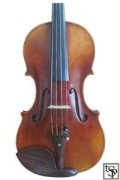
Heritage D Z Strad Violin N615 Full Size 4/4 with Italian Alps Spruce

From Amazon: D Z Strad Violin N615. Example of hand-crafted violin, with full, even sound, ideal for professional solo performances. Includes case and two brand new bows (one wood and one carbon fiber). The case and bows have been valued at $900. The violin is 100 percent handmade and oil-varnished by hand. Italian Alps Spruce top, natually air dried (over 30 years). Selected Maple back, ribs, and scroll, naturally air dried. Hard-carved pegs, tailpiece, and chin rest.

heritage-1 Heritage Pro 4/4 Full Size Violin, Il Cannone, Guarneri

From Amazon: Replica of a violin made in 1837 by Paganini as a gift to Genoa, his native city. The original violin is played monthly and on special occasions in Genoa to preserve it.

Heritage -2 Heritage Series 4/4 Pro Full Size Violin The Cessol, Stradivari Strad
From Amazon: Replica of “The Cessol” by Antonio Stradivari, Cremona 1716. Made during Stradivari’s “Golden Period”, this violin is one of the Great Master’s finest instruments. Described by the Hills as “a superb example in every aspect, and quite of the character we should expect.”

recorder-1 Hohner 9550 Pearwood 2-Piece Soprano

From Amazon: Two-piece, hardwood Soprano Recorder for Baroque fingering. Tuned to the key of C and includes a mouthpiece featuring unique vanes for uniform wind dispersal. Includes a swab for cleaning and a fingering guide. Made in Germany.

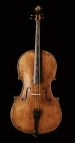
31cGASFC0DL._AA160_ Heritage Stradivari Davidov Model Professional Cello, 4/4 Full Size

From Amazon: ‘The Davidov’ by Antonio Stradivari, Cremona, 1712. Replica named after the Russion virtuoso Karl Yul’yevich Davidov, who owned the cello in about 1885. The instrument was later played by Jacqueline du Pre. Du Pre’s teacher, William Pleath was with her when she tried out the cello, and recommended it to her as “one of the really great instruments of the world”. Du Pre’s recordings from 1965 to 1968 were all made on the “Davidov”. The original is now owned by Yo-Yo Ma.

cello-2 Eastman Master Cello, Stradivari Strad Pattern, 4/4 Full Size

From Amazon: Offered in full antiqued finish. These handmade and hand varnished instruments offer the highest level of workmanship from this excellent workshop. They produce a powerful and robust tone. The instruments are fitted with quality ebony fittings.

For fine listening to Baroque music, our site recommends these headphones:

Bose AE2 audio headphones

Back to home page

About On Baroque

On Baroque is an exercise in curation. There is already plenty of information about Baroque music online, but it can be time-consuming finding what you want. On Baroque is an effort to bring together and organize some of this information to make it easier for you to access what you want. It’s the kind of site I was looking for and couldn’t find, so I created it myself.

violin

Baroque music is generally defined as the music composed in the seventeenth and much of the eighteenth centuries, roughly 1560 to 1750. More than just a time period, though, it’s a musical style defined by very specific motifs, including what’s known as the basso continuo (“continuous bass”), which you can think of as a rhythm section, something you don’t really hear in Renaissance music, which preceded the Baroque period, or Classical music, which followed it. Another characteristic motif is homophony, which refers to the melodic voice of the piece and its rhythmic accompaniment.

Then there’s the structure of the typical suite, which starts with an overture and that’s followed by four movements: Allemande, Courante, Sarabande and Gigue.

The Baroque is also the period in which we saw the development of opera, cantata, oratorio, concerto, and sonata as musical genres.

Each of the major Baroque composers and many of the minor ones are represented on the home page. For each one you can access a list of their entire body of work, or at least the most complete list that’s thought to be available, along with a thumbnail sketch of their contribution to the genre. For each composer you can also listen to representative pieces of their work, access some sheet music, and go directly to a selection of their books and music on Amazon.

On Baroque launched May 25, 2013, with 17 of the major composers of the genre represented. Two years later it had 60. More are being added, with the goal of having all of the major and many of the minor figures represented. I hope you find the site helpful.—Nabob

Back to Point Against Point
Back to home page

Heinrich Ignaz Franz Biber: Notes and Commentary

Heinrich Ignaz Franz Biber von Bibern was a Bohemian-Austrian composer and violinist. He is regarded as one of the most important composers for the violin in the history of the instrument.

“In the 17th century, the violin consolidated its position as expressively the most wide-ranging of non-keyboard instruments. This was an age of outstanding performers, like Corelli. Italy was the center of instrumental prowess, but the finest of all virtuosos was Heinrich Biber. A composer as well as a performer, Biber was fascinated by the doctrine of the affections: the belief that emotional states such as tenderness, fear, and anger could be given direct musical expression. Many Baroque composers pursued this idea but none did so with such a degree of quirkiness, flair, and sheer experimental verve as Biber. Above all else in his violin sonatas, he reveals an astonishing combination of profound feeling and technical wizardry that suggests a brilliant improviser at work.”—The Rough Guide to Classical Music (2001, 3rd ed.) 

Biber’s technique allowed him to easily reach the 6th and 7th positions, employ multiple stops in intricate polyphonic passages, and explore the various possibilities of scordatura tuning. He also wrote one of the earliest known pieces for solo violin, the monumental passacaglia of the Mystery Sonatas. During Biber’s lifetime, his music was known and imitated throughout Europe. In the late 18th century he was named the best violin composer of the 17th century by music historian Charles Burney. In the late 20th century Biber’s music, especially the Mystery Sonatas, enjoyed a renaissance. Today, it is widely performed and recorded. He lived from August 12, 1644, to May 3, 1704.—Excerpted from Wikipedia

Heinrich Ignaz Franz Biber Books and Music
More on Biber
Back to home page

Heinrich Ignaz Franz Biber: Books and Music

Selected Books
Hintergrunde zu den Rosenkranz-Sonaten
GRIN Verlag, 2007
Thomas Grasse
$67.57 on Amazon

Rosenkranz

16 Violin Sonatas
Alfred Music, 1985
$20.53 on Amazon

Violin Sonatas

Selected Music

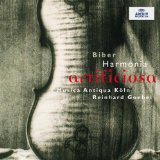
Harmonia Harmonia Artificiosa (2004), 2-CD set

Mystery The Mystery Sonatas (2002), 2-CD set

Biber Mensa Mensa Sonora (1995), 1 CD

Biber: Mensa Sonora (Goebel)

More on Biber
Back to home page

Heinrich Ignaz Franz Biber, 1644-1704

HIF Biber

Selected Recordings

Passacaglia in G Minor

Mysterien Sonaten, I. Sonatas del Rosario

Battalia (Il Giardino Armonico)

Selected Sheet Music

Requiem ex F con terza minore

Terza
Source: CPDL.org

Showcase Piece

Partia I in D minor

Notes and Commentary

Heinrich Ignaz Franz Biber von Bibern was a Bohemian-Austrian composer and violinist. He is regarded as one of the most important composers for the violin in the history of the instrument.

“In the 17th century, the violin consolidated its position as expressively the most wide-ranging of non-keyboard instruments. This was an age of outstanding performers, like Corelli. Italy was the center of instrumental prowess, but the finest of all virtuosos was Heinrich Biber. A composer as well as a performer, Biber was fascinated by the doctrine of the affections: the belief that emotional states such as tenderness, fear, and anger could be given direct musical expression. Many Baroque composers pursued this idea but none did so with such a degree of quirkiness, flair, and sheer experimental verve as Biber. Above all else in his violin sonatas, he reveals an astonishing combination of profound feeling and technical wizardry that suggests a brilliant improviser at work.”—The Rough Guide to Classical Music (2001, 3rd ed.) 

Biber’s technique allowed him to easily reach the 6th and 7th positions, employ multiple stops in intricate polyphonic passages, and explore the various possibilities of scordatura tuning. He also wrote one of the earliest known pieces for solo violin, the monumental passacaglia of the Mystery Sonatas. During Biber’s lifetime, his music was known and imitated throughout Europe. In the late 18th century he was named the best violin composer of the 17th century by music historian Charles Burney. In the late 20th century Biber’s music, especially the Mystery Sonatas, enjoyed a renaissance. Today, it is widely performed and recorded. He lived from August 12, 1644, to May 3, 1704.—Excerpted from Wikipedia

Books and Music

Selected Books
Hintergrunde zu den Rosenkranz-Sonaten
GRIN Verlag, 2007
Thomas Grasse
$67.57 on Amazon

Rosenkranz

16 Violin Sonatas
Alfred Music, 1985
$20.53 on Amazon

Violin Sonatas

Selected Music

Harmonia Harmonia Artificiosa (2004), 2-CD set

Mystery The Mystery Sonatas (2002), 2-CD set

Biber Mensa Mensa Sonora (1995), 1 CD

Complete Works

C. 1 – Missa Alleluja à 36
C. 2 – Missa Sancti Alexii
C. 3 – Missa Christi resurgentis
C. 4 – Missa ex B
C. 5 – Missa Quadragemisalis
C. 6 – Missa Sancti Henrici
C. 7 – Requiem à 15 in Concerto
C. 8 – Requiem ex F con terza minore
C. 9 – Laetatus sum a 7
C. 10 – Nisi Dominus a 2, violino e basso
Vesperae à 32
C. 11 – Dixit Dominus
C. 12 – Magnificat
Vesperae longiores ac breviores (1693)
C. 13 – Dixit Dominus
C. 14 – Confitebor tibi Domine
C. 15 – Beatus vir
C. 16 – Laudate, pueri, Dominum
C. 17 – Laudate Dominum
C. 18 – Magnificat
C. 20 – Laudate pueri
C. 23 – Lauda Jerusalem
C. 43 – In Festo Trium Regium, Muttetum Natale à 6
C. 44 – Litaniae de Sancto Josepho
C. 45 – Lux perpetua
C. 46 – Huc poenitentes
C. 47 – Ne cedite mentes
C. 48 – Quo abiit dilectus tuus a 8 (Offertorium in Festo 7 dolorum)
C. 49 – Salve Regina
C. 51 – Arminio, chi la dura la vince. Dramma musicale in three acts
Instrumental music [edit]

Access complete list.

Back to home page

Heinrich Ignaz Franz Biber: Complete Works

The following list is excerpted from Wikipedia

C. 1 – Missa Alleluja à 36
C. 2 – Missa Sancti Alexii
C. 3 – Missa Christi resurgentis
C. 4 – Missa ex B
C. 5 – Missa Quadragemisalis
C. 6 – Missa Sancti Henrici
C. 7 – Requiem à 15 in Concerto
C. 8 – Requiem ex F con terza minore
C. 9 – Laetatus sum a 7
C. 10 – Nisi Dominus a 2, violino e basso
Vesperae à 32
C. 11 – Dixit Dominus
C. 12 – Magnificat

Vesperae longiores ac breviores (1693)
C. 13 – Dixit Dominus
C. 14 – Confitebor tibi Domine
C. 15 – Beatus vir
C. 16 – Laudate, pueri, Dominum
C. 17 – Laudate Dominum
C. 18 – Magnificat
C. 20 – Laudate pueri
C. 23 – Lauda Jerusalem
C. 43 – In Festo Trium Regium, Muttetum Natale à 6
C. 44 – Litaniae de Sancto Josepho
C. 45 – Lux perpetua
C. 46 – Huc poenitentes
C. 47 – Ne cedite mentes
C. 48 – Quo abiit dilectus tuus a 8 (Offertorium in Festo 7 dolorum)
C. 49 – Salve Regina
C. 51 – Arminio, chi la dura la vince. Dramma musicale in three acts\

Instrumental music 

C. 52 – Arien à 4
C. 53 – Arien à 4, for violin, 2 violas & continuo in A major
C. 55 – Ballettae à 4 Violettae
C. 56 – Balletti à 4, for violin, 2 violas & continuo in G major
C. 58 – Balletti
C. 59 – Balletti Lamentabili à 4
C. 60 – Balletti
C. 61 – Battalia à 10, for 3 violins, 4 violas, 2 violone, and continuo,(1673)
Harmonia artificioso-ariosa: diversi mode accordata (7 partias for 1 or 2 violins, 2 violas, 2 violas d’amore, and continuo in various combinations) (1696)
C. 62 – Partia, No. 1 in D minor
C. 63 – Partia, No. 2 in B minor
C. 64 – Partia, No. 3 in A major
C. 65 – Partia, No. 4 in E flat major
C. 66 – Partia, No. 5 in G minor
C. 67 – Partia, No. 6 in D major
C. 68 – Partia, No. 7
“Mensa Sonora seu Musica Instrumentalis” (6 suites for violin, two violas, and continuo) (1680)
C. 69–74
C. 75 – Serenada à 5 ‘Der Nachtwächter’
C. 76 – Trombet-undt Musicalischer Taffeldienst à 4
Fidicinium sacroprofanum (12 sonatas for 1 or 2 violins, 2 violas, and continuo) (1683)
C. 78–89
Rosary Sonatas (for violin in scordatura and continuo and a passacaglia for violin solo) (also known as Mystery Sonatas and Copper-Engraving Sonatas) (1676)
C. 90 – Sonata, for violin & continuo No. 1 in D minor, (The Annunciation)
C. 91 – Sonata, for violin & continuo No. 2 in A major, (The Visitation)
C. 92 – Sonata, for violin & continuo No. 3 in B minor, (The Nativity)
C. 93 – Sonata, for violin & continuo No. 4 in D minor, (The Presentation)
C. 94 – Sonata, for violin & continuo No. 5 in A major, (The Finding in the Temple)
C. 95 – Sonata, for violin & continuo No. 6 in C minor, (The Agony in the Garden)
C. 96 – Sonata, for violin & continuo No. 7 in F major, (The Scourging of Jesus)
C. 97 – Sonata, for violin & continuo No. 8 in B flat major, (The Crowning of Jesus with Thorns)
C. 98 – Sonata, for violin & continuo No. 9 in A minor, (The Carrying of the Cross)
C. 99 – Sonata, for violin & continuo No. 10 in G minor, (The Crucifixion)
C. 100 – Sonata, for violin & continuo No. 11 in G major,(The Resurrection)
C. 101 – Sonata, for violin & continuo No. 12 in C major, (The Ascension)
C. 102 – Sonata, for violin & continuo No. 13 in D minor, (The Descent of the Holy Ghost)
C. 103 – Sonata, for violin & continuo No. 14 in D major, (The Assumption of our Lady)
C. 104 – Sonata, for violin & continuo No. 15 in C major, (The Crowning of the Blessed Virgin Mary)
C. 105 – Passacaglia, for violin solo in G minor
C. 106 – Pastorella, sonata for violin & continuo in A major
C. 108 – Sonata, for violin & continuo in E major
C. 109 – Sonata a 6
C. 110 – Sonata à 6 “Die pauern kirchfartt genandt”, for 3 violins, 2 violas & continuo in B-flat major
C. 111 – Sonata à 7, 6 Tromb, Tramburin con Organo Ao. 1668
C. 112 – Sonata ‘pro tabula’ for 5 recorders, 2 violins, 3 violas & continuo in C major
C. 113 – Sonata Sancti Polycarpi
Sonatae tam aris quam aulis servientes (12 sonatas for 5–8 instruments [trumpets, strings, and continuo] in various combinations) (1676)
C. 114 – Sonata, for 2 trumpets, 2 violins, 2 violas & continuo No. 1 in C major
C. 115 – Sonata, for 2 violins, 3 violas & continuo No. 2 in D major
C. 116 – Sonata, for 2 violins, 3 violas & continuo No. 3 in G minor
C. 117 – Sonata, for trumpet, violin, 2 violas & continuo No. 4 in C major
C. 118 – Sonata, for 2 violins, 3 violas & continuo No. 5 in E minor
C. 119 – Sonata, for 2 violins, 2 violas & continuo No. 6 in F major
C. 120 – Sonata, for 2 trumpets, 2 violins & continuo No. 7 in G major
C. 121 – Sonata, for 2 violins, 2 violas & continuo No. 8 in G major
C. 122 – Sonata, for 2 violins, 2 violas & continuo No. 9 in B flat major
C. 123 – Sonata, for trumpet, violin, 2 violas & continuo No. 10 in G minor
C. 124 – Sonata, for 2 violins, 2 violas & continuo No. 11 in A major
C. 125 – Sonata, for 2 trumpets, 2 violins, 2 violas & continuo No. 12 in C major
C. 126–137 – A due No. 1–12
Sonatae violino solo (8 sonatas for violin and continuo) (1681)
C. 138 – Sonata, for violin & continuo No. 1 in A major
C. 139 – Sonata, for violin & continuo No. 2 in D minor
C. 140 – Sonata, for violin & continuo No. 3 in F major
C. 141 – Sonata, for violin & continuo No. 4 in D major
C. 142 – Sonata, for violin & continuo No. 5 in E minor
C. 143 – Sonata, for violin & continuo No. 6 in C minor
C. 144 – Sonata, for violin & continuo No. 7 in G minor
C. 145 – Sonata, for violin & continuo No. 8 in G major
C. 146 – Sonata violino solo representativa (Representatio Avium), for violin & continuo in A major, 1669?
C. 147 – Sonata, for solo violin in A major
C. App. 100 – Missa Bruxellensis
C. App. 101 – Missa Salisburgensis
C. App. 106 – Hymnus “Plaudite Tympana”
C. App. 111 – Harmonia Romana
C. App. 117 – Sonata à 3 “AB”
C. App. 118 – Sonata à 3 (“AB”)
C. App. 119 – Sonata à 4 (“H.B.”)
C. App. 121 – Sonata Jucunda, for 2 violins, 3 violas & continuo in D major
Lost Vocal works
Applausi festivi di Giove (cantata) (1687)
Li trofei della fede cattolica (cantata) (1687)
Alessandro in Pietra (opera) (1689)
Trattenimento musicale del’ossequio di Salisburgo (cantata) (1699)
Sonata à 3 (for 2 violins and trombone) (Questionable attribution to Biber’s early career as a novice composer) The theory that Biber wrote this suggests Antonio Bertali as a teacher. Bertali wrote a number of similar sonatas for exactly the same scoring. This sonata could possibly be attributed to Bertali except that the violin passages are sometimes more fanciful than any other in Bertali’s works.

Heinrich Ignaz Franz Biber Books and Music
More on Biber
Back to home page