Johann Adolph Hasse: Complete Works

Hasse’s output was extensive. Access complete list.

Instrumental music

    • Six sonatas for cembalo (pianoforte)
    • Six trio sonatas
    • Sonata I in e minor
    • Sonata II in C major
    • Sonata III in A major
    • Sonata IV in G major
    • Sonata V in E major
    • Sonata VI in D major

Cantatas and ballads

      • Chieggio ai gigli ed alle rose (Pietro Metastasio; Naples 1727/1729)
      • Il nome or Scrivo in te l’amato nome (Pietro Metastasio; Naples 1727/1729)
      • È ver, mia Fille, è vero (Pietro Metastasio; Naples 1727/1729)
      • L’Armonica or Ah perché col canto mio (with glass harmonica) (Pietro Metastasio; Vienna 1769)
      • La Gelosia (Pietro Metastasio; Vienna 1769)

Church music

        • Litaniae Lauretanae in f minor
        • Liltaniae Lauretanae in G major
        • Missa ultima in g minor (Venice, 1783)
        • Messe in d minor (1751)
        • Miserere in d minor

Opera

            • Antioco
            • Apostolo Zeno
            • Antonio e Cleopatra
            • l Sesostrate
            • La Semele

Johann Adolph Hasse Books and Music
More on Johann Adolph Hasse
Back to home page

Johann Adolph Hasse, 1699-1783

Hasse

Selected Recordings

Adagio

Cleofide

Sinfonia in G Minor

Selected Sheet Music

Flute Concerto in G Major
flute concerto

Source: IMSLP.org

Showcase Piece

Laudate pueri, Psalm 112

Notes and Commentary

Johann Adolph Hasse was an 18th-century German composer, singer, and teacher of music. Immensely popular in his time, Hasse was best known for his prolific operatic output, though he also composed a considerable quantity of sacred music. He was a pivotal figure in the development of opera seria and 18th-century music.

Despite his popularity as a figure at the very forefront of 18th-century serious Italian opera, after his death Hasse’s reputation vastly declined and his music lay mostly unperformed (with the exception of some of his sacred works, which were revived now and again in Germany). In particular, his operas sank without trace and revival only begun as the 20th century approached its end.

In his day, Hasse’s style was noted primarily for his lyricism and sense of melody.
Careful choice of key was a crucial factor in Hasse’s style, with certain emotions usually marked out by certain key choices. Amorous feelings were expressed by A, for instance, while for expressions of aristocratic nobility Hasse used C and B flat; on the other hand, his supernatural and fear-inducing music usually went into the keys of C and F minor. Most of his arias begin in the major, switching only to minor for the B section before returning to major for the da capo. As his career developed his arias grew much longer but a lyrical sense was still his overriding target. He lived from March 1699 to December 16, 1783.—Excerpted from Wikipedia

Books and Music

Selected Books

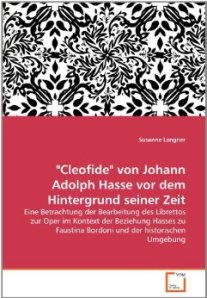
Cleofide (sheet music)
Johann Adolph Hasse
$62.10

cleofide


Selected Music

hasse-ja Sonates pour clavecin (2013), 1 CD

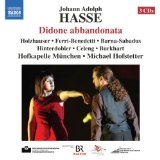
didone Didone abbandonata (2013), 3-CD set

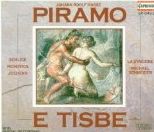
tisbe Piramo E Tisbe (1995), 2-CD set

More Johann Adolph Hasse music

Complete Works

Hasse’s output was extensive. Access complete list.

Instrumental music

    • Six sonatas for cembalo (pianoforte)
    • Six trio sonatas
    • Sonata I in e minor
    • Sonata II in C major
    • Sonata III in A major
    • Sonata IV in G major
    • Sonata V in E major
    • Sonata VI in D major

Cantatas and ballads

      • Chieggio ai gigli ed alle rose (Pietro Metastasio; Naples 1727/1729)
      • Il nome or Scrivo in te l’amato nome (Pietro Metastasio; Naples 1727/1729)
      • È ver, mia Fille, è vero (Pietro Metastasio; Naples 1727/1729)
      • L’Armonica or Ah perché col canto mio (with glass harmonica) (Pietro Metastasio; Vienna 1769)
      • La Gelosia (Pietro Metastasio; Vienna 1769)

Church music

        • Litaniae Lauretanae in f minor
        • Liltaniae Lauretanae in G major
        • Missa ultima in g minor (Venice, 1783)
        • Messe in d minor (1751)
        • Miserere in d minor

Opera

            • Antioco
            • Apostolo Zeno
            • Antonio e Cleopatra
            • l Sesostrate
            • La Semele

Back to home page

Who is ‘The English Bach?’ I’m Going with Bach’s Son

The results of an interesting study came out not long ago that finds people’s brains respond similarly to music no matter how different people are.

hrmph

“We’ve shown for the first time that despite our individual differences in musical experiences and preferences . . . music elicits a highly consistent pattern of activity across individuals,” says Vinod Menon, the Stanford University professor who led the study.

Although that’s an interesting finding, what caught my eye was that the research was built around the music of the English Baroque composer William Boyce. The researchers decided on Boyce because his work fits well into the canon of Western music but is little known to modern Americans, said the article, by Bruce Goldman. Goldman also said that the “musical cognoscenti” call Boyce “‘the English Bach’ because his late-Baroque compositions in some respects resembled those of the famed German composer.”

That’s funny, because I always though the musical cognoscenti referred to Johann Christian Bach as “The English Bach.” Does that mean there are two “English Bachs?” That’s awkward.

Johann Christian Bach, also known as J.C. Bach, was the youngest son of Johann Sebastian Bach and wasn’t a Baroque composer; he was a Classical composer who was much admired by Mozart. He was called “The English Bach” because he spent considerable time in London, where he was called John Bach and also sometimes referred to as “The London Bach.”

excuse

You can get all that information on J.C. Bach’s entry on Wikipedia. Encyclopedia Britannica also calls him The English Bach.

By contrast, on William Boyce’s Wikipedia page, there’s no mention of his being called The English Bach. In fact, the only other place I could find him being called The English Bach is in a review of Trevor Pinnock’s William Boyce album, Eight Symphonies: The English Concert. In that review, a mystery person named “A Customer” says “I love the overtures (or symphonies) of William Boyce, the ‘English Bach,’ as I’m sure most lovers of late Baroque music do.”

Well, that sounds authoritative.

The idea that J.C. Bach is called The Englsh Bach is all over the Internet, not just on the Wikipedia and Encyclopedia Britannica pages. So, I have to go with the idea that The English Bach is really J.C. Bach and William Boyce, as much as I like his music, is just an English composer.

Of course, all of this raises another question, which is whether Boyce should even be considered a Baroque composer. He’s sometimes referred to as a composer of the high or late Baroque period. But in some lists of Baroque composers, he’s left out entirely or else identified as an early Galante-era composer, which is the period of transition between the late Baroque and early Classical periods.

I donlt know enough about it to have an informed opinion on the matter, but I can say his music is nothing at all like, say, Corelli or Tartini or other composers who are firmly in Baroque territory. In some ways, Boyce’s music has a quality that seems more fitting in a Classical context than in a Baroque context. Of course, that’s what the Galante period was all about: moving from one period to another.

In any case, Boyce is a striking composer and it’s good to know that, whatever you think of his music, or even of J.C. Bach’s music, our brains respond to their work in the same way. Meanwhile, we’ll leave it to other parts of our brain to debate who The English Bach is.—Nabob, On Baroque

Back to Point Against Point
Back to home page

John Blow: Notes and Commentary

John Blow was an English Baroque composer and organist, appointed to Westminster Abbey in 1669. His pupils included Henry Purcell. In 1685 he was named a private musician to James II. His only stage composition, Venus and Adonis, was thought to influence Henry Purcell’s later opera Dido and Aeneas. In 1687 he became choirmaster at St Paul’s Cathedral, where many of his pieces were performed. In 1699 he was appointed to the newly created post of Composer to the Chapel Royal. Fourteen services and more than a hundred anthems by Blow are known. In 1700 he published his Amphion Anglicus, a collection of pieces of music for one, two, three and four voices, with a figured bass accompaniment. A famous page in Charles Burney’s History of Music is devoted to illustrations of Blow’s “crudities”. These show the immature efforts in expression characteristic of English music at the time. Some of them have since been judged to be excellent. He lived from February 1649 to October 1, 1708. —Excerpted from Wikipedia

John Blow Books and Music
More on John Blow
Back to home page

John Blow: Complete Works

Morning canticles
Te Deum in A
Jubilate Deo in A
Cantate Domino in A
Deus Misereatur in A
Te Deum in E minor
Jubilate Deo in E minor
Te Deum in G
Jubilate in G

Communion settings
Kyrie in A
Nicene Creed in A
Kyrie in E minor
Nicene Creed in E minor
Kyrie in G
Nicene Creed in G
Kyrie in G
Nicene Creed in G

Evening canticles
Cantate Domino in E minor
Deus Misereatur in E minor
Magnificat and Nunc dimittis in G

Full anthems
Behold, O God our defender
Be merciful unto me O Lord
God is our hope and strength
Let my prayer come up
Let thy hand be strengthened
My days are gone like a shadow
My God, my God, look upon me
O God, wherefore art thou absent
Praise the Lord, ye servants
Save me O God
The Lord hear thee

Verse anthems
God spake sometime in visions
I was in the spirit
O pray for the peace of Jerusalem

Latin works
Salvator mundi

Catches (secular)
Catch on the battle at Hailbron
On The Kings coming home

Other works
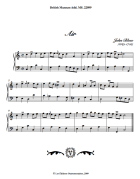
Air
Amphion Anglicus
An Ode on the Death of Mr. Henry Purcell
Prelude in C major
Venus and Adonis

John Blow Books and Music
More on John Blow
Back to home page

John Blow: Books and Music

Selected Books

The Trumpet
Yale Univ. Press,
John Wallace
$36 on Amazon

trumpet

“Provides a remarkable overview of all important trumpet topics and includes complete analysis of important works. Some reporting is done with considerable bias (the authors are trumpeters) including a suspect appendix of important 20th century works that includes far more than a fair share of the author’s own commissions.”—Andy on Amazon

Selected Music

adonis Venus & Adonis (2008), 1 CD

anthems Anthems (2006), 2-CD set

spinet Music for Harpsichord & Spinet (2003), 1 CD

More John Blow music

More on John Blow
Back to home page