Harpsichord Concerto in A
Sonata No. 5, harpsichord, C minor
Sonata No. 65
Carlos Seixas Books and Music
More on Seixas
Back to home page
Harpsichord Concerto in A
Sonata No. 5, harpsichord, C minor
Sonata No. 65
Carlos Seixas Books and Music
More on Seixas
Back to home page
Sonata No. 24 for Harpsichord
Carlos Seixas Books and Music
More on Seixas
Back to home page
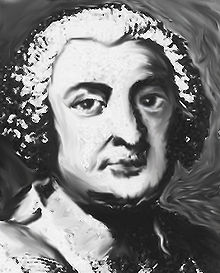
José António Carlos de Seixas was a Portuguese composer, the son of the cathedral organist, Francisco Vaz and Marcelina Nunes. He was was born in Coimbra and succeeded his father as organist in 1718 at age 14. Two years later he moved to Lisbon, where he gave harpsichord lessons and met Domenico Scarlatti who was living in Portugal from 1721 to 1728.
Seixas was influenced by the German Empfindsamer Stil (literally ‘sensitive style’). Much of his work was destroyed in the earthquake that devastated Lisbon in 1755. Only three orchestral pieces and around 100 keyboard sonatas survived, plus a handful of choral works for liturgical use (much more conservative than what one would expect from his instrumental music). He lived from June 11, 1704, to August 25, 1742.—Excerpted from Wikipedia
Carlos Seixas Books and Music
More on Seixas
Back to home page
The following are among Seixas’ surviving works.
Benedictus
Harpsichord Sonatas:
Keyboard Sonatas (1-100)
Mass in G Major
Orchestral pieces (1-3)
Carlos Seixas Books and Music
More on Seixas
Back to home page
Books
Sinfonia for Organ
Frank Speller (ed.)
Saint Cecilia Series, 1975 (Sheet music)
$19.95 on Amazon

Music
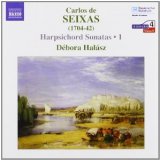 Harpsichord Sonatas 1 (2006)
 Harpsichord Sonatas (1994)
 Sonatas (2012)
Harpsichord Concerto in A
Sonata No. 5, harpsichord, C minor
Sonata No. 65
Benedictus

Source: IMSLP.org
Sonata No. 24 for Harpsichord
José António Carlos de Seixas was a Portuguese composer, the son of the cathedral organist, Francisco Vaz and Marcelina Nunes. He was was born in Coimbra and succeeded his father as organist in 1718 at age 14. Two years later he moved to Lisbon, where he gave harpsichord lessons and met Domenico Scarlatti who was living in Portugal from 1721 to 1728.
Seixas was influenced by the German Empfindsamer Stil (literally ‘sensitive style’). Much of his work was destroyed in the earthquake that devastated Lisbon in 1755. Only three orchestral pieces and around 100 keyboard sonatas survived, plus a handful of choral works for liturgical use (much more conservative than what one would expect from his instrumental music). He lived from June 11, 1704, to August 25, 1742.—Excerpted from Wikipedia
Books
Sinfonia for Organ
Frank Speller (ed.)
Saint Cecilia Series, 1975 (Sheet music)
$19.95 on Amazon

Music
Harpsichord Sonatas 1 (2006)
 Harpsichord Sonatas (1994)
 Sonatas (2012)
The following are among Seixas’ surviving works.
Benedictus
Harpsichord Sonatas:
Keyboard Sonatas (1-100)
Mass in G Major
Orchestral pieces (1-3)
William Boyce is widely regarded as one of the most important English-born composers of the 18th century. He is best known for his set of eight symphonies, his anthems, and his odes. He also wrote the masque Peleus and Thetis and songs for John Dryden’s Secular Masque, incidental music for William Shakespeare’s The Tempest, Cymbeline, Romeo and Juliet and The Winter’s Tale, and a quantity of chamber music including a set of twelve trio sonatas. He also composed the British and Canadian Naval March “Heart of Oak”. The lyrics were later written by David Garrick for his 1759 play Harlequin’s Invasion.
Boyce was largely forgotten after his death and he remains a little-performed composer today, although a number of his pieces were rediscovered in the 1930s and Constant Lambert edited and sometimes conducted his works. Lambert had already launched the early stages of the modern Boyce revival in 1928, when he published the first modern edition of the Eight Symphonies (Bartlett and Bruce 2001). The great exception to this neglect was his church music, which was edited after his death by Philip Hayes and published in two large volumes, Fifteen Anthems by Dr Boyce in 1780 and A Collection of Anthems and a Short Service in 1790. He lived from September 1711 to February 7, 1779.—Excerpted from Wikipedia
Is Boyce sometimes referred to as “The English Bach?” That’s open to debate.
William Boyce Books and Music
More on William Boyce
Back to home page
Sinfonía 8 I. Pomposo II. Largo (Andante) III. Tempo di
William Boyce Books and Music
More on William Boyce
Back to home page
Sinfonia n. 5 in Re maggiore 1 parte
The hero whom a fair one fires
In war’s fierce alarms
William Boyce Books and Music
More on William Boyce
Back to home page


 On Baroque
You must be logged in to post a comment.