Praeludium in F major
Praeludium in Phrygian Mode
Praeludium, Fuga et Finale in E minor
Praeludium, Fuga et Finale in G minor
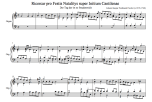
Ricercar pro Festis Natalytis
Ricercar pro Festis Paschalibus
Ricercar pro Festis Pentacostalibus
Ricercar pro tempore adventus
Ricercar pro Tempore Quadragesimae
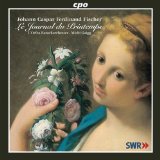
Johann Caspar Ferdinand Fischer was a German Baroque composer. Johann Nikolaus Forkel, a Baroque-era music theorist, ranked Fischer as one of the best composers for keyboard of his day. However, partly due to the rarity of surviving copies of his music, his music is rarely heard today.
Much of Fischer’s music shows the influence of the French Baroque style, exemplified by Jean Baptiste Lully, and he was responsible for bringing the French influence to German music. Fischer’s harpsichord suites updated the standard model at the time, and he was also one of the first composers to apply the principles of the orchestral suite to the harpsichord, replacing the standard French ouverture with an unmeasured prelude. Both Bach and Handel knew Fischer’s work and sometimes borrowed from it. He lived from September 9, 1656, to August 27, 1746.—Excerpted from Wikipedia
Praeludium in F major
Praeludium in Phrygian Mode
Praeludium, Fuga et Finale in E minor
Praeludium, Fuga et Finale in G minor
Ricercar pro Festis Natalytis
Ricercar pro Festis Paschalibus
Ricercar pro Festis Pentacostalibus
Ricercar pro tempore adventus
Ricercar pro Tempore Quadragesimae
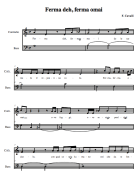
Francesco Cavalli was an Italian composer of the early Baroque period. His real name was Pietro Francesco Caletti-Bruni, but he is better known by that of Cavalli, the name of his patron Federico Cavalli, a Venetian nobleman.
Cavalli was the most influential composer in the rising genre of public opera in mid-17th century Venice. Unlike Monteverdi’s early operas, scored for the extravagant court orchestra of Mantua, Cavalli’s operas make use of a small orchestra of strings and basso continuo to meet the limitations of public opera houses. He introduced melodious arias into his music and popular types into his libretti. His operas have a remarkably strong sense of dramatic effect as well as a great musical facility. His operas provide the only example of a continuous musical development of a single composer in a single genre from the early to the late 17th century in Venice. (Only a few operas by others such as Monteverdi and Antonio Cesti survive.) The development is particularly interesting to scholars because opera was still quite a new medium when Cavalli began working, and had matured into a popular public spectacle by the end of his career.
He wrote forty-one operas, twenty-seven of which are still extant. He lived from February 14, 1602, to January 14, 1676.—Excerpted from Wikipedia
Offers “a unique perspective into the cultural, political and aesthetic transformation of opera from an occasional courtly display to an international pop genre.”—From the book description on Amazon
Francesco Cavalli was an Italian composer of the early Baroque period. His real name was Pietro Francesco Caletti-Bruni, but he is better known by that of Cavalli, the name of his patron Federico Cavalli, a Venetian nobleman.
Cavalli was the most influential composer in the rising genre of public opera in mid-17th century Venice. Unlike Monteverdi’s early operas, scored for the extravagant court orchestra of Mantua, Cavalli’s operas make use of a small orchestra of strings and basso continuo to meet the limitations of public opera houses. He introduced melodious arias into his music and popular types into his libretti. His operas have a remarkably strong sense of dramatic effect as well as a great musical facility. His operas provide the only example of a continuous musical development of a single composer in a single genre from the early to the late 17th century in Venice. (Only a few operas by others such as Monteverdi and Antonio Cesti survive.) The development is particularly interesting to scholars because opera was still quite a new medium when Cavalli began working, and had matured into a popular public spectacle by the end of his career.
He wrote forty-one operas, twenty-seven of which are still extant. He lived from February 14, 1602, to January 14, 1676.—Excerpted from Wikipedia
Offers “a unique perspective into the cultural, political and aesthetic transformation of opera from an occasional courtly display to an international pop genre.”—From the book description on Amazon


 , 1 CD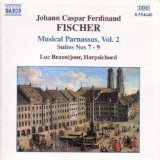
 , 1 CD
 , 1 CD





 , 3-CD set
 , 2-CD set
 , 2-CD set

 On Baroque
You must be logged in to post a comment.