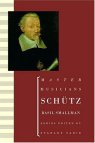
“Oxford has produced another winning entry in The Master Musicians series. Smallman’s narrative weaves discussion of life and works seamlessly, and the extras (calendar, list of works, personalia, bibliography) have been executed superbly.”—B.J. Murray, Choice, on Amazon
“Heinrich Schütz was Germany’s most significant composer before the age of Bach and Handel. He represents the transition between not only two epochs but also two cultures.”—David Ewen,The Complete Book of Classical Music
Schütz was a German composer and organist, generally regarded as the most important German composer before Johann Sebastian Bach and often considered to be one of the most important composers of the 17th century along with Claudio Monteverdi. He wrote what is traditionally considered to be the first German opera, Dafne, performed at Torgau in 1627, the music of which has since been lost.
Schütz’s compositions show the influence of his teacher Gabrieli (displayed most notably with Schütz’s use of polychoral and concertato styles) and of Monteverdi. Additionally, the influence of the Netherlandish composers of the 16th century is prominent in his work. His best known works are in the field of sacred music, ranging from solo voice with instrumental accompaniment to a cappella choral music. Representative works include his three books of Symphoniae sacrae, the Psalms of David, the Sieben Worte Jesu Christi am Kreuz (the Seven Last Words on the Cross), and his three Passion settings.
Schütz’s music, while starting off in the most progressive styles early in his career, eventually grew into a style that is simple and almost austere, culminating with his late Passion settings.
He was one of the last composers to write in a modal style. His harmonies often result from the contrapuntal alignment of voices rather than from any sense of “harmonic motion”; contrastingly, much of his music shows a strong tonal pull when approaching cadences. His music includes a great deal of imitation, but structured in such a way that the successive voices do not necessarily enter after the same number of beats or at predictable intervallic distances.
Schütz’s writing often includes intense dissonances caused by the contrapuntal motion of voices moving in correct individual linear motion, but resulting in harmonic tension. Above all, his music displays sensitivity to the accents and meaning of the text, which is often conveyed using special technical figures drawn from musica poetica, themselves drawn from or created in analogy to the verbal figures of classical rhetoric.
Beyond the early book of madrigals, almost no secular music by Schütz has survived, save for a few domestic songs (arien) and no purely instrumental music at all (unless one counts the short instrumental movement entitled “sinfonia” that encloses the dialogue of Die sieben Worte), even though he had a reputation as one of the finest organists in Germany.
Schütz was of great importance in bringing new musical ideas to Germany from Italy, and as such had a large influence on the German music which was to follow. The style of the North German organ school derives largely from him. A century later this music was to culminate in the work of J.S. Bach. He lived from October 18, 1585, to November 18, 1672.—Excerpted from Wikipedia
“Oxford has produced another winning entry in The Master Musicians series. Smallman’s narrative weaves discussion of life and works seamlessly, and the extras (calendar, list of works, personalia, bibliography) have been executed superbly.”—B.J. Murray, Choice, on Amazon
“The oratorio, like the opera, was a child of the Baroque era. Giacomo Carissimi was the first master of the oratorio. He developed some of the conventions that were henceforth to govern that genre. With Carissimi, the oratorio began to take recognizable shape as a dramatized setting of a biblical (or some other form of sacred) text, for solo voices, chorus, and orchestra. BUt where earlier such dramas had been staged, those by Carissimi were among the first to dispense with scenery and costumes.”—David Ewen,The Complete Book of Classical Music
Giacomo Carissimi was an Italian composer. He is widely celebrated as a master of the early Baroque period or, more accurately, the Roman School of music. He is credited with further developing the recitative, introduced by Monteverdi, which is important to the history of dramatic music. He is also credited with further developing the chamber cantata, by which Carissimi superseded the concertato madrigals which had themselves replaced the madrigals of the late Renaissance, and with developing the oratorio, of which he was the first significant composer.
Carissimi’s position in the history of church, vocal and chamber music is somewhat similar to that of Francesco Cavalli in the history of opera. While Luigi Rossi was his predecessor in developing the chamber cantata, Carissimi was the composer who first made this form the vehicle for the most intellectual style of chamber music, a function which it continued to perform until the death of Alessandro Scarlatti, Emanuele d’Astorga, and Benedetto Marcello.
Of his oratorios, Jephte as probably his best known work, along with Jonas. These and other works are important for establishing the form of oratorio unaccompanied by dramatic action, which maintained its hold for 200 years. The name comes from their presentation at the Oratory of Santissimo Crocifisso in Rome. He may also be credited for having given greater variety and interest to the instrumental accompaniments of vocal compositions.
Carissimi was active at the time when secular music was about to usurp the dominance of sacred music in Italy. The change was decisive and permanent. When he began composing, the influence of the previous generations of Roman composers was still heavy, and when his career came to a close the operatic forms, as well as the instrumental secular forms, were predominant. He lived from April 18, 1605, to January 12, 1674.—Excerpted from Wikipedia
Note: This list of Carissimi’s works is incomplete.
Arie
Ars Cantandi
Il Ciarlatano
Duetti da Camera
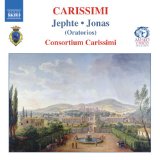
Jephte
Jonas
Judicium Salomonis
Mesto in sen d’un antro ombroso
Motetti
Prelude
Pulchra et decora
Tre parti di una messa inedita a otto voce
Vittoria, mio core
“The oratorio, like the opera, was a child of the Baroque era. Giacomo Carissimi was the first master of the oratorio. He developed some of the conventions that were henceforth to govern that genre. With Carissimi, the oratorio began to take recognizable shape as a dramatized setting of a biblical (or some other form of sacred) text, for solo voices, chorus, and orchestra. But where earlier such dramas had been staged, those by Carissimi were among the first to dispense with scenery and costumes.”—David Ewen, The Complete Book of Classical Music
Giacomo Carissimi was an Italian composer. He is widely celebrated as a master of the early Baroque period or, more accurately, the Roman School of music. He is credited with further developing the recitative, introduced by Monteverdi, which is important to the history of dramatic music. He is also credited with further developing the chamber cantata, by which Carissimi superseded the concertato madrigals which had themselves replaced the madrigals of the late Renaissance, and with developing the oratorio, of which he was the first significant composer.
Carissimi’s position in the history of church, vocal and chamber music is somewhat similar to that of Francesco Cavalli in the history of opera. While Luigi Rossi was his predecessor in developing the chamber cantata, Carissimi was the composer who first made this form the vehicle for the most intellectual style of chamber music, a function which it continued to perform until the death of Alessandro Scarlatti, Emanuele d’Astorga, and Benedetto Marcello.
Of his oratorios, Jephte as probably his best known work, along with Jonas. These and other works are important for establishing the form of oratorio unaccompanied by dramatic action, which maintained its hold for 200 years. The name comes from their presentation at the Oratory of Santissimo Crocifisso in Rome. He may also be credited for having given greater variety and interest to the instrumental accompaniments of vocal compositions.
Carissimi was active at the time when secular music was about to usurp the dominance of sacred music in Italy. The change was decisive and permanent. When he began composing, the influence of the previous generations of Roman composers was still heavy, and when his career came to a close the operatic forms, as well as the instrumental secular forms, were predominant. He lived from April 18, 1605, to January 12, 1674.—Excerpted from Wikipedia
Note: This list of Carissimi’s works is incomplete.
Arie
Ars Cantandi
Il Ciarlatano
Duetti da Camera
Jephte
Jonas
Judicium Salomonis
Mesto in sen d’un antro ombroso
Motetti
Prelude
Pulchra et decora
Tre parti di una messa inedita a otto voce
Vittoria, mio core


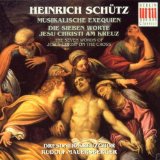
 Musikalische Exequien (1995)
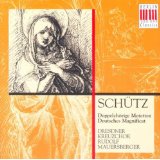 Motets / German Magnificat (2009)
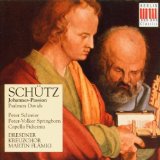
 , 1 CD




 , 1 CD
 , 1 CD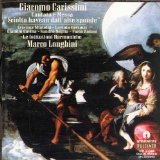
 , 1 CD


 On Baroque
You must be logged in to post a comment.