Stabat Mater

Source: CPDL.org
Giuseppe Tartini Books and Music
More on Tartini
Back to home page
Devil’s Trill Sonata, Allegro Assai
Giuseppe Tartini Books and Music
More on Tartini
Back to home page
“Among Corelli’s many successors in the art of playing the violin and of writing music for the instrument, Giuseppe Tartini was the most significant. He wrote some 150 violin concertos and a hundred violin sonatas in which the technique of violin performance made significant progress over that established by Corelli. At the same time, Tartini’s thematic material reveals a deepening of thought and an enrichment of expression far beyond any realized by Corelli.”—David Ewen, The Complete Book of Classical Music
Giuseppe Tartini’s most famous work is the “Devil’s Trill Sonata,” a solo violin sonata that requires a number of technically demanding double stop trills and is difficult even by modern standards. According to a legend embroidered upon by Madame Blavatsky, Tartini was inspired to write the sonata by a dream in which the Devil appeared at the foot of his bed playing the violin.
Almost all of Tartini’s works are violin concerti, of which there are at least 135, and violin sonatas. Tartini’s compositions include some sacred works such as a Miserere, composed between 1739 and 1741 at the request of Pope Clement XII, and a Stabat Mater, composed in 1769. He also composed trio sonatas and a sinfonia in A. Tartini’s music is problematic to scholars and editors because Tartini never dated his manuscripts, and he also revised works that had been published, making it difficult to determine when a work was written, when it was revised and what the extent of those revisions were.
In addition to his work as a composer, Tartini was a music theorist, of a very practical bent. He is credited with the discovery of sum and difference tones, an acoustical phenomenon of particular utility on string instruments (intonation of double-stops can be judged by careful listening to the difference tone, the “terzo suono”). He published his discoveries in a treatise “Trattato di musica secondo la vera scienza dell’armonia’.” It was eventually translated into French, and later published in an English translation by Sol Babitz in 1956, and that was later translated into German.
Tartini was born in Piran, a town on the peninsula of Istria, in the Republic of Venice (now in Slovenia). He lived from April 8, 1692, to February 26, 1770.—Excerpted from Wikipedia
Giuseppe Tartini Books and Music
More on Tartini
Back to home page
Tartini composed more than 130 Concerti for violin, two Concerti for flute and two Cello concerti as well as over 170 Sonatas for violin, with or without continuo, some 50 Sonatas a Tre and 4 Sonatas a Quatre. Only some 20 conerti and 50 sonatas were published, so the remainder exist only in the forms of manuscripts. A catalogue of Tartini’s concerti was drawn up by Minos Doumias, numbered according to their keys. The most accurate dating applies to some of the works published during Tartini’s life time. Doumias has divided the remainder of the works based on style, sorting the concerti into three main periods: prior to 1735, 1735-1750, and after 1750.—Excerpted from Marcel Safier’s Tartini page
Concertos and Sonatas:
Concerto in A major D.96
Concerto in B minor D.125
Concerto in C major D.2
Concerto in G major for Flute, Strings and Continuo
Concerto in D minor D.115
Sonata A Quatre in G major for String Orchestra
Concerto in D major for Cello, Strings and Continuo
Variations on a Theme by Corelli for Violin and Continuo Sonata a tre in D minor
Sonata in D minor for solo Violin
Sonata in A major “Pastoral” for Violin and Continuo
Sonata a tre in D major
Sonata in G minor Op.1 No.10
2 Concerti for Violin:
Concerto in E minor D.56
Concerto in G for Violin, Strings and Conitnuo D.83
For complete list, go to Marcel Safier’s Tartini page.
Giuseppe Tartini Books and Music
More on Tartini
Back to home page
Selected Books
Trattato Di Musica: Secondo La Vera Scienza Dell’ Armonia
Kessinger Publishing (Italian edition of 1754 work)
Giuseppe Tartini
$16.52 on Amazon

“Tartini, a music theorist as well as composer, published his ideas on what is now known as ‘sum and difference tones,’ in which the intonation of double-stops can be determined by noting the difference in tones. This is called the terzo suono in Italian.”—On Baroque
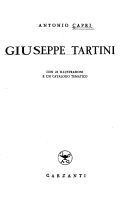
Giuseppe Tartini
Garzanti, 1945
Antonio Capri
$62.16 on Amazon

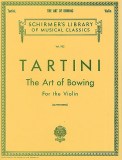
The Art of Bowing for the Violin
Monzani & Hill, 1825
Giuseppe Tartini
Currently unavailable on Amazon
Selected Music
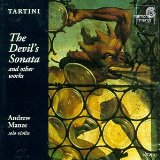
 The Devil’s Sonata and Other Works (1998)
 Violin Concertos (2007)
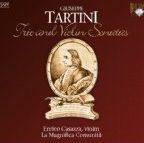
 Trio and Violin Sonatas (2008)
More Giuseppe Tartini music
More on Tartini
Back to home page

Violin Concerto Vol. 11
Violin Concerto Vol. 7
Concerto per Violoncello
Stabat Mater
Source: CPDL.org
Devil’s Trill Sonata, Allegro Assai
“Among Corelli’s many successors in the art of playing the violin and of writing music for the instrument, Giuseppe Tartini was the most significant. He wrote some 150 violin concertos and a hundred violin sonatas in which the technique of violin performance made significant progress over that established by Corelli. At the same time, Tartini’s thematic material reveals a deepening of thought and an enrichment of expression far beyond any realized by Corelli.”—David Ewen, The Complete Book of Classical Music
Giuseppe Tartini’s most famous work is the “Devil’s Trill Sonata,” a solo violin sonata that requires a number of technically demanding double stop trills and is difficult even by modern standards. According to a legend embroidered upon by Madame Blavatsky, Tartini was inspired to write the sonata by a dream in which the Devil appeared at the foot of his bed playing the violin.
Almost all of Tartini’s works are violin concerti, of which there are at least 135, and violin sonatas. Tartini’s compositions include some sacred works such as a Miserere, composed between 1739 and 1741 at the request of Pope Clement XII, and a Stabat Mater, composed in 1769. He also composed trio sonatas and a sinfonia in A. Tartini’s music is problematic to scholars and editors because Tartini never dated his manuscripts, and he also revised works that had been published, making it difficult to determine when a work was written, when it was revised and what the extent of those revisions were.
In addition to his work as a composer, Tartini was a music theorist, of a very practical bent. He is credited with the discovery of sum and difference tones, an acoustical phenomenon of particular utility on string instruments (intonation of double-stops can be judged by careful listening to the difference tone, the “terzo suono”). He published his discoveries in a treatise “Trattato di musica secondo la vera scienza dell’armonia’.” It was eventually translated into French, and later published in an English translation by Sol Babitz in 1956, and that was later translated into German.
Tartini was born in Piran, a town on the peninsula of Istria, in the Republic of Venice (now in Slovenia). He lived from April 8, 1692, to February 26, 1770.—Excerpted from Wikipedia
Selected Books
Trattato Di Musica: Secondo La Vera Scienza Dell’ Armonia
Kessinger Publishing (Italian edition of 1754 work)
Giuseppe Tartini
$16.52 on Amazon
“Tartini, a music theorist as well as composer, published his ideas on what is now known as ‘sum and difference tones,’ in which the intonation of double-stops can be determined by noting the difference in tones. This is called the terzo suono in Italian.”—On Baroque
Giuseppe Tartini
Garzanti, 1945
Antonio Capri
$62.16 on Amazon
The Art of Bowing for the Violin
Monzani & Hill, 1825
Giuseppe Tartini
Currently unavailable on Amazon
Selected Music
 The Devil’s Sonata and Other Works (1998)
 Violin Concertos (2007)
 Trio and Violin Sonatas (2008)
Tartini composed more than 130 Concerti for violin, two Concerti for flute and two Cello concerti as well as over 170 Sonatas for violin, with or without continuo, some 50 Sonatas a Tre and 4 Sonatas a Quatre. Only some 20 conerti and 50 sonatas were published, so the remainder exist only in the forms of manuscripts. A catalogue of Tartini’s concerti was drawn up by Minos Doumias, numbered according to their keys. The most accurate dating applies to some of the works published during Tartini’s life time. Doumias has divided the remainder of the works based on style, sorting the concerti into three main periods: prior to 1735, 1735-1750, and after 1750.—Excerpted from Marcel Safier’s Tartini page
Concertos and Sonatas:
Concerto in A major D.96
Concerto in B minor D.125
Concerto in C major D.2
Concerto in G major for Flute, Strings and Continuo
Concerto in D minor D.115
Sonata A Quatre in G major for String Orchestra
Concerto in D major for Cello, Strings and Continuo
Variations on a Theme by Corelli for Violin and Continuo Sonata a tre in D minor
Sonata in D minor for solo Violin
Sonata in A major “Pastoral” for Violin and Continuo
Sonata a tre in D major
Sonata in G minor Op.1 No.10
2 Concerti for Violin:
Concerto in E minor D.56
Concerto in G for Violin, Strings and Conitnuo D.83
For complete list, go to Marcel Safier’s Tartini page.
Handel’s compositions include 42 operas, 29 oratorios, more than 120 cantatas, trios, and duets, numerous arias, chamber music, a large number of ecumenical pieces, odes and serenatas, and 16 organ concerti.
His oratorio Messiah, with its “Hallelujah” chorus, is among the most famous Baroque works and is a popular choice for performances during the Christmas season. Among Handel’s best-known instrumental works are the Concerti Grossi Opus 3 and 6, “The Cuckoo and the Nightingale,” in which birds are heard calling during passages played in different keys representing the vocal ranges of two birds, and his 16 keyboard suites, especially The Harmonious Blacksmith.
Collected editions of Handel’s works include the Händel-Gesellschaft and the Hallische Händel-Ausgabe, however the more recent Händel-Werke-Verzeichnis publication is now commonly used to number his works. For example, Handel’s Messiah can be referred to as HG xlv, HHA i/17, or HWV 56. Some of Handel’s music is also numbered based on initial publications. For example, a 1741 publication by Walsh labelled twelve of Handel’s concerti grossi as Opus 6.—Excerpted from Wikipedia
Handel produced hundreds of pieces over his career. Access complete list on Wikipedia.
“Though George Frideric Handel’s best concerti grossi and orchestral suites is music of uncommon distinction, and though he filled his solo concerti and sonatas with the most infectious ideas, he is essentially a dramatic and not an instrumental composer. He gained his fame through operas—his immortality, through oratorios.”—David Ewen, The Complete Book of Classical Music
George Frideric Handel was a German-born British Baroque composer, famous for his operas, oratorios, anthems, and organ concertos. Handel was born in 1685, in a family indifferent to music. He received critical musical training in Halle, Hamburg, and Italy before settling in London in 1712 and becoming a naturalised British subject in 1727. By then he was strongly influenced by the great composers of the Italian Baroque and the middle-German polyphonic choral tradition.
Within fifteen years, Handel had started three commercial opera companies to supply the English nobility with Italian opera, but the public came to hear the vocal bravura of the soloists rather than the music. In 1737 he had a physical breakdown, changed direction creatively, and addressed the middle class and made a transition to English choral works. After his success with Messiah (1742) he never performed an Italian opera again. Handel was only partly successful with his performances of English oratorio on mythical and biblical themes, but when he arranged a performance of Messiah to benefit the Foundling Hospital (1750) the criticism ended. Almost blind, and having lived in England for almost fifty years, he died in 1759, a respected and rich man.
Handel is regarded as one of the greatest composers of all time, with works such as Water Music, Music for the Royal Fireworks, and Messiah remaining popular. Handel composed more than forty operas in over thirty years, and since the late 1960s, with the revival of baroque music and original instrumentation, interest in Handel’s operas has grown. He lived from February 23, 1685, to April 14, 1759.—Excerpted from Wikipedia
George Frederic Handel Books and Music
More on Handel
Back to home page
Hallelujah chorus from Messiah

Source: CPDL.org
George Frederic Handel Books and Music
More on Handel
Back to home page


 On Baroque
You must be logged in to post a comment.