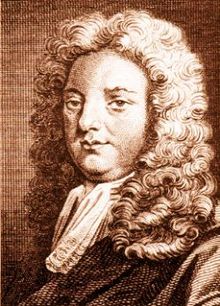
John Blow, 1649-1708

Blow

Selected Recordings

Venus and Adonis, Act I

O pray for the peace of Jerusalem

Salvator mundi

Selected Sheet Music

Air
air

Source: IMSLP.org

Showcase Piece

Ground in G for 2 Violins and Continuo

Notes and Commentary

John Blow was an English Baroque composer and organist, appointed to Westminster Abbey in 1669. His pupils included Henry Purcell. In 1685 he was named a private musician to James II. His only stage composition, Venus and Adonis, was thought to influence Henry Purcell’s later opera Dido and Aeneas. In 1687 he became choirmaster at St Paul’s Cathedral, where many of his pieces were performed. In 1699 he was appointed to the newly created post of Composer to the Chapel Royal. Fourteen services and more than a hundred anthems by Blow are known. In 1700 he published his Amphion Anglicus, a collection of pieces of music for one, two, three and four voices, with a figured bass accompaniment. A famous page in Charles Burney’s History of Music is devoted to illustrations of Blow’s “crudities”. These show the immature efforts in expression characteristic of English music at the time. Some of them have since been judged to be excellent. He lived from February 1649 to October 1, 1708. —Excerpted from Wikipedia

Books and Music

Selected Books

The Trumpet
Yale Univ. Press,
John Wallace
$36 on Amazon

trumpet

“Provides a remarkable overview of all important trumpet topics and includes complete analysis of important works. Some reporting is done with considerable bias (the authors are trumpeters) including a suspect appendix of important 20th century works that includes far more than a fair share of the author’s own commissions.”—Andy on Amazon

Selected Music

adonis Venus & Adonis (2008), 1 CD

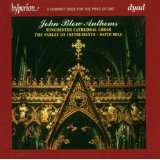
anthems Anthems (2006), 2-CD set

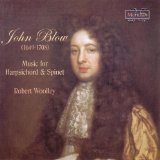
spinet Music for Harpsichord & Spinet (2003), 1 CD

More John Blow music

Complete Works

Morning canticles
Te Deum in A
Jubilate Deo in A
Cantate Domino in A
Deus Misereatur in A
Te Deum in E minor
Jubilate Deo in E minor
Te Deum in G
Jubilate in G

Communion settings
Kyrie in A
Nicene Creed in A
Kyrie in E minor
Nicene Creed in E minor
Kyrie in G
Nicene Creed in G
Kyrie in G
Nicene Creed in G

Evening canticles
Cantate Domino in E minor
Deus Misereatur in E minor
Magnificat and Nunc dimittis in G

Full anthems
Behold, O God our defender
Be merciful unto me O Lord
God is our hope and strength
Let my prayer come up
Let thy hand be strengthened
My days are gone like a shadow
My God, my God, look upon me
O God, wherefore art thou absent
Praise the Lord, ye servants
Save me O God
The Lord hear thee

Verse anthems
God spake sometime in visions
I was in the spirit
O pray for the peace of Jerusalem

Latin works
Salvator mundi

Catches (secular)
Catch on the battle at Hailbron
On The Kings coming home

Other works
Air
Amphion Anglicus
An Ode on the Death of Mr. Henry Purcell
Prelude in C major
Venus and Adonis
Back to home page

Attilio Ariosti: Selected Recordings

Sonata No. 12 in E minor for viola d’amore

Cantata for alto, flute, violin and basso continuo

Sonata G dur

Attilio Ariosti Books and Music
More on Ariosti
back to home page

Attilio Ariosti: Notes and Commentary

Attilio Malachia Ariosti, principally noted for his work with viola d’amore and opera, was a Servite Friar and Italian composer in the Baroque style, born in Bologna. He produced more than 30 operas and oratorios, numerous cantata, and instrumental works.

In 1697, in Berlin, he wrote and collaborated in the writing of a number of stage works performed for the court. He resided as the court composer until 1703.

His first opera was performed in Venice in 1697. From 1703 to 1709 he was the General Austrian Agent for Italy, during the reign of Joseph I. After 1716 he achieved success in Paris and London. In London, he shared with Georg Frideric Handel and Giovanni Bononcini the directorship of the Royal Academy of Music, and he played the viola d’amore in an entr’acte in Handel’s Amadigi di Gaula. In 1724 he published a Collection of Cantatas, and Lessons for the Viola d’Amour, which he sold by subscription. This publication might have been the most successful sale of music by subscription in the 18th century.

He wrote 21 solo sonatas for the the viola d’amore, which is a viola with resonating or sympathetic strings (unplayed strings beneath the regular stings that resonate when the strings above them are played). These are usually called the Stockholm Sonatas, as the sole surviving source for most of them is in the Statens Musikbibliotek in Stockholm, Sweden. The Stockholm Sonatas display Ariosti’s liking for surprising harmonies, his inventive use of silence, and his wit.—Excerpted from Wikipedia

Attilio Ariosti Books and Music
More on Ariosti
back to home page

Attilio Ariosti: Complete Works

Instrumental music

  • Concerts (lost)
  • Some sonatas for viola and violoncello

Oratorios
The best known is “La Passione di Cristo” (Vienna, 1709)
Operas
Altogether 23 operas, among them:

  • La festa di Imeneo” – (Berlin) balletto.
  • Atys” – (Berlin).
  • La fede nei tradimenti” – (Berlin, 1701).
  • Marte e Irene” – (Berlin, 1703).
  • I gloriosi presagi del Scipione Africano” – (Vienna, 1704).
  • La profezia d’Eliseo nell’assedio di Samaria” – (Vienna, 1705).
  • Marte placato” – (Vienna, 1707).
  • La gara delle antiche eroine ne’ campi elisi” – (Vienna, 1707).
  • Amor tra nemici” – (Vienna, 1708).
  • La Placidia” – (Vienna, 1709).
  • Coriolano” – (London, 1723).
  • Lucio Vero” – (London, 1726).
  • Vespasiano e Artaserse” – (London, 1724).
  • Dario” – (London, 1725).

Librettos

  • Gli amori di Polifemo“, music by Giovanni Bononcini.

Excerpted from Wikipedia

Attilio Ariosti Books and Music
More on Ariosti
back to home page

Attilio Ariosti: Books and Music

Selected Books

Attilio Ariosti in Berlin (German Edition)
Leipzig, Druck von Giesecke & Devrient, 1905 (facsimilie)
Alfred Leopold Ebert
$10.44 on Amazon

aa-berlin

Collection of Lessons for the Viol d’amore
Attilio Ariosti

aa-lessons

Die Viola d’amore
Heinz Berck
38.50 euros
Berck

Selected Music

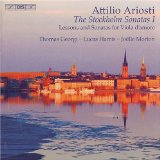
stockholm sonatas Stockholm Sonatas 1 (2007), 1 CD

six sonatas Six Sonatas for Viola d’Amore and Harpsichord (1979), 1 vinyl album

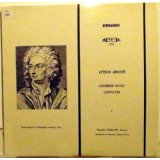
aa-chamber Chamber Music, Cantatas, 1 vinyl album

More Attilio Ariosti music

More on Ariosti
back to home page

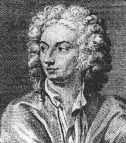
Attilio Ariosti, 1666-1729

ariosti

Selected Recordings

Sonata No. 12 in E minor for viola d’amore

Cantata for alto, flute, violin and basso continuo

Sonata G dur

Selected Sheet Music

Vespasian

Vespasian

Source: IMSLP.org

Showcase Piece

Sonata in A Minor for Viola d´amore

Notes and Commentary

Attilio Malachia Ariosti, principally noted for his work with viola d’amore and opera, was a Servite Friar and Italian composer in the Baroque style, born in Bologna. He produced more than 30 operas and oratorios, numerous cantata, and instrumental works.

In 1697, in Berlin, he wrote and collaborated in the writing of a number of stage works performed for the court. He resided as the court composer until 1703.

His first opera was performed in Venice in 1697. From 1703 to 1709 he was the General Austrian Agent for Italy, during the reign of Joseph I. After 1716 he achieved success in Paris and London. In London, he shared with Georg Frideric Handel and Giovanni Bononcini the directorship of the Royal Academy of Music, and he played the viola d’amore in an entr’acte in Handel’s Amadigi di Gaula. In 1724 he published a Collection of Cantatas, and Lessons for the Viola d’Amour, which he sold by subscription. This publication might have been the most successful sale of music by subscription in the 18th century.

He wrote 21 solo sonatas for the the viola d’amore, which is a viola with resonating or sympathetic strings (unplayed strings beneath the regular stings that resonate when the strings above them are played). These are usually called the Stockholm Sonatas, as the sole surviving source for most of them is in the Statens Musikbibliotek in Stockholm, Sweden. The Stockholm Sonatas display Ariosti’s liking for surprising harmonies, his inventive use of silence, and his wit.—Excerpted from Wikipedia

Books and Music

Selected Books

Attilio Ariosti in Berlin (German Edition)
Leipzig, Druck von Giesecke & Devrient, 1905 (facsimilie)
Alfred Leopold Ebert
$10.44 on Amazon

aa-berlin

Collection of Lessons for the Viol d’amore
Attilio Ariosti

aa-lessons

Die Viola d’amore
Heinz Berck
38.50 euros
Berck

Selected Music

stockholm sonatas Stockholm Sonatas 1 (2007), 1 CD

six sonatas Six Sonatas for Viola d’Amore and Harpsichord (1979), 1 vinyl album

aa-chamber Chamber Music, Cantatas, 1 vinyl album

More Attilio Ariosti music

Complete Works

Instrumental music

  • Concerts (lost)
  • Some sonatas for viola and violoncello

Oratorios
The best known is “La Passione di Cristo” (Vienna, 1709)
Operas
Altogether 23 operas, among them:

  • La festa di Imeneo” – (Berlin) balletto.
  • Atys” – (Berlin).
  • La fede nei tradimenti” – (Berlin, 1701).
  • Marte e Irene” – (Berlin, 1703).
  • I gloriosi presagi del Scipione Africano” – (Vienna, 1704).
  • La profezia d’Eliseo nell’assedio di Samaria” – (Vienna, 1705).
  • Marte placato” – (Vienna, 1707).
  • La gara delle antiche eroine ne’ campi elisi” – (Vienna, 1707).
  • Amor tra nemici” – (Vienna, 1708).
  • La Placidia” – (Vienna, 1709).
  • Coriolano” – (London, 1723).
  • Lucio Vero” – (London, 1726).
  • Vespasiano e Artaserse” – (London, 1724).
  • Dario” – (London, 1725).

Librettos

  • Gli amori di Polifemo“, music by Giovanni Bononcini.

Excerpted from Wikipedia

Back to home page

He lived from November 5, 1666, to 1729.

The Mystery of the Violetta Marina

Castrucci

Castrucci

It’s great acquainting yourself with composers who are unfamiliar to you and I was getting to know Pietro Castrucci when I read that he had invented something called the violetta marina. There was no explanation of what that was, but since “violetta” refers to a small violin, it appeared to be some type of string instrument.

Of course, the first thing I did was search the term on Google and there was little about it. But I did come across a discussion on the topic among violin makers, and one mentioned that he believed Handel used one in Orlando, his 1733 opera.

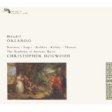
Orlando

Handel’s Olando

The consensus among the violin makers was that the instrument was a type of viola with sympathetic strings, what’s called a viola d’amore. Sympathetic strings (sometimes also referred to as resonating strings), are strings that sit below the regular strings and vibrate, or resonate, in sympathy with the strings above them as they’re played. (Click on the violin image below.) A few Baroque composers, including Franz Biber and Attilio Ariosti, make fairly extensive use of instruments with sympathetic strings. Vivaldi also uses them in some of his compositions. I especially like Biber’s use of them in Harmonia Artificiosa. A good example is his Partia VII. Listen to the first 30 seconds and you’ll hear the resonating strings. (Click on the video at the end of this post.)

sympathetic strings

Sympathetic strings.
Click to enlarge.

And yet the mystery persists, because even violin makers can’t say with any certainty how the violetta marina differs from the viola d’amore. “I don’t think that any such instrument has been found,” says Myron Rosenblum, one of the participants in the violin makers’ discussion.

The Viola da Gamba Society of America thinks it’s a small, three-stringed viola with a sympathetic string.

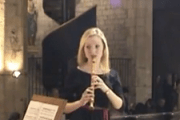
Castrucci is a fairly obscure composer. I can find only one full album of his music on Amazon, his 6 Concerti Grossi, Op. 3. Castrucci Grossi He’s featured on some compilations with other Italian composers, but little of his work appears to be around today. Even the International Music Score Library Project (IMSLP), which is so thorough in cataloguing sheet music, has no Castrucci compositions in its databases. On YouTube there are performances of some sonatas featuring recorder solos (see the image below for Sonata No. 3), but other than those, plus the Concerti Grosso, there isn’t much.

Cowley

Castrucci Sonata No. 3 for Recorder

We do know Castrucci studied with Corelli for a while and later was the leader of the opera orchestra of George Frideric Handel, so he would be familiar with Handel’s use of the viola d’amore in Orlando.

Ideally, we would go to that opera to hear what the violetta marina sounds like, since the piece calls for it, but contemporary recordings use the viola d’amore.

For a while I wondered if the instrument is in some way related, or developed in tribute, to French composer Marin Marais, who was noted for his basse de viol work. Indeed, he is probably the leading historical composer of that instrument. Given that Castrucci named his instument violetta marina, it makes you wonder if he wasn’t trying to produce an instrument with a sound that resonated with Marais’s work.

tromba marina

Tromba Marina

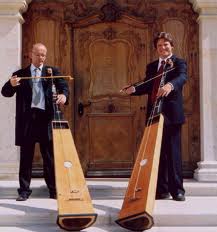
geiringer But then I came across a reference to the tromba marina in a book called Instruments in the History of Western Music by Karl Geiringer. The tromba marina is an unusual single-string instrument that makes the sound of a trumpet. One theory that has stuck to the instrument is that it was played by nuns to mimic the sound of the trumpet because they were prohibited from having brass instruments in their convent.
Whether there’s any connection between these two marinas, the tromba and the violetta, is unclear. Given that, and as long as even violin makers don’t know what the violetta marina is, the idea that it’s an instrument that tries to channel Marin Marais is probably as good a theory as any.

In any case, the viola d a’more produces a wonderful sound. I especially like it in Biber’s work. It would be great to eventually get to the bottom of the mystery of the violetta marina, because I’m sure many people would like to hear what works written for viola d’amore sound like using Castrucci’s invention.—Nabob, On Baroque

Franz Biber’s Partia VII:

Back to Point Against Point
Back to home page