“The importance of this work in the history of music would be hard to overestimate. While later music theorists and analysts, such as Schenker, find this emphasis on chords to be destructive to the horizontal considerations that make a great work hold together, this work has influenced so many people that even those that do not even know his name but talk about root position chords and their inversions are invoking his concepts without realizing the source.”—Craig Matteson on Amazon
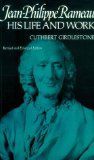
“OK, this is unquestionably a major book on Rameau, if not THE major work. So let’s get that out of the way. Masterful, scholarly, detailed and analytical, it’s a must. But, Rameau gave us more than most people know. First of all, he codified harmony for centuries to come. . . . The Baroque started with harmony in flux, and by the time it was over, there were certain progressions and cadences that had become established, and that still make sense today. . . . And Rameau was the man who set it down. His treatises are hard reading, and I suspect still not fully understood. And here is a basic problem with Girdlestone. In such a thick book, 600 pages, how can you fail to even try [to talk about this]? He mentions that others have covered the subject, and backs out at the outset of a brief chapter in which he mainly teeters on the verge of calling Rameau a crank. And that is not very deep or adventurous for what aims to be a definitive book on Rameau.”—Fernand Raynaud on Amazon
“With Jean-Philipe Rameau, the golden age of French classical opera is at hand. Lully was the founder of the French opera, and in essence Rameau’s operas were an extension of Lully, and not a departure. This fact makes all the more ridiculous the bitter war raged against Rameau by the Lully faction, which came to regard Rameau as an arch enemy, the negation of what Lully stood for and accomplished.”—David Ewen,The Complete Book of Classical Music
“Top early French harpsichord genius, theorist, and opera specialist”—Phil Goulding, Classical Music
Jean-Philippe Rameau was one of the most important French composers and music theorists of the Baroque era. He replaced Jean-Baptiste Lully as the dominant composer of French opera and is also considered the leading French composer for the harpsichord of his time, alongside François Couperin.
Little is known about Rameau’s early years, and it was not until the 1720s that he won fame as a major theorist of music with his Treatise on Harmony (1722). He was almost 50 before he embarked on the operatic career on which his reputation chiefly rests. His debut, Hippolyte Et Aricie(1733), caused a great stir and was fiercely attacked for its revolutionary use of harmony by the supporters of Lully’s style of music.
Nevertheless, Rameau’s pre-eminence in the field of French opera was soon acknowledged, and he was later attacked as an “establishment” composer by those who favoured Italian opera during the controversy known as the Querelle des Bouffons in the 1750s. Rameau’s music had gone out of fashion by the end of the 18th century, and it was not until the 20th that serious efforts were made to revive it. Today, he enjoys renewed appreciation with performances and recordings of his music ever more frequent. He lived from September 25, 1683, to September 12, 1764.—Excerpted from Wikipedia
“The importance of this work in the history of music would be hard to overestimate. While later music theorists and analysts, such as Schenker, find this emphasis on chords to be destructive to the horizontal considerations that make a great work hold together, this work has influenced so many people that even those that do not even know his name but talk about root position chords and their inversions are invoking his concepts without realizing the source.”—Craig Matteson on Amazon
“OK, this is unquestionably a major book on Rameau, if not THE major work. So let’s get that out of the way. Masterful, scholarly, detailed and analytical, it’s a must. But, Rameau gave us more than most people know. First of all, he codified harmony for centuries to come. . . . The Baroque started with harmony in flux, and by the time it was over, there were certain progressions and cadences that had become established, and that still make sense today. . . . And Rameau was the man who set it down. His treatises are hard reading, and I suspect still not fully understood. And here is a basic problem with Girdlestone. In such a thick book, 600 pages, how can you fail to even try [to talk about this]? He mentions that others have covered the subject, and backs out at the outset of a brief chapter in which he mainly teeters on the verge of calling Rameau a crank. And that is not very deep or adventurous for what aims to be a definitive book on Rameau.”—Fernand Raynaud on Amazon
RCT 18 – Avec du vin, endormons-nous (2 sopranos, Tenor) (1719)
RCT 18bis – L’épouse entre deux draps (3 sopranos) (formerly attributed to François Couperin)
RCT 18ter – Je suis un fou Madame (3 voix égales) (1720)
RCT 19 – Mes chers amis, quittez vos rouges bords (3 sopranos, 3 basses) (pub. 1780)
RCT 20 – Réveillez-vous, dormeur sans fin (5 voix égales) (pub. 1722)
RCT 20bis – Si tu ne prends garde à toi (2 sopranos, bass) (1720)
Songs
RCT 21.1 – L’amante préoccupée or A l’objet que j’adore (soprano, continuo) (1763)
RCT 21.2 – Lucas, pour se gausser de nous (soprano, bass, continuo) (pub. 1707)
RCT 21.3 – Non, non, le dieu qui sait aimer (soprano, continuo) (1763)
RCT 21.4 – Un Bourbon ouvre sa carrière or Un héros ouvre sa carrière (alto, continuo) (1751, air belonging to Acante et Céphise but censored before its first performance and never reintroduced in the work).
Cantatas
RCT 23 – Aquilon et Orithie (between 1715 and 1720)
RCT 28 – Thétis (same period)
RCT 26 – L’impatience (same period)
RCT 22 – Les amants trahis (around 1720)
RCT 27 – Orphée (same period)
RCT 24 – Le berger fidèle (1728)
RCT 25 – Cantate pour le jour de la Saint Louis (1740)
Operas and stage works
Main article: List of operas by Rameau
Tragédies en musique
RCT 43 – Hippolyte et Aricie (1733; revised 1742)
RCT 32 – Castor et Pollux (1737; revised 1754)
RCT 35 – Dardanus (1739; revised 1744 and 1760)
RCT 62 – Zoroastre (1749; revised 1756, with new music for Acts II, III & V)
RCT 31 – Les Boréades or Abaris (unperformed; in rehearsal 1763)
Opéra-ballets
RCT 44 – Les Indes galantes (1735; revised 1736)
RCT 41 – Les fêtes d’Hébé or les Talens Lyriques (1739)
RCT 39 – Les fêtes de Polymnie (1745)
RCT 59 – Le temple de la gloire (1745; revised 1746)
RCT 38 – Les fêtes de l’Hymen et de l’Amour or Les Dieux d’Egypte (1747)
RCT 58 – Les surprises de l’Amour (1748; revised 1757)
Pastorales héroïques
RCT 60 – Zaïs (1748)
RCT 49 – Naïs (1749)
RCT 29 – Acante et Céphise or La sympathie (1751)
RCT 34 – Daphnis et Eglé (1753)
Comédies lyriques
RCT 53 – Platée or Junon jalouse (1745)
RCT 51 – Les Paladins or Le Vénitien (1760)
Comédie-ballet
RCT 54 – La princesse de Navarre (1744)
Actes de ballet
RCT 33 – Les courses de Tempé (1734)
RCT 40 – Les fêtes de Ramire (1745)
RCT 52 – Pigmalion (1748)
RCT 42 – La guirlande or Les fleurs enchantées (1751)
RCT 57 – Les sibarites or Sibaris (1753)
RCT 48 – La naissance d’Osiris or La Fête Pamilie (1754)
RCT 30 – Anacréon (1754)
RCT 58 – Anacréon (completely different work from the above, 1757, 3rd Entrée of Les surprises de l’Amour)
RCT 61 – Zéphire (date unknown)
RCT 50 – Nélée et Myrthis (date unknown)
RCT 45 – Io (unfinished, date unknown)
Lost works
Main article: Lost operas by Jean-Philippe Rameau
RCT 56 – Samson (tragédie en musique) (partially performed in 1734)
RCT 46 – Linus (tragédie en musique) (1752, score stolen after a rehearsal)
RCT 47 – Lysis et Délie (pastorale) (scheduled on November 6, 1753)
Incidental music for opéras comiques
Music mostly lost.
RCT 36 – L’endriague (in 3 acts, 1723)
RCT 37 – L’enrôlement d’Arlequin (in 1 act, 1726)
RCT 55 – La robe de dissension or Le faux prodige (in 2 acts, 1726)
RCT 55bis – La rose or Les jardins de l’Hymen (in a prologue and 1 act, 1744)
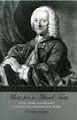
“Steven Zohn’s excellent and engaging study should put to rest, once and for all, any view that Telemann was a habitual composer of wallpaper music. Zohn gives us a comprehensive, nuanced, and discerning picture of the Telemann whose music Bach and Handel so greatly admired.”—Michael Marissen, Professor of Music, Swarthmore College, on Amazon
“‘If we wish to understand the extraordinary blaze of music that illuminated Germany from the time of Haydn, Mozart, and Beethoven,’ wrote Romain Rolland, ‘we must have some acquaintance with those who prepared this magnificent beacon; we must watch the lighting of the fire.’ One of those whom Rolland regarded as significant in the preparation of that beacon, and in the lighting of that fire, was Georg Philipp Telemann.”—David Ewen,The Complete Book of Classical Music
“Baroque master of 3,000 works.”—Phil Goulding, Classical Music
Georg Philipp Telemann was a German Baroque composer and multi-instrumentalist. Almost completely self-taught in music, he became a composer against his family’s wishes. After studying in Magdeburg, Zellerfeld, and Hildesheim, Telemann entered the University of Leipzig to study law, but eventually settled on a career in music. He held important positions in Leipzig, Sorau, Eisenach, and Frankfurt before settling in Hamburg in 1721, where he became musical director of the city’s five main churches. While Telemann’s career prospered, his personal life was always troubled: his first wife died only a few months after their marriage, and his second wife had extramarital affairs and accumulated a large gambling debt before leaving him. He lived from March 14, 1681, to June 25, 1767.
Telemann was one of the most prolific composers in history, at least in terms of surviving oeuvre, with at least 3,000 known pieces, and was considered by his contemporaries to be one of the leading German composers of the time. He was compared favorably both to his friend Johann Sebastian Bach, who made Telemann the godfather and namesake of his son Carl Philipp Emanuel, and to George Frideric Handel, whom Telemann also knew personally. Telemann’s music incorporates several national styles (French, Italian) and is even at times influenced by Polish popular music. He remained at the forefront of all new musical tendencies and his music is an important link between the late Baroque and early Classical styles.—From Wikipedia
“‘If we wish to understand the extraordinary blaze of music that illuminated Germany from the time of Haydn, Mozart, and Beethoven,’ wrote Romain Rolland, ‘we must have some acquaintance with those who prepared this magnificent beacon; we must watch the lighting of the fire.’ One of those whom Rolland regarded as significant in the preparation of that beacon, and in the lighting of that fire, was Georg Philipp Telemann.”—David Ewen,The Complete Book of Classical Music
“Baroque master of 3,000 works.”—Phil Goulding, Classical Music
Georg Philipp Telemann was a German Baroque composer and multi-instrumentalist. Almost completely self-taught in music, he became a composer against his family’s wishes. After studying in Magdeburg, Zellerfeld, and Hildesheim, Telemann entered the University of Leipzig to study law, but eventually settled on a career in music. He held important positions in Leipzig, Sorau, Eisenach, and Frankfurt before settling in Hamburg in 1721, where he became musical director of the city’s five main churches. While Telemann’s career prospered, his personal life was always troubled: his first wife died only a few months after their marriage, and his second wife had extramarital affairs and accumulated a large gambling debt before leaving him. He lived from March 14, 1681, to June 25, 1767.
Telemann was one of the most prolific composers in history, at least in terms of surviving oeuvre, with at least 3,000 known pieces, and was considered by his contemporaries to be one of the leading German composers of the time. He was compared favorably both to his friend Johann Sebastian Bach, who made Telemann the godfather and namesake of his son Carl Philipp Emanuel, and to George Frideric Handel, whom Telemann also knew personally. Telemann’s music incorporates several national styles (French, Italian) and is even at times influenced by Polish popular music. He remained at the forefront of all new musical tendencies and his music is an important link between the late Baroque and early Classical styles.—From Wikipedia
“Steven Zohn’s excellent and engaging study should put to rest, once and for all, any view that Telemann was a habitual composer of wallpaper music. Zohn gives us a comprehensive, nuanced, and discerning picture of the Telemann whose music Bach and Handel so greatly admired.”—Michael Marissen, Professor of Music, Swarthmore College, on Amazon



 Les Fetes d’Hebe (1998)
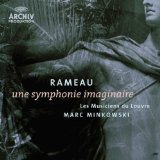
 Une Symphonie Imaginaire (2005)
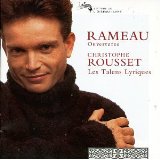
 Overtures (1997)


 (1733), caused a great stir and was fiercely attacked for its revolutionary use of harmony by the supporters of Lully’s style of music.



 , 1 CD
 , 1 CD
 , 2-CD set


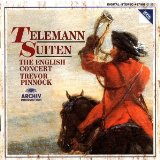

 On Baroque
You must be logged in to post a comment.