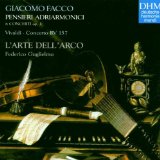
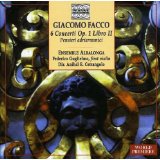
Giacomo Facco, 1676-1753

Facco

Selected Recordings

“Pensieri Adriarmonici” for strings, Op. 1 n. 1, in E minor

No sè què blando temor

Las Amazonas de España

Selected Sheet Music

Pensieri Adriarmonici

Facco-6

Source: IMSLP.org

Showcase Piece

“Pensieri Adriarmonici” Concerto Op.1 No. 4 in C minor

Notes and Commentary

Giacomo Facco was an Italian Baroque violinist, conductor, and composer. One of the most famous Italian composers of his day, he was completely forgotten until 1962, when his work was discovered by composer, conductor, and musicologist Uberto Zanolli.

Facco wrote a cycle of twelve concertos for violin, strings, and organ with the title of Pensieri Adriarmonici (Thoughts Adriarmonicous), published in Amsterdam, the first book in 1716 and the second in 1718. He also wrote solo cantatas—on his own texts, for he was a skilled poet. these were found at the National Library of Paris, and were presented by soprano Betty Fabila for the first time (conducted by Uberto Zanolli) in 1962 at the Castle of Chapultepec in Mexico City.

Facco is believed to have composed numerous sacred works for the Royal Chapel in Madrid, but these appeared to have been destroyed, along with many other compositions, in the fire of 1734.

Much of the information about Facco’s life and works was discovered by Uberto Zanolli, an Italian-Mexican composer who found Facco’s Pensieri Adriarmonici at the Vizcain Library in Mexico City in 1962. Since then, Zanolli has worked on putting together a biography of Facco and a musicological recovery of his work. Facco lived from February 4, 1676, to February 16, 1753.—Excerpted from Wikipedia

Books and Music

Selected Books

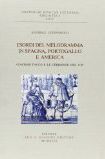
Esordi del melodramma in Spagna, Portogallo e America
Olschki, 1992
Annibale Cetrangolo
$68.19 on Amazon

Facco-5

Selected Music

Facco-2 Festejo Harmonico (1995), 1 CD

Facco-3 Pensieri Adriarmonici Ouero (2008), 1 CD

Facco-4 6 Concerti Op 1 Book 2 (2002), 1 CD

More Giacomo Facco music

Complete Works

Operas
Le regine di Macedonia
I rivali generosi
Penelope la casta
Amor es todo imbención
Amor aumenta el valor

Solo cantatas (Italian)
Bella leggiadra Armida
Clori pur troppo bella
Emireno d’Egitto
In grembo ai fiori
Menzognere speranze
Or che spunta
Perchè dici ch’io t’amo
Sentimi amor
Vidi su molli erbette

Solo cantatas (Spanish)
Bella rosa
El trinar
O qué brillar, cantata a la Virgen Maria
Si el ave, si la fiera y si la planta

Dialogues and serenades
Il convito fatto da Giuseppe ai fratelli in Egitto
Augurio di vittorie alla Sacra Real Cattolica Maestà di Filippo V
La contesa tra la pietà e l’incredulità decisa da Maria Vergine
Festejo para los días de la reyna
Serenata (Cañizares) for Philip V of Portugal

Instrumental music
Pensieri adriarmonici
A Select Concerto
a piece published in L’art de se perfectionner dans le violin
5 suites and a sinfonia for 2 cellos
Back to home page

Giovanni Legrenzi: Selected Recordings

Sonata ‘La Mosta’

L’Arpeggiata

Dies Irae

Giovanni Legrenzi Books and Music
More on Legrenzi
Back to home page

Giovanni Legrenzi: Notes and Commentary

Giovanni Legrenzi was an Italian composer of opera, vocal, and instrumental music, and organist, of the Baroque era. He was one of the most prominent composers in Venice in the late 17th century, and extremely influential in the development of late Baroque idioms across northern Italy.

He was active in most of the genres current in northern Italy in the late 17th century, including sacred vocal music, opera, oratorio, and varieties of instrumental music. Though best known as a composer of instrumental sonatas, he was predominantly a composer of liturgical music with a distinctly dramatic character. The bulk of his instrumental music may also be included in this category, since it would have been used primarily as a substitute for liturgical items at Mass or Vespers. His operas were immensely popular (and extravagantly presented) in their day, though like his oratorios, few have survived. His later dance music was certainly connected with the operatic repertoire. He lived from August 12, 1626, to May 27, 1690.”—Excerpted from Wikipedia

a href=”https://onbaroque.com/2013/09/28/giovanni-legrenzi-books-and-music/”>Giovanni Legrenzi Books and Music
More on Legrenzi
Back to home page

Giovanni Legrenzi: Complete Works

Published works
Concerti Musicali per uso di Chiesa
Sonata a due, e tre
Harmonia d’affetti Devoti a due, tre, e quatro, voci
Sonate dà Chiesa, e dà Camera, Correnti, Balletti, Alemane, Sarabande a tre, doi violini, e violone. Libro Secondo
Salmi a cinque, tre voci, e due violini
Sentimenti Devoti Espressi con le musica di due, e tre voci. Libro Secondo
Compiete con le Lettanie & Antifone Della B.V. a 5. voci
Sonate a due, tre, cinque, a sei stromenti. Libro 3
Sacri e Festivi Concerti. Messa e Salmi a due chori con stromenti a beneplacito
Acclamationi Divote a voce sola. Libro Primo
La Cetra. Libro Quarto di Sonate a due tre e quattro stromenti
Cantate, e Canzonette a voce sola
Idee Armoniche Estese per due e tre voci
Echi di Riverenza di Cantate, e Canzoni. Libro Secondo
Sacri Musicali Concerti a due, e tre voci. Libro Terzo
Balletti e Correnti a cinque stromenti, con il basso continuo per il cembalo. Libro Quinto Postumo
Motetti Sacri a voce sola con tre strumenti

Unpublished works
The Messa a cinque voci con stromenti
The unaccompanied Missa quinque vocibus
The Messa a 16 for four choirs and organ continuo
The Prosa pro mortuis, including “Dies irae”
Intret in conspectu, a motet for 6 voices
Credidi propter quod locutus sum, a psalm setting for solo alto
Laudate pueri, a psalm setting for five voices
Spirate aure serenae, a motet for solo soprano

Legrenzi also composed numerous operas and oratorios. Among them:

Operas

Nino, il giusto
Achille in Sciro
Zenobia e Radamisto
Tiridate

Oratorios

Oratorio del giuditio
Oratorio della passione
Sedecia
Il creation del mondo–A complete list is on Wikipedia

Giovanni Legrenzi Books and Music
More on Legrenzi
Back to home page

Giovanni Legrenzi, 1626-1690

Legrenzi

Selected Recordings

Sonata ‘La Mosta’

L’Arpeggiata

Dies Irae

Selected Sheet Music

18 trio sonatas, op. 2

Legrenzi-2

Source: IMSLP.org

Showcase Piece

Sonata Op.2 No.15, ‘La Torriana’

Notes ad Commentary

Giovanni Legrenzi was an Italian composer of opera, vocal, and instrumental music, and organist, of the Baroque era. He was one of the most prominent composers in Venice in the late 17th century, and extremely influential in the development of late Baroque idioms across northern Italy.

He was active in most of the genres current in northern Italy in the late 17th century, including sacred vocal music, opera, oratorio, and varieties of instrumental music. Though best known as a composer of instrumental sonatas, he was predominantly a composer of liturgical music with a distinctly dramatic character. The bulk of his instrumental music may also be included in this category, since it would have been used primarily as a substitute for liturgical items at Mass or Vespers. His operas were immensely popular (and extravagantly presented) in their day, though like his oratorios, few have survived. His later dance music was certainly connected with the operatic repertoire. He lived from August 12, 1626, to May 27, 1690.”—Excerpted from Wikipedia

Books and Music

Selected Books

Sonate für vier Violinen mit Basso continuo
Bärenreiter-Verlag, 1951 (sheet music)
$49.99 on Amazon

Legrenzi-6

Selected Music

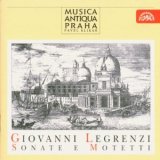
Legrenzi-3 Sonatas and Motets (1997), 1 CD

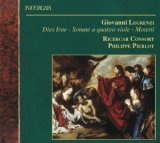
Legenzi-4 Dies Irae (2005), 1 CD

Legtenzi-5 II Sedecia (2012), 1 CD

More Giovanni Legrenzi music

Complete Works

Published works
Concerti Musicali per uso di Chiesa
Sonata a due, e tre
Harmonia d’affetti Devoti a due, tre, e quatro, voci
Sonate dà Chiesa, e dà Camera, Correnti, Balletti, Alemane, Sarabande a tre, doi violini, e violone. Libro Secondo
Salmi a cinque, tre voci, e due violini
Sentimenti Devoti Espressi con le musica di due, e tre voci. Libro Secondo
Compiete con le Lettanie & Antifone Della B.V. a 5. voci
Sonate a due, tre, cinque, a sei stromenti. Libro 3
Sacri e Festivi Concerti. Messa e Salmi a due chori con stromenti a beneplacito
Acclamationi Divote a voce sola. Libro Primo
La Cetra. Libro Quarto di Sonate a due tre e quattro stromenti
Cantate, e Canzonette a voce sola
Idee Armoniche Estese per due e tre voci
Echi di Riverenza di Cantate, e Canzoni. Libro Secondo
Sacri Musicali Concerti a due, e tre voci. Libro Terzo
Balletti e Correnti a cinque stromenti, con il basso continuo per il cembalo. Libro Quinto Postumo
Motetti Sacri a voce sola con tre strumenti

Unpublished works
The Messa a cinque voci con stromenti
The unaccompanied Missa quinque vocibus
The Messa a 16 for four choirs and organ continuo
The Prosa pro mortuis, including “Dies irae”
Intret in conspectu, a motet for 6 voices
Credidi propter quod locutus sum, a psalm setting for solo alto
Laudate pueri, a psalm setting for five voices
Spirate aure serenae, a motet for solo soprano

Legrenzi also composed numerous operas and oratorios. Among them:

Operas

Nino, il giusto
Achille in Sciro
Zenobia e Radamisto
Tiridate

Oratorios

Oratorio del giuditio
Oratorio della passione
Sedecia
Il creation del mondo–A complete list is on Wikipedia

Back to home page

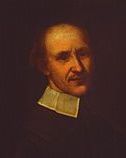
Johann Rosenmüller, 1619-1684

Selected Recordings

Sinfonia Quinta

Sonata №2 e-moll per due violini e basso continuo

Vocal & Instrumental Works

Selected Sheet Music

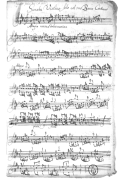
Sonata No.2
Rosenmuller-2

Source: IMSLP.org

Notes and Commentary

Johann Rosenmüller was a German Baroque composer who played a part in transmitting Italian musical styles to the north. He studied at the University of Leipzig, graduating in 1640. He served as organist of the Nikolaikirche Leipzig from 1651, and became director of music in absentia to the Altenburg court in 1654. In 1655 he was imprisoned in a scandal involving alleged homosexual activities. Escaping, he fled to Italy, and by 1658 was employed at Saint Mark’s in Venice. He composed many vocal works while teaching at an orphanage for girls, (Ospedale della Pietà) between 1678 and 1682. The works of Giovanni Legrenzi and Arcangelo Corelli were among his Italian influences and his sacred compositions show the influence of Heinrich Schütz. In his last years, Rosenmüller returned to Germany with Duke Anton-Ulrich of Brunswick-Wolfenbüttel, at whose court he served as choir master. He lived from 1619 to 1684.—Excerpted from Wikipedia

Books and Music

Selected Books

Johann Rosenmüller (ca. 1619-1684)
BiblioLife, 2009
August Horneffer
$15.39 on Amazon

Rosenmuller- Horneffer

“Pre-1923 historical reproduction that was curated for quality.”—Amazon description

Selected Music

Rosenmuller-6 Sonate Da Camera E Sinfonie (2002), 1 CD

Rosenmuller-3 Jeremiah Lamentations and Trio Sonatas (1999), 1 CD

Rosenmuller-4 Vespro della beata Vergine (1997), 2-CD set

More Johann Rosenmüller music

Complete Works

Andere Kern-Sprüche
Kern-Sprüche
Paduanen, Alemanden, Couranten, Balletten, Sarabanden
Psalm 134
Siehe, eine Jungfrau ist schwanger
Sonatae à 2,3,4 e 5 stromenti da arco et altri
Sonate e Sinfonie da camera
Studenten-Music

Back  to home page

Johann Paul von Westhoff, 1656-1705

Selected Recordings

6 Sonates for Violin et Basso continuo

Imitazione delle Campane

Suites for Solo Violin

Selected Sheet Music

Violin Sonata in A major
Westhoff-1

Source: IMSLP.org

Notes and Commentary

Johann Paul von Westhoff was a German Baroque composer and violinist. One of the most important exponents of the Dresden violin school, he was among the highest ranked violinists of his day, and composed some of the earliest known music for solo violin. He worked as musician and composer as a member of Dresden’s Hofkapelle and at the Weimar court. Westhoff’s surviving music comprises seven works for violin and basso continuo and seven for solo violin, all published during his lifetime. More works, particularly a 1682 collection of solo violin music, are considered lost. His work, together with that of Heinrich Ignaz Franz Biber and Johann Jakob Walther, greatly influenced the subsequent generation of German violinists, and the six partitas for solo violin inspired Johann Sebastian Bach’s famous violin sonatas and partitas. He lived from 1656 to April, 17, 1705.—Excerpted from Wikipedia

Selected Books and Music

Selected Books

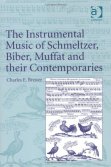
The Instrumental Music of Schmeltzer, Biber, Muffat and Their Contemporaries
Ashgate Publishing Company, 2011
Charles Brewer
$83.91 on Amazon

Brewer

Selected Music

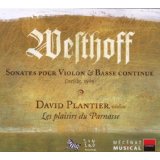
esthoff-2 Sonatas for Violin & Basso Continuo (2005), 1 CD

Westhoff-3 Partitas for Solo Violin (2010), 1 CD

Westhoff-4 Complete Suites for Solo Violin (2004), 1 CD

Complete Works

Erstes Dutzend Allemanden, Couranten, Sarabanden und Giguen Violino Solo sonder Passo Continuo (lost)
Sonata for violin and basso continuo
Suite for violin solo
Sonate a Violino solo con basso continuo
Solo partitas for violin

Back to home page