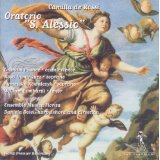
Camilla de Rossi was an Italian composer of Roman citizenship. She composed four oratorios for solo voices and orchestra, all of which were commissioned by Emperor Joseph I of Austria and were performed in the Imperial Chapel in Vienna. Rossi’s surviving works demonstrate a knowledge of stringed instruments and, as Barbara Garvey Jackson describes, “a keen interest in tone color.” Her oratorios are for solo voices; none of her works use choruses. She calls for various instruments (chalumeaux, archlute, trumpets, oboe) with string orchestra (including continuo). Her oratorio, Il Sacrifizio di Abramo, suggests a knowledge of instruments, strings in particular. But the piece also calls for two chalumeaux, an instrument first heard in Vienna in 1707, one year before her oratorio was performed for the first time in 1708. Her cantata Frá Dori e Fileno is for strings and two soloists.—Excerpted from Wikipedia
Il Sacrifizio di Abramo Source:SheetMusicPlus (for purchase)
Showcase Piece
Il sacrifizio di Abramo
Notes and Commentary
Camilla de Rossi was an Italian composer of Roman citizenship. She composed four oratorios for solo voices and orchestra, all of which were commissioned by Emperor Joseph I of Austria and were performed in the Imperial Chapel in Vienna. Rossi’s surviving works demonstrate a knowledge of stringed instruments and, as Barbara Garvey Jackson describes, “a keen interest in tone color.” Her oratorios are for solo voices; none of her works use choruses. She calls for various instruments (chalumeaux, archlute, trumpets, oboe) with string orchestra (including continuo). Her oratorio, Il Sacrifizio di Abramo, suggests a knowledge of instruments, strings in particular. But the piece also calls for two chalumeaux, an instrument first heard in Vienna in 1707, one year before her oratorio was performed for the first time in 1708. Her cantata Frá Dori e Fileno is for strings and two soloists.—Excerpted from Wikipedia
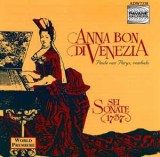
Anna Bon was a Russian-born Italian composer and performer. Her parents were both involved in music and traveled internationally, her father a Bolognese artist, and her mother a singer. She studied music at the Ospedale della Pietà in Venice with the maestra di viola, Candida della Pièta. At the age of 16, she composed her six op. 1 flute sonatas, published in Nürnberg in 1756, which she dedicated to Friedrich. By 1756, she rejoined her parents in Bayreuth and held the new post of ‘chamber music virtuosa’ at the court. In 1762 the family moved to the Esterházy court at Eisenstadt, where she remained until at least 1765. She dedicated the published set of six harpsichord sonatas, op. 2, to Ernestina Augusta Sophia, Princess of Saxe-Weimar, and the set of six divertimenti (trio sonatas), op. 3, to Charles Theodore, Elector of Bavaria. In 1767, she lived in Hildburghausen, Thuringia, with her husband, a singer named Mongeri, although details of her story are lost to history. She was born in 1739 and died at an unknown date after 1767.—Excerpted from Wikipedia
Six Chamber Sonatas, for transverse flute, violoncello, or harpsichord, op. 1
Six Sonatas for Harpsichord, op. 2
Six Divertimenti, for two flutes and basso continuo, op. 3
Aria, “Astra coeli,” for soprano, 2 violins, viola, and basso continuo
Offertory, “Ardete amore,” for soprano, 2 altos, bass, 2 oboes, 2 horns, 2 violins, viola, and basso continuo
Motet, “Eia in preces et veloces,” for alto, 2 violins, viola, and basso continuo
Opera, now lost, composed during her stay at the court of Prince Esterhazy in Eisenstadt
Anna Bon was a Russian-born Italian composer and performer. Her parents were both involved in music and traveled internationally, her father a Bolognese artist, and her mother a singer. She studied music at the Ospedale della Pietà in Venice with the maestra di viola, Candida della Pièta. At the age of 16, she composed her six op. 1 flute sonatas, published in Nürnberg in 1756, which she dedicated to Friedrich. By 1756, she rejoined her parents in Bayreuth and held the new post of ‘chamber music virtuosa’ at the court. In 1762 the family moved to the Esterházy court at Eisenstadt, where she remained until at least 1765. She dedicated the published set of six harpsichord sonatas, op. 2, to Ernestina Augusta Sophia, Princess of Saxe-Weimar, and the set of six divertimenti (trio sonatas), op. 3, to Charles Theodore, Elector of Bavaria. In 1767, she lived in Hildburghausen, Thuringia, with her husband, a singer named Mongeri, although details of her story are lost to history. She was born in 1739 and died at an unknown date after 1767.—Excerpted from Wikipedia
Six Chamber Sonatas, for transverse flute, violoncello, or harpsichord, op. 1
Six Sonatas for Harpsichord, op. 2
Six Divertimenti, for two flutes and basso continuo, op. 3
Aria, “Astra coeli,” for soprano, 2 violins, viola, and basso continuo
Offertory, “Ardete amore,” for soprano, 2 altos, bass, 2 oboes, 2 horns, 2 violins, viola, and basso continuo
Motet, “Eia in preces et veloces,” for alto, 2 violins, viola, and basso continuo
Opera, now lost, composed during her stay at the court of Prince Esterhazy in Eisenstadt


 , 1 CD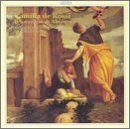
 , 1 CD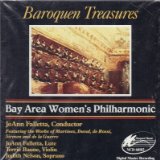
 , 1 CD


 , 1 CD
 , 1 CD
 , 1 CD
 On Baroque
You must be logged in to post a comment.