6 Concerti grossi, Op. 3
Sonata ll in C Major
Sonata d moll
Pietro Castrucci Books and Music
More on Castrucci
Back to home page
6 Concerti grossi, Op. 3
Sonata ll in C Major
Sonata d moll
Pietro Castrucci Books and Music
More on Castrucci
Back to home page
Op. 3 No. 12 / Concerto grosso
Pietro Castrucci Books and Music
More on Castrucci
Back to home page
Pietro Castrucci was an Italian violinist and composer. He was born in Rome, where he studied with Arcangelo Corelli. In 1715, he settled in London, where he became known as one of the finest virtuoso violinists of his generation. By 1718 he had become leader of the opera orchestra of George Frideric Handel, a position he held until 1737, when he was succeeded by the younger John Clegg. In 1739 he became one of the first beneficiaries of the Royal Society of Musicians and was little heard of thereafter, apart from an erroneous report of his death in 1746. After a benefit concert in Dublin in 1750, he died there of malaria in 1752. Despite being by then a pauper, he was buried with full ceremony in St. Mary’s Church, Dublin. Castrucci was the inventor of the “violetta marina,” which is a variation of the viola d’amore. More on Castrucci’s violetta marina. Handel wrote obbligati for this instrument. He lived from 1679 to March 7, 1752.—Excerpted from Wikipedia
Pietro Castrucci Books and Music
More on Castrucci
Back to home page
The following is a partial list of Castrucci’s works.
1. Concerto Grosso in A minor, Op. 3/4: Adagio Andantino
2. Concerto Grosso in A minor, Op. 3/4: Allegro Ardito
3. Concerto Grosso in A minor, Op. 3/4: Adagio un poco Andantino
4. Concerto Grosso in A minor, Op. 3/4: Allegro spirituoso
5. Concerto Grosso in G minor, Op. 3/9: Allegro Moderato. Adagio
6. Concerto Grosso in G minor, Op. 3/9: Vivace
7. Concerto Grosso in G minor, Op. 3/9: Andantino Pianissimo sempre
8. Concerto Grosso in G minor, Op. 3/9: Andante
9. Concerto Grosso in G minor, Op. 3/9: Allegro
10. Concerto Grosso in G minor, Op. 3/6: Allegro
11. Concerto Grosso in G minor, Op. 3/6: Adagio
12. Concerto Grosso in G minor, Op. 3/6: Giga. Allegro
13. Concerto Grosso in D major, Op. 3/12: Introduzione: Allegro
14. Concerto Grosso in D major, Op. 3/12: Adagio Andantino
15. Concerto Grosso in D major, Op. 3/12: Allegro
16. Concerto Grosso in D major, Op. 3/12: Gavotta: Andante
17. Concerto Grosso in D major, Op. 3/12: Finale con L’Eco: Andantino
18. Concerto Grosso in F major, Op. 3/5: Andante Moderato
19. Concerto Grosso in F major, Op. 3/5: Allegro
20. Concerto Grosso in F major, Op. 3/5: Adagio un poco Andante
21. Concerto Grosso in F major, Op. 3/5: Allegro. Adagio
22. Concerto Grosso in F major, Op. 3/5: Gavotta: Allegro. Andante Piano. Allegro
23. Concerto Grosso in G minor, Op. 3/11: Preludio un poco Andante
24. Concerto Grosso in G minor, Op. 3/11: Allegro
25. Concerto Grosso in G minor, Op. 3/11: Sarabanda: Andantino. Piano sempre
26. Concerto Grosso in G minor, Op. 3/11: Allegro. Alla francese
Sonata ll in C Major
Sonata d moll
Pietro Castrucci Books and Music
More on Castrucci
Back to home page
Selected Books
Music in the Galant Style
Oxfor Univ. Press, 2007
Robert Gjerdingen
$42.77 on Amazon
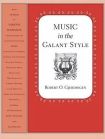
“This is an outstanding book. It is one of the most informative, enjoyable, fascinating, and thought-provoking books on music that I have ever read. Through hundreds of musical examples, it demonstrates how extensively the music of the “galant” 18th-century era was based on the skillful treatment and combination of a limited number of basic schemata.”—Olli Väisälä on Amazon
The Cambridge Companion to the Violin
Cambridge Univ. Press, 1993
Robin Stowell, ed.
$31.13 on Amazon

“As an adult beginner, this excellent book provides one with the highlights to the violin’s history, construction, repertoire, and pedagogy, among other subjects. This book is also an excellent choice for anyone who enjoys listening to the violin. Being a teacher at a fine arts high school, I have recommended this book to my students who are studying violin.”—Amazon review
Selected Music
 6 Concerti Grossi, Op. 3 (2001)
 Italian Musicians in London (1997)
 The Grand Tour

6 Concerti grossi, Op. 3
Sonata ll in C Major
Sonata d moll
Opus 2, No.4, Mvt. 1, Andante No. 4
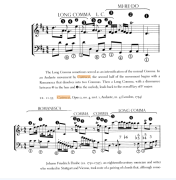
Source: Music in the Galant Style
Op. 3 No. 12 / Concerto grosso
Pietro Castrucci was an Italian violinist and composer. He was born in Rome, where he studied with Arcangelo Corelli. In 1715, he settled in London, where he became known as one of the finest virtuoso violinists of his generation. By 1718 he had become leader of the opera orchestra of George Frideric Handel, a position he held until 1737, when he was succeeded by the younger John Clegg. In 1739 he became one of the first beneficiaries of the Royal Society of Musicians and was little heard of thereafter, apart from an erroneous report of his death in 1746. After a benefit concert in Dublin in 1750, he died there of malaria in 1752. Despite being by then a pauper, he was buried with full ceremony in St. Mary’s Church, Dublin. Castrucci was the inventor of the “violetta marina,” which is a variation of the viola d’amore. More on Castrucci’s violetta marina. Handel wrote obbligati for this instrument. He lived from 1679 to March 7, 1752.—Excerpted from Wikipedia
Selected Books
Music in the Galant Style
Oxfor Univ. Press, 2007
Robert Gjerdingen
$42.77 on Amazon
“This is an outstanding book. It is one of the most informative, enjoyable, fascinating, and thought-provoking books on music that I have ever read. Through hundreds of musical examples, it demonstrates how extensively the music of the “galant” 18th-century era was based on the skillful treatment and combination of a limited number of basic schemata.”—Olli Väisälä on Amazon
The Cambridge Companion to the Violin
Cambridge Univ. Press, 1993
Robin Stowell, ed.
$31.13 on Amazon
“As an adult beginner, this excellent book provides one with the highlights to the violin’s history, construction, repertoire, and pedagogy, among other subjects. This book is also an excellent choice for anyone who enjoys listening to the violin. Being a teacher at a fine arts high school, I have recommended this book to my students who are studying violin.”—Amazon review
Selected Music
6 Concerti Grossi, Op. 3 (2001)
Italian Musicians in London (1997)
The Grand Tour
The following is a partial list of Castrucci’s works.
1. Concerto Grosso in A minor, Op. 3/4: Adagio Andantino
2. Concerto Grosso in A minor, Op. 3/4: Allegro Ardito
3. Concerto Grosso in A minor, Op. 3/4: Adagio un poco Andantino
4. Concerto Grosso in A minor, Op. 3/4: Allegro spirituoso
5. Concerto Grosso in G minor, Op. 3/9: Allegro Moderato. Adagio
6. Concerto Grosso in G minor, Op. 3/9: Vivace
7. Concerto Grosso in G minor, Op. 3/9: Andantino Pianissimo sempre
8. Concerto Grosso in G minor, Op. 3/9: Andante
9. Concerto Grosso in G minor, Op. 3/9: Allegro
10. Concerto Grosso in G minor, Op. 3/6: Allegro
11. Concerto Grosso in G minor, Op. 3/6: Adagio
12. Concerto Grosso in G minor, Op. 3/6: Giga. Allegro
13. Concerto Grosso in D major, Op. 3/12: Introduzione: Allegro
14. Concerto Grosso in D major, Op. 3/12: Adagio Andantino
15. Concerto Grosso in D major, Op. 3/12: Allegro
16. Concerto Grosso in D major, Op. 3/12: Gavotta: Andante
17. Concerto Grosso in D major, Op. 3/12: Finale con L’Eco: Andantino
18. Concerto Grosso in F major, Op. 3/5: Andante Moderato
19. Concerto Grosso in F major, Op. 3/5: Allegro
20. Concerto Grosso in F major, Op. 3/5: Adagio un poco Andante
21. Concerto Grosso in F major, Op. 3/5: Allegro. Adagio
22. Concerto Grosso in F major, Op. 3/5: Gavotta: Allegro. Andante Piano. Allegro
23. Concerto Grosso in G minor, Op. 3/11: Preludio un poco Andante
24. Concerto Grosso in G minor, Op. 3/11: Allegro
25. Concerto Grosso in G minor, Op. 3/11: Sarabanda: Andantino. Piano sempre
26. Concerto Grosso in G minor, Op. 3/11: Allegro. Alla francese
Sonata ll in C Major
Sonata d moll

Biber
The highly regarded songwriter and producer Ben Mink once said of music writing that all you need is a good six minutes. He was referring to jamming but I think more broadly he was referring to inspiration. Mink is probably best know for his work with k.d. lang but he’s also worked with some of the biggest names in rock, including Mick Jagger and Keith Richards, and Geddy Lee of Rush, his friend and occasional collaborator.
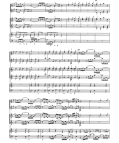
Partia No. 1 excerpt
I think of Mink’s remark a lot when I listen to music, whether it’s contemporary music or Baroque, and it was the first thing I thought of when I heard Franz Biber’s Harmonia artificioso-arios for the first time. What really caught my attention was Partia No. 1, which, after the introductory part, goes into a modern-sounding sequence in which the harmony and melody play off each other in a dramatic way. To my ears, if ever there was a good six minutes (or, in this case, a good two minutes) this was it. An inspired bit of writing to be sure.
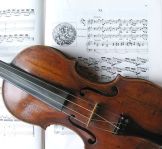
A cross-tuned violin. Note how the two middle strings are crossed at the bridge and tailpiece
Biber is widely regarded by musicologists and music theorists as one of the most important composers for the violin ever, and I’m guessing part of the reason for that is his use of cross-tuning, a technique called scordatura. I believe one of the reasons Partia No. 1 is so riveting is because of the cross-tuning while the melody and harmony play off each other in the dramatic fashion that they do. And, again, it’s so modern sounding.
One of the points made about Biber’s violin work is that his cross-tuning technique enables him to comfortably play otherwise difficult positions on the fingerboard, like the sixth and seventh positions, and to use multiple stops in “intricate polyphonic passages,” as it’s put on the Biber page on Wikipedia.
It’s interesting that Keith Richards, in his thoroughly enjoyable memoir, Life
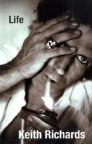 say enough about how important alternative tuning is to his work. He says he spent years mastering alternative tunings, the results of which you can hear on some of the Rolling Stones’ biggest numbers like “Start Me Up” and “Street Fighting Man.” In fact, if I remember correctly what Richards said in his book, two of the Stones’ biggest hits, “I Can’t Get No (Satisfaction)” and “Jumping Jack Flash,” are in many respects the same song but with different tuning.
In the two-minute video clip below, you’ll hear the part of Partia No. 1 that caught my attention for its drama and modern sensibility. It shows that good music never dates itself, and I think that’s something even Keith Richards would attest to.—Nabob, On Baroque
More on scordatura
Back to Point Against Point
Back to home page
A generalist’s random reflections on Baroque music
Ignazio Albertini: We Hardly Knew You
Johann Schmelzer: The Most Underrated Baroque Composer
Rosa Giacinta Badalla: A First-round Draft Pick of Convent Music
The 55 Greatest Baroque Composers in One Sentence Each
Tension in the Service of the Sad: Pete Townshend Meets Henry Purcell
‘La Folia’: The ‘Stairway to Heaven’ of Baroque Music
The World’s Most Baroque Rock Band
He Knows a Good Time, and It’s Not Opera
Let’s Give Leonora Duarte the Hollywood Treatment
The World Awaits the Next Johann
Baroque Music in All Its Jargon
50 Great Composers, 1 Not-so-Great Compilation
Who is The English Bach? I’m Going with Bach’s Son
The Mystery of the Violetta Marina
Keith Richards, Ben Mink, and Franz Biber’s Partia No. 1
One of the defining characteristics of Baroque music is the basso continuo, or figured bass, which you can think of as a piece’s rhythm section. The harpsichord and cello often play this continuo role together (although any bass and chord-producing instruments can do it), creating what in rock is called the song’s bottom line or in jazz, the groove: the note pattern that creates the feeling of continuous motion. In the continuo, the harpsichord, as a chord-producing instrument, accompanies the bass line with a chord series that thickens—or harmonizes with—the bass line. The continuo is sometimes called figured bass because the composer would simply write chord figures below the musical staff and let the musician figure out how to realize the harmony. Once the continuo is realized, the foundation is laid for the violin or other solo instrument to play the melody line on top of it.

Getting into the groove
The rise of classical music, with its cleaner textures, shorter melody lines, and quickly shifting dynamics, left little space for the continuo. Whether it’s really accurate or not, I like to think of jazz and rock ensembles as resurrecting the continuo in a new and cool way.
No doubt music theorists would quickly disabuse me of this notion, but until they do, I think of the basso continuo as the part of Baroque music that makes it groovy or cool, which I know are not terms you hear associated with Baroque music. But maybe they should be.
In any case, a great example of the basso continuo is in the 3rd movement of Corelli’s Violin Sonata No. 1 in D Major, Op. 5. (Thanks to a Columbia University site for pointing this out.) The movement is in the clip below. It’s 57 seconds long. Listen as the harpsichord and the cello (which is harder to hear) ground the song with the bass line while the violin plays the melody line on top of it.—Nabob, On Baroque
More on the basso continuo
Columbia University:
http://ccnmtl.columbia.edu/projects/sonicg/terms/basso_continuo.html
“Theory of Music” blog:
Benedictus

Source: IMSLP.org
Carlos Seixas Books and Music
More on Seixas
Back to home page


 On Baroque
You must be logged in to post a comment.