Georg Muffat was a French Baroque composer most well known for the performance directions printed as part of his collections of string pieces Florilegium Primum and Florilegium Secundum (First and Second Bouquets) in 1695 and 1698. The performance directions are notable for their detail. These performance directions were intended to assist German string players with the idiom of the French dance style, and include detailed rules for the tempo and order of bow strokes in various types of movement, as well as more general strategies for good ensemble playing and musicianship. These texts remain extremely valuable for modern historically-interested musicians.
Muffat was, as Johann Jakob Froberger before him, and Handel after him, a cosmopolitan composer who played a role in the exchanges between European musical traditions. He lived from June 1, 1653, to February 23, 1704.—Excerpted from Wikipedia
Sonatas for various instruments (armonico tributo 1682)
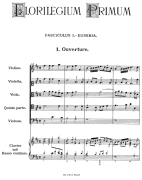
Orchestral suites (florilegium primum & secundum 1695)
12 Concerti grossi (auserlesene… instrumental Musik 1701)
12 Toccatas for the organ as well as other pieces: passacaglia, chaconne, air with variations (Apparatus musico-organisticus 1690)
Partitas for the harpsichord
Religious works (notably three masses and Salve Regina) from which “Missa in labore requies” is preserved
3 operas (“Marina Armena,” “Königin Marianne die verleumdete Unschuld,” and “La fatali felicità di Plutone”—Excerpted from Wikipedia
“A fascinating overall impression of the day-to-day concerns and working environment of a professional musician of the late 17th century.”—American Recorder
Georg Muffat was a French Baroque composer most well known for the performance directions printed as part of his collections of string pieces Florilegium Primum and Florilegium Secundum (First and Second Bouquets) in 1695 and 1698. The performance directions are notable for their detail. These performance directions were intended to assist German string players with the idiom of the French dance style, and include detailed rules for the tempo and order of bow strokes in various types of movement, as well as more general strategies for good ensemble playing and musicianship. These texts remain extremely valuable for modern historically-interested musicians.
Muffat was, as Johann Jakob Froberger before him, and Handel after him, a cosmopolitan composer who played a role in the exchanges between European musical traditions. He lived from June 1, 1653, to February 23, 1704.—Excerpted from Wikipedia
“A fascinating overall impression of the day-to-day concerns and working environment of a professional musician of the late 17th century.”—American Recorder
Sonatas for various instruments (armonico tributo 1682)
Orchestral suites (florilegium primum & secundum 1695)
12 Concerti grossi (auserlesene… instrumental Musik 1701)
12 Toccatas for the organ as well as other pieces: passacaglia, chaconne, air with variations (Apparatus musico-organisticus 1690)
Partitas for the harpsichord
Religious works (notably three masses and Salve Regina) from which “Missa in labore requies” is preserved
3 operas (“Marina Armena,” “Königin Marianne die verleumdete Unschuld,” and “La fatali felicità di Plutone”—Excerpted from Wikipedia


 , 1 CD
 , 1 CD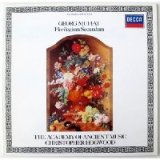
 , 1 CD
 On Baroque
You must be logged in to post a comment.