Johann David Heinichen was a German Baroque composer and music theorist who brought the musical genius of Venice to the court of Augustus the Strong in Dresden. He studied music at the Thomasschule zu Leipzig with Johann Schelle and later received organ and harpsichord lessons with Johann Kuhnau. By profession he was a lawyer, and while practicing law in Weissenfels he published the first edition of his major treatise on the thoroughbass. He went to Italy and spent seven formative years there, mostly in Venice, with great success with his operas. Although Heinichen’s music is original, rhythmically exuberant, and imaginative, it was little known for a long time. His music is enjoying a resurgence of popularity, with some of his concerti, masses, and his final work, a Magnificat, now receiving attention in the recording world. He lived from April 17, 1683, to July 16, 1729.—Excerpted from Wikipedia
Heinichen wrote hundreds of pieces in a variety of genres. Access complete list. Below are selected pieces.
Suite for 2 oboes & bassoon in G major
Suite for strings in G major
Tafelmusik in F major
Sinfonia in D major
Sinfonia in A major
Sinfonia in F major
Concerto grosso in C major
Concerto grosso in G major
Concerto a quattro in D major
Concerto grosso in D major
Concerto grosso in F major
Violin Concerto in D major
Violin Concerto in E flat major
Violin Concerto in B flat major
Violin Concerto in A minor Complete list
Trio sonata for flute, viola d’amore & b.c. in F major
Notes and Commentary
Johann David Heinichen was a German Baroque composer and music theorist who brought the musical genius of Venice to the court of Augustus the Strong in Dresden. He studied music at the Thomasschule zu Leipzig with Johann Schelle and later received organ and harpsichord lessons with Johann Kuhnau. By profession he was a lawyer, and while practicing law in Weissenfels he published the first edition of his major treatise on the thoroughbass. He went to Italy and spent seven formative years there, mostly in Venice, with great success with his operas. Although Heinichen’s music is original, rhythmically exuberant, and imaginative, it was little known for a long time. His music is enjoying a resurgence of popularity, with some of his concerti, masses, and his final work, a Magnificat, now receiving attention in the recording world. He lived from April 17, 1683, to July 16, 1729.—Excerpted from Wikipedia
Heinichen wrote hundreds of pieces in a variety of genres. Access complete list. Below are selected pieces.
Suite for 2 oboes & bassoon in G major
Suite for strings in G major
Tafelmusik in F major
Sinfonia in D major
Sinfonia in A major
Sinfonia in F major
Concerto grosso in C major
Concerto grosso in G major
Concerto a quattro in D major
Concerto grosso in D major
Concerto grosso in F major
Violin Concerto in D major
Violin Concerto in E flat major
Violin Concerto in B flat major
Violin Concerto in A minor Complete list
Johann Rosenmüller was a German Baroque composer who played a part in transmitting Italian musical styles to the north. He studied at the University of Leipzig, graduating in 1640. He served as organist of the Nikolaikirche Leipzig from 1651, and became director of music in absentia to the Altenburg court in 1654. In 1655 he was imprisoned in a scandal involving alleged homosexual activities. Escaping, he fled to Italy, and by 1658 was employed at Saint Mark’s in Venice. He composed many vocal works while teaching at an orphanage for girls, (Ospedale della Pietà) between 1678 and 1682. The works of Giovanni Legrenzi and Arcangelo Corelli were among his Italian influences and his sacred compositions show the influence of Heinrich Schütz. In his last years, Rosenmüller returned to Germany with Duke Anton-Ulrich of Brunswick-Wolfenbüttel, at whose court he served as choir master. He lived from 1619 to 1684.—Excerpted from Wikipedia
Andere Kern-Sprüche
Kern-Sprüche
Paduanen, Alemanden, Couranten, Balletten, Sarabanden
Psalm 134
Siehe, eine Jungfrau ist schwanger
Sonatae à 2,3,4 e 5 stromenti da arco et altri
Sonate e Sinfonie da camera
Studenten-Music
Johann Paul von Westhoff was a German Baroque composer and violinist. One of the most important exponents of the Dresden violin school, he was among the highest ranked violinists of his day, and composed some of the earliest known music for solo violin. He worked as musician and composer as a member of Dresden’s Hofkapelle and at the Weimar court. Westhoff’s surviving music comprises seven works for violin and basso continuo and seven for solo violin, all published during his lifetime. More works, particularly a 1682 collection of solo violin music, are considered lost. His work, together with that of Heinrich Ignaz Franz Biber and Johann Jakob Walther, greatly influenced the subsequent generation of German violinists, and the six partitas for solo violin inspired Johann Sebastian Bach’s famous violin sonatas and partitas. He lived from 1656 to April, 17, 1705.—Excerpted from Wikipedia
Erstes Dutzend Allemanden, Couranten, Sarabanden und Giguen Violino Solo sonder Passo Continuo (lost)
Sonata for violin and basso continuo
Suite for violin solo
Sonate a Violino solo con basso continuo
Solo partitas for violin
Johann Heinrich Schmelzer was one of the most important violinists of the Baroque period, and an important influence on later German and Austrian composers for violin. He made substantial contributions to the development of violin technique and promoted the use and development of sonata and suite forms in Austria and South Germany. He attained a high reputation in a field (violin playing and violin composition) which at the time was dominated by Italians; indeed, one traveler referred to him in 1660 as “nearly the most eminent violinist in all of Europe.” Schmelzer’s Sonatae unarum fidium of 1664 was the first collection of sonatas for violin and basso continuo to be published by a German-speaking composer. It contains the brilliant virtuosity, sectional structure, and lengthy ground-bass variations typical of the mid-Baroque violin sonata. Austrian violinist and composer Heinrich Ignaz Franz Biber (1644-1704) is believed to have been one of Schmelzer’s students. He lived from 1620-1623 to 1680.—Excerpted from Wikipedia
Lamento sopra la morte di Ferdinando III
Duodena selactarum sonatarum
Sacroprofanus Concentus
Sonatae unarum fidium seu a violino solo
Die musikalische Fechtschul
Sacred Music
Ad cocentus o mortales ad triumphos
Compieta
Currite, accurrite
Die Stärke der Liebe
Hodie lux tua, sancti fulgebit
Inquietum est cor meum
Le memorie dolorose
Missa Dei patris benedicte
Missa Jesu crusifixi
Missa Mater purissima
Missa Natalis
Missa Peregrina in honorem Sancti Rochi
Missa pro defunctis
Missa Sancti Joannis
Missa Sancti Spiritus
Missa Sancti Stanislai
Missa Tarde venientium in honorem Sancti Wenceslai
Nos autem gloriari
O Jesu summa charitas
Sileat misericordiam tuam
Terra triumphans jubila
Vesperae brivissimae de beatissimae virgine et de apostolis


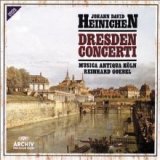
 , 2-CD set
 , 1 CD
 , 1 CD


 , 1 CD
 , 1 CD
 , 2-CD set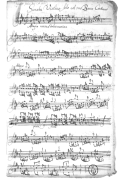

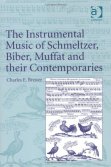
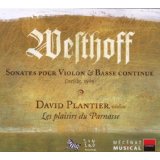
 , 1 CD
 , 1 CD
 , 1 CD
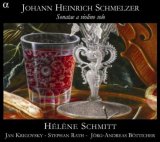
 , 1 CD
 , 1 CD
 , 1 CD
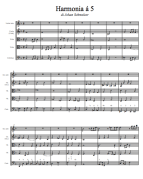
 On Baroque
You must be logged in to post a comment.