Selected Books
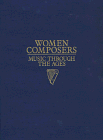
Women Composers: 1700 to 1799
Martha Schleifer and Sylvia Glickman
G. K. Hall & Company, 1998
$39.95

“Belongs in all music collections.”— Library Journal
Selected Music
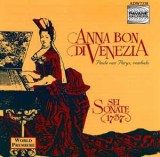 Anna Bon di Venezia (1995)
 Six Sonate, op 2 (2006)
Selected Books
Women Composers: 1700 to 1799
Martha Schleifer and Sylvia Glickman
G. K. Hall & Company, 1998
$39.95
“Belongs in all music collections.”— Library Journal
Selected Music
Anna Bon di Venezia (1995)
Six Sonate, op 2 (2006)

Minuetto con Variazione
6 Sonatas for Flute and Cembalo
Sonata VI
6 Flute Sonatas

Source: IMSLP.org
Sonata for harpsichord in B flat major
Anna Bon was a Russian-born Italian composer and performer. Her parents were both involved in music and traveled internationally, her father a Bolognese artist, and her mother a singer. She studied music at the Ospedale della Pietà in Venice with the maestra di viola, Candida della Pièta. At the age of 16, she composed her six op. 1 flute sonatas, published in Nürnberg in 1756, which she dedicated to Friedrich. By 1756, she rejoined her parents in Bayreuth and held the new post of ‘chamber music virtuosa’ at the court. In 1762 the family moved to the Esterházy court at Eisenstadt, where she remained until at least 1765. She dedicated the published set of six harpsichord sonatas, op. 2, to Ernestina Augusta Sophia, Princess of Saxe-Weimar, and the set of six divertimenti (trio sonatas), op. 3, to Charles Theodore, Elector of Bavaria. In 1767, she lived in Hildburghausen, Thuringia, with her husband, a singer named Mongeri, although details of her story are lost to history. She was born in 1739 and died at an unknown date after 1767.—Excerpted from Wikipedia
Selected Books
Women Composers: 1700 to 1799
Martha Schleifer and Sylvia Glickman
G. K. Hall & Company, 1998
$39.95
“Belongs in all music collections.”— Library Journal
Selected Music
Anna Bon di Venezia (1995)
Six Sonate, op 2 (2006)
 Sei Sonate Da Camera (2012)
Six Chamber Sonatas, for transverse flute, violoncello, or harpsichord, op. 1
Six Sonatas for Harpsichord, op. 2
Six Divertimenti, for two flutes and basso continuo, op. 3
Aria, “Astra coeli,” for soprano, 2 violins, viola, and basso continuo
Offertory, “Ardete amore,” for soprano, 2 altos, bass, 2 oboes, 2 horns, 2 violins, viola, and basso continuo
Motet, “Eia in preces et veloces,” for alto, 2 violins, viola, and basso continuo
Opera, now lost, composed during her stay at the court of Prince Esterhazy in Eisenstadt
 Lucia Quinciani, c.1566-c.1611
Claudia Sessa, c.1570-c.1619
Vittoria Aleotti, c. 1575-after 1620
Sulpitia Cesis, 1577-after 1617
Leonora Duarte, 1610-1678
Barbara Strozzi, 1619-1677
Rosa Giacinta Badalla, 1660-1710
Camilla de Rossi, c.1670-c.1710
Anna Bon, 1739-1767
English Baroque Composers
French Baroque Composers
German Baroque Composers
Italian Baroque Composers
Other European Baroque Composers
Back to home page
 Let’s assume for a minute that “Hamlet” had been written as a comedy rather than a tragedy and that when Hamlet tells Ophelia to “get thee to a nunnery” she actually goes. How long could we expect before the recording contract followed?
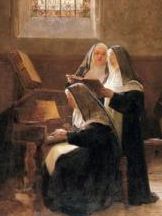
Music has always been a big part of convent life, much to the church hierarchy’s dismay, and musically talented women were much sought after. Indeed, it wasn’t unusual for a convent, much like a university today, to sweeten the pot a bit to get a talented novice to move inside their walls. “Musical skills and beautiful singing voices were so valuable that convents could even offer discounts on the dowries of gifted nuns, and decorous religious houses accepted girls from modest backgrounds,” says Silvia Evanegisti in her book Nuns: A History of Convent LIfe. Just don’t tell the Bishop about it.
Well, we know from Act IV, Scene V of “Hamlet” that Ophelia was quite the singer, so had Polonious lived, he surely would have gotten a discount to send his daughter to a nunnery, as Hamlet suggested.
 Given the premium convents offered on musical talent, it’s not surprising that many of the female composers we know about from the Baroque era today were nuns. One nun whose work has managed to survive to this day is Rosa Giacinta Badalla, a Benedictine nun in Milan who’s believed to have lived from around 1660 to 1710. She had only one printed collection of compositions that we know about, Motetti a voce sola, and it makes one wish she had been given a recording contract.
Her work is “remarkable . . . for its patent vocal viruosity, motivic originality, and self-assured compositional technique,” Robert Kendrick says in his Grove Music entry on Badalla.
You can hear that virtuosity, originality, and self-assurance in “O serene pupille,” a beautiful piece for solo voice that also translates well to the violin. In this 5-minute video, we see musicians from La Donna Musicale in 2011 perform an excerpt from the piece using violin as the solo instrument. La Donna Musicale is based in Boston and it’s a company dedicated to performing classical works by women composers.
To showcase the rich vein of music that’s come to us from the convents, a couple of publishers have released compilations within the last few years. Rosa Mistica is a highly regarded collection that includes a piece from Badalla as well as composers named Isabella Leonarda and Bianca Maria Meda.

Music in the Convents
“This music brings such joy and peace to my whole being, and every one of the pieces on this album is so beautiful, it’s hard to find words that adequately express the astounding harmony,” says one reviewer on Amazon.
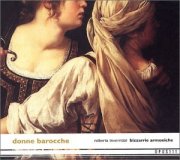
 Badalla’s work also appears on Concerto delle Donne, a compilation of female Baroque composers, including one of the most well-known of all female classical composers, Barbara Strozzi. This compilation isn’t limited to the cloistered, so it has a much broader range of work and yet the pieces still center around sacred music, as Baroque music by women composers often did.
In this compilation, Badalla’s piece is called “O fronde care,” and she wrote the lyrics for the piece, not the music. 
Other surviving pieces from Badalla, including “Pane Angelico” and “Vuo Cercando”, have been transcribed and are available today.
Another piece of Badalla’s, called “Non piangete,” is performed beautifully by soprano Roberta Invernizzi and cellist Elena Russo. You can listen to that in the video below.
We’re fortunate this this and other works from Badalla and other nuns remain with us today, and hopefully yet more will be found in the musty cellars of convents someday. The work of composers as gifted as Badalla deserve a wider audience; it would be a shame to keep it cloistered behind the walls of a nunnery.
Back to Point Against Point
Back to home page
 Credited with writing the first opera, “Euridice,” and seen as key in transitioning music from Renaissance to Baroque stylings
 Established North Germany organ tradition, the harmonically and rhythmically complex improvisatory style that was later mastered by Dieterich Buxtehude
 First musical dramatist, sometimes considered first Baroque opera composer, who built on Peri’s Renaissance-Baroque transition work
 An early instrumentalist who is more well-known for his vocal works, mainly “Miserere mei, Deus,” which is sung annually at the Sistine Chapel during Holy Week
 Influential early instrumental Baroque keyboard composer who showed how interesting keyboard music, unaccompanied by voice, could be
 With “Dafne,” first German opera composer and the most renowned German composer before Bach and Handel

Student of Sweelinck who helped spread North German organ tradition throughout Europe, and noted for his “patterned variation” keyboard technique in which chorale phrases build to a climax

French lutenist known for writing graceful melodic lines with clear phrase structures
 Minor figure but possibly the most notable English composer along with John Blow prior to Henry Purcell. His viol consort suites juxtaposed bizarre, spine-tingling themes with pastoral ones
 Helped bring opera to the masses with his performances in small public houses that relied on limited orchestras of strings and basso continuo
 First master of the oratorio, which set biblical or other forms of sacred text to music in dramatized settings that dispensed with scenery and costumes
 Helped establish the tradition of Italian opera seria
 Developed the keyboard suite and contributed to the exchange of musical traditions through his travels outside Germany
 Arguably the most notable female composer of the Baroque period with vocal pieces that are firmly rooted in the seconda pratica tradition but that have more lyricism than Monteverdi’s work
 Virtuoso violinist who helped bring the sonata form to Germany and whose innovative techniques in playing and tuning greatly influenced Biber.
 Known mainly for his four suites of harpsichord music and the standard he set for the material quality of the music books he published
 The Italian founder of French opera who, with Moliiere, created comédie-ballet, which combined theater, comedy, incidental music, and ballet. “Psyché” is his most well-known work
 Pinnacle of North German organ tradition who is said to have inspired Bach to walk 200 miles to hear him play. His organ works today remain central to the standard organ repertoire
 Known for his sacred music, which is considered more varied, expressive, and accessible than that of Lully, his contemporary
 Widely regarded as one of the most important composers for the violin in the history of the instrument, pioneering many tuning and playing techniques and composing works that use multiple stops in intricate polyphonic passages. His “Mystery Sonatas” are among the earliest known pieces for solo violin
 English composer whose opera, “Venus and Adonis,” is credited with influencing Henry Purcell’s landmark opera, “Dido and Aeneas,” and who composed hundreds of anthems for Anglican church services
 Composer of some of the earliest works for solo cello, including a group of seven ricercari for unaccompanied cello
 Known today mostly for his Canon in D, which is loved and dismissed in equal measure by critics. In his time, he was greatly admired for his work, considered the highest achievement of the South German organ tradition, which is simpler, more melodic than that of the North German organ traditon
 Eminent instrumentalist composer who is widely credited with developing two of the most significant forms of instrumental music there is, the sonata and the concerto. His “Christmas Concerto” remains a favorite today
 Master of the basse de viol and the leading French composer for the instrument, which today has largely been replaced by the cello
 Widely regarded as one of the best keyboardists of his day, but most of his work has been lost, so the German composer’s work is rarely heard today
 Matured Corelli’s idea of the concerto and today his 12 concerti of opus 8 constitute one of the great achievements of the Baroque period
 Combined French and Italian influences into a unique English Baroque style. The opera “Dido and Aeneas” is his most well-known work and today he remains one of England’s most eminent composers
 Founder of the Neapolitan school of opera, which took Italian opera in a more Classical, less Baroque style, and influenced even non-Italian opera, including the work of Handel
 German composer whose work, heavily influenced by Lully’s French style, is little played today but was highly regarded during his time for the quality of his sonatas
 Noted for his opera and, maybe more importantly, his work for the viola d’amore, which is a violin-like instrument characterized by non-playing “sympathetic strings” that resonate “in sympathy” with the strings above them when they’re played. Biber is another composer who made memorable use of sympathetic strings
 French violin prodigy who studied under Lully and whose work often had a surprisingly modern, and often under-appreciated, sound to it, with striking counter-rhythms and complex harmonies
 French keyboard master who innovated fingering techniques, established new heights of ornamentation, and brought Corelli’s sonata form to France
 Italian composer whose instrumental music greatly influenced Bach but who is almost entirely known today for a piece of music he didn’t actually write, the “Adagio in D Minor.” The piece was mainly written by Italian musicologist Remo Giazotto, who, after Albinoni’s death, took the small bit that Albinoni had written and turned it into the piece that’s so familiar today
 The greatest and most prolific writer of concertos, including the set of four violin concertos so popular today, the “Four Seasons”
 Czech Baroque composer whose music is admired for its daring compositional structure, harmonic invention, and counterpoint
 Virtuoso violinist who studied under Corelli and eventually settled in London. HIs work is little known today, but he is credited with inventing the violetta marina, an instrument no one today has seen but is believed to be a smaller version of the viola d’amore
 Hyper-prolific composer of some 3,000 works who was greatly admired by Bach, a friend of his, and whose music is said to serve as a bridge between German Baroque and Classical styles
 French harpsichord genius whose music built on the work of Lully and became the pinnacle of the French opera tradition

German music theorist, organist, composer, and lexicographer of the Baroque era. He was most well known as the compiler of the Musicalisches Lexicon.
 The titan of western art whose music is revered for its intellectual depth, technical command, and artistic beauty
 Master harpsichord composer whose work, starting with his 555 keyboard sonatas, helped transition music from a Baroque to a Classical sound
 German-born British composer who made his fame and established his imminence as a writer of operas and oratorios, but who is as well-known today for his concerti grossi, including “The Water Music,” and his sonatas
 Much admired in his time for his Vivaldi-like work, he’s largely known today for his Estro poetico-armonico, a musical setting for voices, figured bass, and occasional solo instruments
 German lutenist who was perhaps the most prolific composer for the instrument with his approximately 600 pieces for it
 Instrumentalist composer in the manner of Corelli but with his concerti grossi and sonatas, enlarged the canvas by varying the material more than Corelli and enriching the orchestral colorations
 German violinist held in high regard by Bach for his work, including his cantatas, concertos, and symphonies, but his vocal works have largely been lost
 Violinist and lutenist known mainly for his 12 concerti e sinphonie op. 1 and 18 pieces for gallichone, a type of lute
 Violinist best known for his suites of violin sonatas. His bowing technique so impressed Tartini that it led this latter composer to withdraw from public while he studied how to apply it to his own work
 Corelli’s most significant successor in writing music for the violin. He wrote 150 or so violin concertos and a hundred violin sonatas, including his “Devil’s Trill Sonata,” which Tartini said came to him in a dream
 Violin virtuoso whose “L’arte del violino, opus 3,” a collection of 12 concertos for solo violin, strings, and basso continuo, was one of the most influential musical publications of the early eighteenth century. Locatelli’s style is considered a bridge between Corelli and Vivaldi
 Renowned violinist who is considered to have founded the French violin school.
 Widely regarded as the greatest player and teacher of the flute, and composer for the instrument. He was also an innovative designer of the instrument, adding keys to enhance intonation
 A popular composer in his day, best known for his prolific operatic output and for his role in developing opera seria, the noble, serious form of opera that contrasts with opera buffa, or comic opera
 Portuguese composer influenced by the German Empfindsamer Stil (“sensitive style”) for keyboard works. Only three orchestral pieces and around 100 keyboard sonatas, plus a handful of choral works for liturgical use, are available today
 Known as “the father of the comic opera,” he enjoyed considerable fame for the dramma giocoso (“merry”) style of opera that he helped usher in
 Along with Galuppi, an innovator of opera buffa, or comic opera, whose work helped establish the traditions that would govern the writing of opera buffa for more than a century
 English “Galante” composer best known for his set of eight symphonies, anthems, and odes. “Galante” refers to a simplified, modern style of music that, in some accounts, is seen as a kind of transition between the Baroque and Classical periods of music
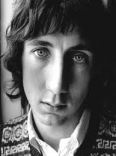
Rock legend Pete Townshend of The Who has long cited Henry Purcell as a major, if unlikely, musical influence and in fact he incorprated parts of Purcell’s work into his rock opera, Quadrophenia, and in the opening of “Pinball Wizard,” among other pieces.
It’s interesting how this influence began. In a conversation he had with Matt Everitt of the BBC’s “6 Music” program, he said he was living with his manager, Kit Lambert, whose father was the musical director of the Royal Ballet at Covent Gardens, Constant Lambert.  Early in the band’s career, around the time of “My Generation,” Kit shared with Townshend a recording of Purcell’s suite, “The Gordian Knot Untied,” which uses a series of suspended chords. The sophistication and emotive quality of the chord suspensions, particularly in the Chaconne, riveted Townshend and he started incorporating the idea of suspension into his work. “Suddenly I was in a world of suspensions,” he says.
Purcell translates rather nicely into pop music, Townshend says, because, like pop, it’s simple. “Purcell wrote in the very early era of orchestral and choral music,” he told Everitt, “and his music was simple, very basic. It had to be knocked off quickly. It wasn’t as complex as Bach went on to produce later.”
The Chaconne is the sixth of eight parts of “The Gordian Knot Untied” and it is, as Townshend described it, moving and “profoundly sad,” which would certainly characterize much of The Who’s music, if you think of pieces like “The Song is Over” and “Behind Blue Eyes.” 
Townshend also used suspensions in the opening chord sequence of “Pinball Wizard.”
“That chord sequence [at the beginning of ‘Pinball Wizard’] runs for about 15 minutes [on the demo],” Townshend told Steve Rosen of Sounds International in 1980. “It’s just an exploration of how many chords I could make with a running B. The B was in every chord. It went through about 30 or 40 chords very slowly and then into the song. “I’m a Boy” did that as well, in the solo.
“I got very Baroque,” he went on. “I started to be interested in the fact that [Baroque composers] used melodic transitions very rarely and there would always be suspensions and tension and it would be another level of tension and it would drop. This was mainly Purcell.”
Tension in the service of the simple and the sad. That sounds a lot like The Who.—Nabob, On Baroque
“La Folia” is an interesting piece of music. It’s a short chord progression that’s been handed down from generation to generation and just about every composer of note has put his own stamp on it. Is there anything comparable to it today?
Maybe. Think of what “Wipeout” is to drummers or the opening riff of “Stairway to Heaven” is to guitarists. In both of these cases, you have a piece of music that’s almost like a musical currency, a way for musicians to size up one another instantly to get a sense of where they are as players. Only a piece that’s universally recognized can serve that role, and “La Folia” certainly seems to be that piece historically.
In any case, you can learn more about the origins of La Folia on Wikipedia, but there’s also an entire website devoted to it. That’s something not even “Wipeout” and “Stairway to Heaven” have. But give it time. They’ve only been around for a few decades; “La Folia” has been around for a few hundred years.
You can see how Vivaldi, Bach, Corelli, Marais, and Geminiani have each put their own stamp on “La Folia” in the 90-second video above.—Nabob, On Baroque

The ‘La Folia’ chord progression
Suite 3 in d3 Courante
Prelude and Allemande
Folies d’Espagne
Jean-Henri d’Anglebert Books and Music
More on d’Anglebert
Back to home page
Suite Troisième in ré – Allemande
Jean-Henri d’Anglebert Books and Music
More on d’Anglebert
Back to home page


 On Baroque
You must be logged in to post a comment.